
Nov. 13, 2026
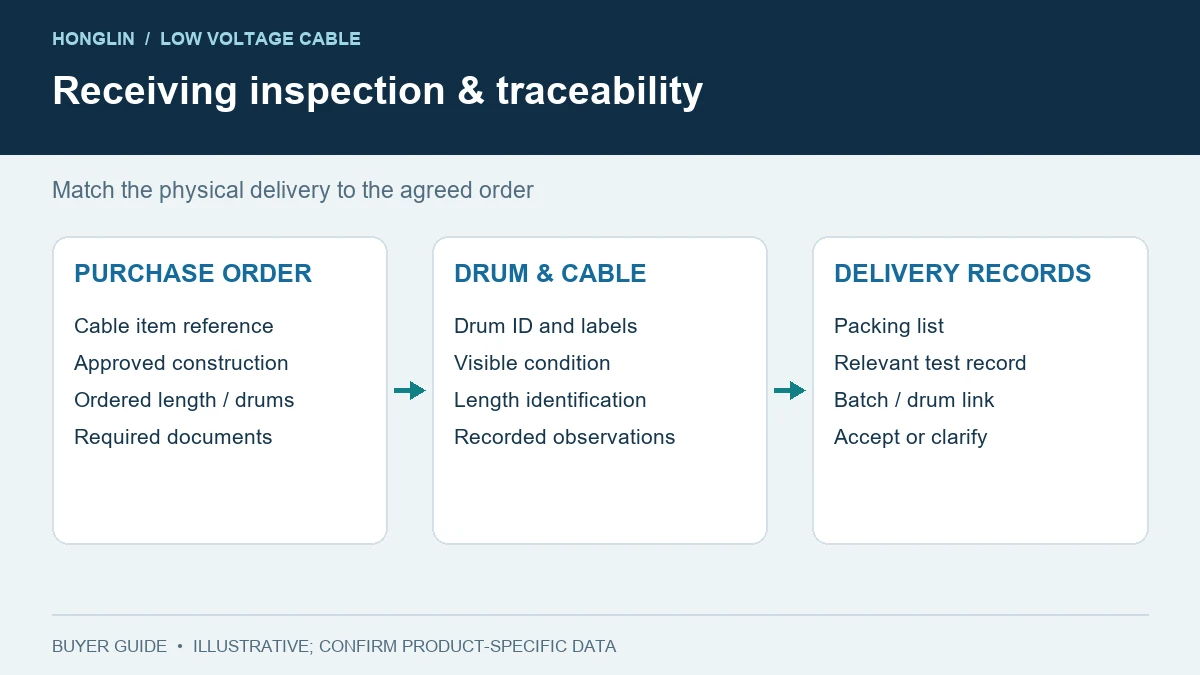
A low voltage cable inspection checklist helps the receiving team confirm that the delivered drums, cable identity and documents match the approved order. Start with identification and condition, then refer any technical discrepancies to the responsible reviewer. Site receiving inspection is one part of quality control; it does not replace the specified factory tests or installation checks.
For international projects, several teams may handle the same shipment: supplier, forwarder, importer, warehouse and installer. A clear approach to low voltage cable marking and traceability keeps the order reference attached to the physical cable throughout these handovers.
Give the receiving team the accepted purchase order, approved data revision, drum schedule and required document list. Define who can record a discrepancy, who can assess its significance and who can release the material. Photographs are more useful when their filenames or inspection records identify the relevant drum.
| Receiving check | Compare with | Record |
|---|---|---|
| Drum identity and quantity | Drum schedule and packing list | Drum IDs, count and any missing items |
| Cable description | Approved order and data sheet | Voltage, construction, core sizes and product reference |
| Visible condition | Agreed delivery and handling requirements | Packaging, flange, accessible sheath and end-condition observations |
| Length identification | Agreed length schedule and measurement basis | Labelled length and available marking references |
| Document identity | Required evidence list | Report numbers, batches and the supplier's traceability link |
| Disposition | Project receiving procedure | Accepted, held for clarification, or referred for assessment |
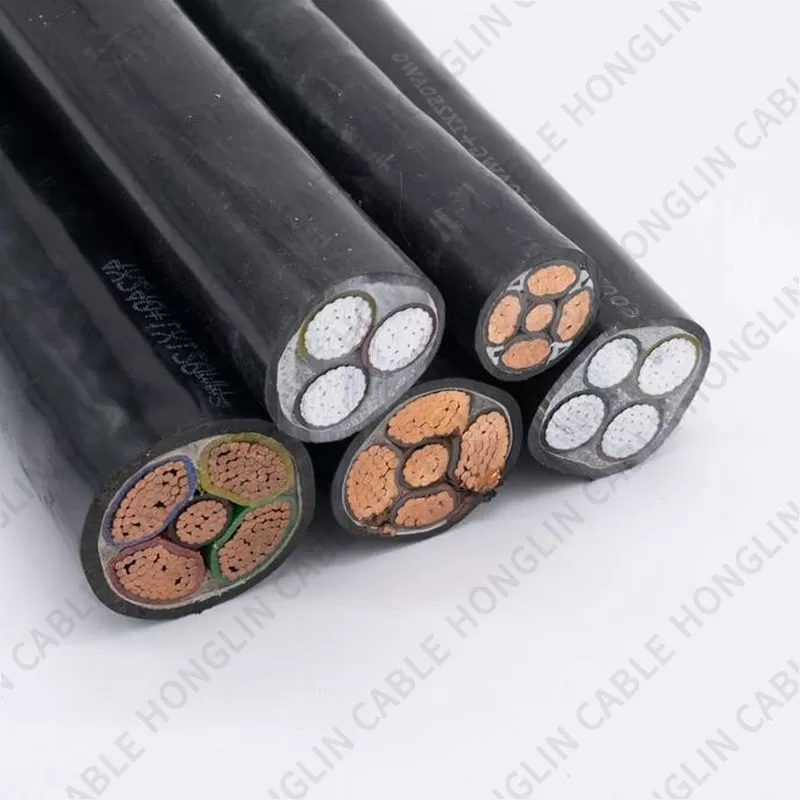
Use the low voltage cable inspection checklist as a controlled record. An unchecked field should remain visibly open until the responsible person resolves it. Signing a delivery receipt and granting technical acceptance may be separate steps under the project's procedure.
Agree the identifiers before manufacturing. The supplier should explain how the cable marking, drum label, production batch and relevant test records relate to one another. They do not necessarily use identical numbering, but the relationship must be understandable and documented.
Low voltage cable marking and traceability should continue when a drum is partly used or cut lengths are moved to a different area. Record the source drum, destination circuit and remaining length under the site's material-control system. Do not discard the only identifying label before the installed cable has a traceable record.
For a mixed-size shipment, review each item separately. Similar black sheaths or matching drum colours are not adequate identifiers. A photograph of one correct drum does not establish that all other drums contain the same construction.
Ask for the evidence specified in the contract and check that the document applies to the cable concerned. Eland explains that routine-test requirements depend on the cable standard. Do not copy an unrelated cable family's test list into a receiving form and assume it applies to every 0.6/1kV product.
The low voltage cable inspection checklist should identify the required report and the person reviewing it. Where a report covers a manufacturing batch, ask the supplier for the link between that batch and the delivered drums. Our test-report procurement guide covers the difference between evidence categories.
If the ordered construction, label or document differs, identify the affected item and place it under the project's hold procedure while the difference is clarified. Record facts: the ordered value, the observed value, photographs and document references. Avoid editing the supplier's report or replacing a label yourself to make the records appear consistent.
Effective low voltage cable marking and traceability lets the supplier investigate a specific batch instead of guessing from a general description. Ask for a written response that explains the discrepancy, proposed corrective action and any required technical reassessment. The authorised project reviewer should decide the disposition.
Visible damage should also be assessed before further use. Unloading and handling require suitable equipment and a site plan; Eland's drum-handling guidance discusses these precautions. Do not treat this article as a lifting instruction or an electrical test procedure.
No. It records defined receiving checks and outstanding issues. Acceptance also depends on the specified evidence, technical review and any agreed inspection or testing arrangements.
Request the manufacturer's traceability mapping. Different document systems may use different identifiers, so a missing identical number needs clarification rather than an automatic conclusion about the product.
Follow the agreed inspection plan. Identification and visible shipping condition should be recorded for the delivered units; any sampling of other characteristics needs an approved basis and defined acceptance criteria.
Send your project reference format, drum schedule and required evidence list with the enquiry. Ask the supplier to confirm the proposed identification method before the order is released.
Send Honglin Cable your BOQ or data sheet, rated voltage, core sizes, conductor material, insulation, sheath and armour requirements, lengths, destination and required documents. Identify any open approval or installation questions. Product availability, evidence, packing options and delivery terms must be confirmed for the enquiry.
Send your specification for review and quotation or browse our 0.6/1kV low voltage power cable range.
Previous post:
Class 2 vs Class 5 Conductors in Low Voltage Power Cable


