Nov. 13, 2026

Project procurement guide.
A sound LV cable enquiry separates the electrical design from the request for a price. The designer selects and verifies a construction and cross-section; the supplier quotes a LV cable with matching characteristics. If the selection is incomplete, send the missing inputs explicitly instead of asking for a cable size from current alone.
Complete low voltage cable sizing before converting a budget enquiry into a production order. The calculation needs load information, circuit arrangement, route length, installation method and environmental conditions.
For low voltage cable sizing, record the assumptions alongside the selected conductor area. Grouping, thermal conditions, voltage-drop requirements and protection coordination should be reviewed by the responsible engineer.
A supplier datasheet supports low voltage cable sizing but does not replace the project calculation. Check that the data refers to the same conductor, insulation and installation assumptions as the approved design.
After low voltage cable sizing is approved, transfer the result into the RFQ with a revision reference. Ask any bidder proposing a different material or construction to submit a separate technical alternative.
The same current and distance can describe different systems. The result depends on voltage, phase arrangement, load behaviour, installation, temperature, grouping, permitted voltage drop, conductor material and fault protection. Terminal and accessory constraints also need review. No single area can be responsibly promised from those two numbers alone.
| Input group | Information to collect |
|---|---|
| Circuit | Voltage, AC/DC, phase arrangement, load current and duty |
| Load behaviour | Power factor, starting or transient conditions, significant harmonics |
| Route | One-way length, laying method, grouping and route transitions |
| Thermal conditions | Ambient air or ground temperature, soil data where relevant |
| Protection | Protective device, fault level and required disconnection information |
| Acceptance criteria | Permitted voltage drop, terminal limits and project calculation standard |
Use XLPE cable current carrying capacity data only with its stated reference conditions. A catalogue value without installation method, ambient assumptions and conductor arrangement is insufficient for a project decision.
When requesting XLPE cable current carrying capacity, identify the exact cable construction and the route conditions. Ask the designer to apply the appropriate method and correction factors for the installation.
Do not approve XLPE cable current carrying capacity from insulation type alone. The selected cable must also satisfy the other design checks, including permitted voltage drop and protection requirements.
Attach the basis of the approved XLPE cable current carrying capacity calculation to the cable schedule. This makes it easier to assess a proposed alternative without silently changing the original thermal assumptions.
A current-rating table represents stated conditions. Schneider Electric’s sizing guidance accounts for installation methods and corrections for temperature, soil and grouping. A value taken from free-air conditions should not simply be copied to a grouped underground duct installation.
Request the table reference and assumptions with the offered datasheet. If the route has several environments, identify the controlling section and document the selected calculation method. Keep the approved calculation revision with the LV cable schedule so later commercial alternatives can be checked consistently.
A low voltage cable voltage drop review requires circuit length, load, system arrangement and relevant cable impedance data. Agree the project limit with the responsible designer before selecting a conductor size.
For low voltage cable voltage drop calculations, identify the load condition being checked and the conductor data used. A simplified example should not be copied to a project with different assumptions.
Review low voltage cable voltage drop when a quotation proposes a different material, size or route. A commercial substitution can require a new engineering assessment even if the voltage rating is unchanged.
Record the approved low voltage cable voltage drop result and calculation reference in the procurement file. Ask the supplier for the data needed to confirm that the offered cable matches the design basis.
The Eland voltage-drop explanation describes the reduction in voltage associated with cable impedance. For a project calculation, provide the applicable conductor resistance and reactance data, operating assumptions, current, route length and power factor. Use a method appropriate to the circuit and avoid mixing per-kilometre data with lengths entered in metres.
Also state whether the criterion concerns normal operation, starting conditions or both. The allowable value is a project and installation requirement; a number from an unrelated example is not automatically the right limit.
The load and length alone do not determine one safe universal size. The designer needs system arrangement, installation method, thermal conditions, voltage-drop limit and protection data, together with the LV cable characteristics.
Use the circuit configuration, route length, load and relevant cable impedance data with the approved design method and project limit. Request the necessary product data and have the calculation checked by the responsible engineer.
It is one input. Voltage drop, fault withstand, protection and installation constraints still need checking.
Treat that as a proposed design change requiring review, not a direct commercial substitution.
State the project’s future-load requirement explicitly so the designer can assess it alongside present duty.
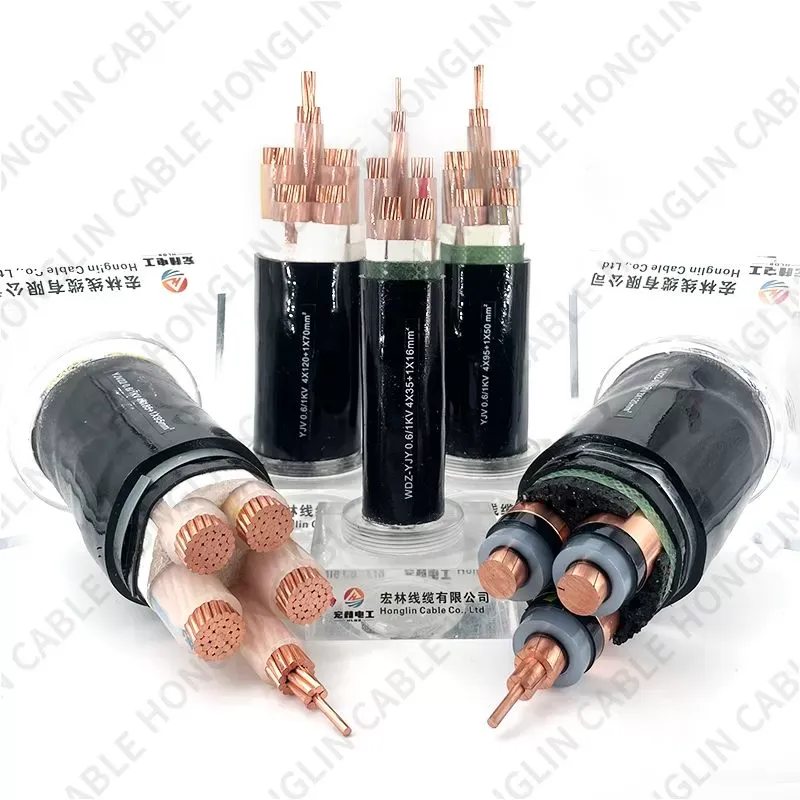
Browse the 0.6/1kV low voltage power cable range and send Honglin Cable your project enquiry. Include the approved cable schedule, standard, conductor, core sizes, construction, total metres and destination. Attach the circuit data and approved calculation if available. Ask for a specification-specific datasheet and a written quotation confirming available construction, minimum quantity, production lead time and delivery scope.