Nov. 13, 2026

Project procurement guide.
LSZH and fire-resistant are not interchangeable descriptions. Low smoke zero halogen concerns specified smoke and halogen-related characteristics. Fire resistance concerns maintaining circuit function under a defined fire exposure. A procurement specification must state the required performance and evidence separately.
An LSZH vs PVC power cable comparison should separate smoke, halogen, flame-spread and circuit-integrity requirements. These are different performance questions and need the applicable tests to be stated.
For LSZH vs PVC power cable, ask bidders to identify the exact sheath or cable construction and the reports supporting the claimed performance. A material abbreviation does not establish every fire-related property.
Keep the installation duty and standard edition consistent in an LSZH vs PVC power cable review. Ask the project reviewer to resolve whether circuit integrity is required in addition to smoke or flame performance.
Your LSZH vs PVC power cable quotation request should list mandatory evidence and accepted alternatives. Confirm the offered construction against that list before comparing cost or delivery dates.
| Requirement | What the buyer should identify |
|---|---|
| Smoke emission | Applicable smoke test and acceptance criteria |
| Halogen-related behaviour | Required gas-emission or acidity test and limits |
| Flame propagation | Single-cable or bunched-cable test, category and criteria |
| Circuit integrity | Fire exposure, duration and any mechanical or water conditions |
| Normal operation | Voltage, load, conductor size and installation requirements |
| Environment | UV, water, oil and mechanical requirements, where applicable |
Eland’s LSZH buyer guide discusses distinct tests for halogen-related emissions and flame performance. Caledonian’s fire-performance specification example lists circuit-integrity, flame, gas and smoke requirements separately. Those examples explain the distinctions; they do not certify Honglin products.
An outer sheath description does not identify every material in the LV cable. Ask whether the claimed LSZH performance applies to the specified finished construction and which reports support it. Also distinguish a PVC-insulated cable from an XLPE-insulated cable with a PVC sheath.
For a project requiring an LSZH alternative, request its full layer construction, voltage and temperature ratings, dimensions, installation instructions and evidence. Do not approve a change solely because its product name contains “LSZH”, “LSF”, “FR” or “fire safe”. Abbreviations can be used differently in commercial catalogues.
If the LV cable serves emergency equipment, use the project’s explicit circuit-integrity and installation requirements. The cable, supporting system, joints and terminations may all need coordinated treatment. A general low-smoke claim does not establish that the circuit remains operational for the required duty.
No. Low-smoke and halogen requirements differ from circuit integrity during fire. Specify the performance tests actually required and review evidence for the offered complete LV cable construction.
No. Limiting flame propagation and maintaining circuit integrity are different performance requirements.
No. Confirm the exact construction’s environmental and installation suitability.
Send the required construction and test matrix for a product-specific feasibility and documentation review. Availability and conformity must be confirmed in the written offer.
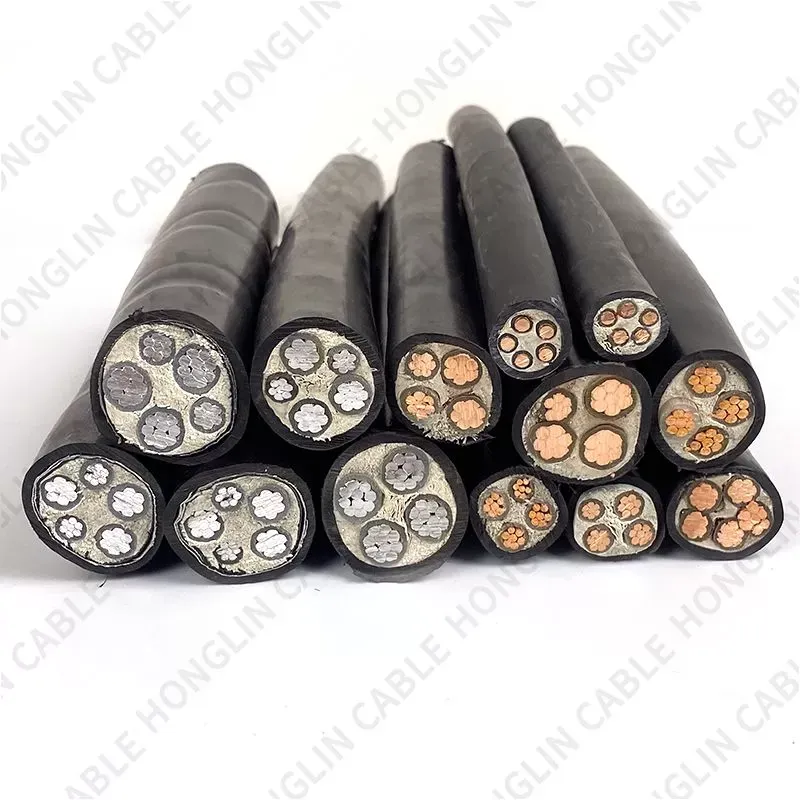
Browse the 0.6/1kV low voltage power cable range and send Honglin Cable your project enquiry. Include the approved LV cable schedule, standard, conductor, core sizes, construction, total metres and destination. Include the required smoke, halogen, flame and circuit-integrity test matrix. Ask for a specification-specific datasheet and a written quotation confirming available construction, minimum quantity, production lead time and delivery scope.