Jan. 09, 2026
Industrial systems today rely heavily on automation, precision control, and continuous operation. Machines no longer remain static; they move, rotate, extend, retract, and operate at high speeds. In such environments, traditional fixed cables quickly become a point of failure.
A high-quality flexible control cable minimizes downtime by resisting conductor breakage, insulation cracking, and signal interruption. Its role is not simply to connect components, but to ensure uninterrupted communication between sensors, actuators, and control units across the entire lifecycle of the equipment.
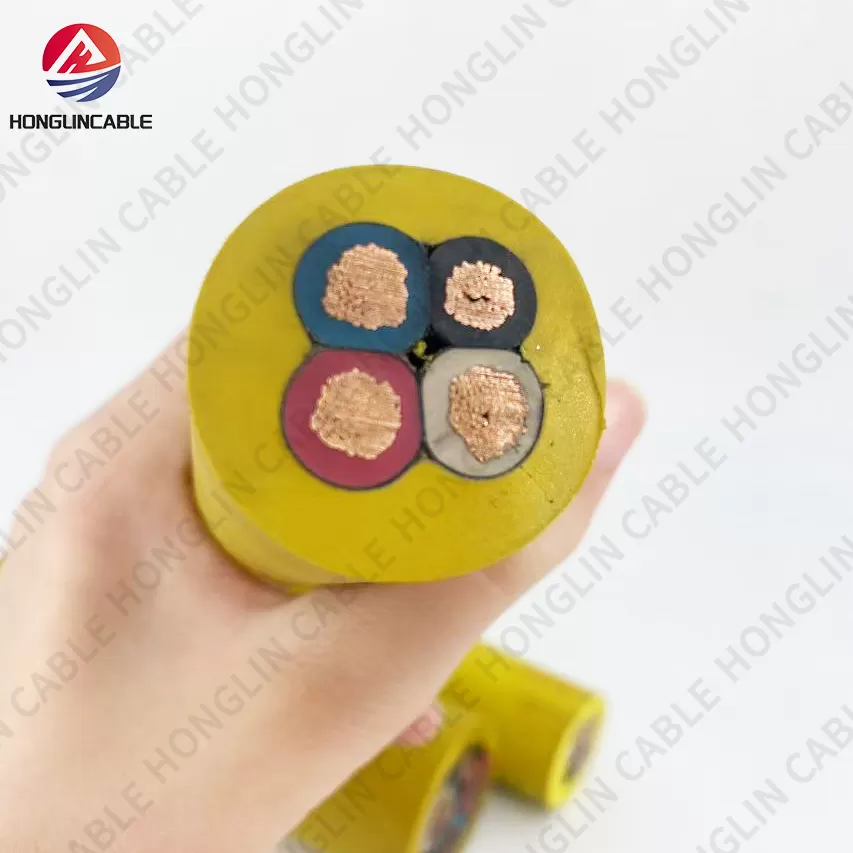
The conductor design is the core element that determines how a flexible control cable performs over time. Fine-stranded annealed copper is the industry standard for achieving superior flexibility. Each conductor consists of many thin copper wires twisted together, allowing mechanical stress to be evenly distributed during bending.
This construction provides multiple advantages:
Improved resistance to metal fatigue
Stable electrical resistance during motion
Reduced risk of internal conductor fracture
Longer service life in dynamic applications
In demanding systems, conductor quality often makes the difference between years of trouble-free operation and frequent cable replacement.
Insulation plays a dual role in a flexible control cable: it must electrically isolate conductors while remaining mechanically elastic. Standard insulation materials used in fixed wiring often become brittle under repeated movement, leading to cracks and eventual failure.
Flexible control cable insulation is engineered to maintain elasticity across a wide temperature range. It resists compression, abrasion, and electrical stress while allowing conductors to move freely within the cable structure. This balance ensures consistent signal transmission even in harsh industrial environments.
The outer jacket is the first line of defense against external threats. In industrial settings, cables are exposed to oil, grease, chemicals, abrasion, moisture, and sometimes direct sunlight. A flexible control cable must withstand all these factors without losing flexibility.
High-performance jacket compounds provide:
Resistance to industrial oils and fluids
Excellent abrasion resistance
Flame-retardant properties
Stability under temperature fluctuations
Long-term mechanical durability
Selecting the right jacket material ensures that the flexible control cable remains reliable regardless of operating conditions.
In many control systems, electromagnetic interference can disrupt signal transmission. Motors, drives, and high-power equipment generate electrical noise that can interfere with sensitive control signals. In such cases, a shielded flexible control cable becomes essential.
Shielding improves signal quality by reducing external interference and preventing signal leakage. Depending on the application, different shielding configurations can be applied to match system requirements. Proper shielding not only enhances performance but also contributes to overall system stability.
A flexible control cable is used across a wide range of industries due to its adaptability and reliability. Common applications include:
Industrial automation and process control
CNC machinery and manufacturing equipment
Robotics and articulated systems
Material handling and conveyor systems
Packaging and labeling machines
Control panels with moving components
Portable industrial equipment
In each of these applications, cable movement is unavoidable, making flexibility a critical performance requirement.
One of the most common mistakes in cable selection is using a fixed-installation control cable in a moving application. While it may function initially, it is not designed to handle continuous bending or vibration.
A flexible control cable is specifically engineered for dynamic use. Its internal structure, materials, and construction techniques are optimized for movement. Using the correct cable type prevents premature failure and reduces long-term operational costs.
Electrical ratings such as voltage capacity and temperature limits must align with the system design. Most flexible control cable products are intended for low-voltage control circuits, but performance varies depending on construction and materials.
Temperature resistance is particularly important. A cable that becomes stiff in cold environments or degrades in high heat will not deliver consistent performance. Properly rated flexible control cable products maintain flexibility and electrical integrity throughout their specified operating range.

Even the best flexible control cable requires proper installation to reach its full service life. Poor installation practices can negate the benefits of high-quality materials and design.
Key considerations include:
Respecting the minimum bending radius
Avoiding sharp edges and mechanical stress points
Providing adequate strain relief
Routing cables to prevent twisting or overextension
Maintaining appropriate spacing from power cables when necessary
Correct installation ensures that the flexible control cable performs reliably from day one.
Consistency in manufacturing is critical for reliable performance. A flexible control cable must have uniform conductor stranding, precise insulation thickness, and controlled twisting geometry. Any deviation can lead to uneven stress distribution and reduced lifespan.
Reputable manufacturers invest in strict quality control processes, including mechanical testing, electrical testing, and visual inspection. These measures ensure that every flexible control cable meets performance expectations before reaching the customer.
While flexible control cable products may have a higher initial cost compared to standard control cables, they offer significantly better long-term value. Reduced downtime, fewer replacements, and lower maintenance costs quickly offset the initial investment.
From a purchasing standpoint, focusing on lifecycle cost rather than unit price leads to more reliable systems and better operational efficiency.
Many industrial systems have unique requirements that standard products cannot fully address. Customization options such as conductor count, color coding, shielding configuration, and jacket material allow a flexible control cable to be tailored to specific needs.
Customized solutions simplify installation, reduce wiring errors, and improve overall system organization. They are especially valuable in complex automation projects where precision and reliability are critical.
As industrial systems evolve, cabling infrastructure must support future upgrades. Choosing a flexible control cable with additional cores or enhanced performance characteristics can simplify future expansion without major redesigns.
Forward-looking cable selection helps protect long-term investments and ensures compatibility with evolving control technologies.
Selecting the right flexible control cable requires careful consideration of mechanical demands, environmental conditions, electrical requirements, and long-term performance expectations. Buyers should evaluate how the cable will be used over its entire service life, not just at installation.
A well-chosen flexible control cable enhances system reliability, minimizes maintenance disruptions, and contributes to consistent production performance.
A flexible control cable is a critical component in modern industrial control and automation systems. Its ability to withstand movement, vibration, and environmental stress makes it indispensable in dynamic applications. By focusing on conductor quality, insulation and jacket materials, shielding options, and proper installation practices, buyers can ensure long-lasting performance and dependable operation