Jan. 30, 2026
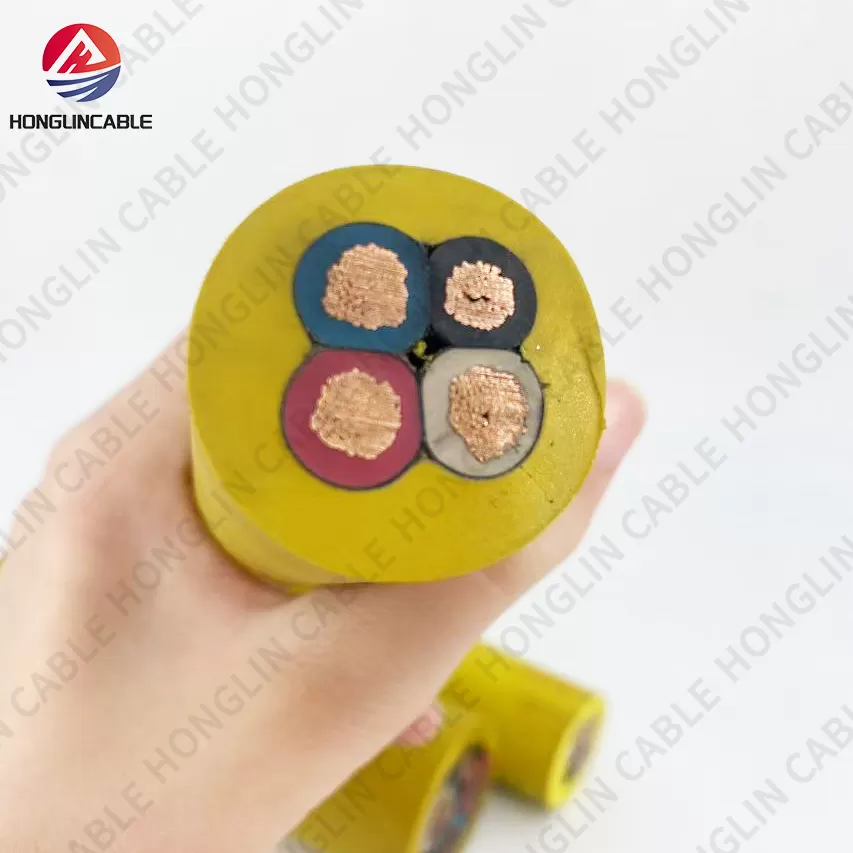
A power and control tray cable is designed to transmit electrical power and control signals simultaneously while being installed in cable tray systems. These cables are widely used in industrial plants, commercial facilities, and infrastructure projects where organized cable routing, mechanical protection, and long service life are essential.
Unlike standard power cables, this type of cable integrates multiple conductors with carefully engineered insulation and jacket systems. This allows both power delivery and signal control within a single cable assembly, reducing installation complexity and improving system efficiency. A well-designed power and control tray cable supports stable operation across demanding environments where electrical reliability is non-negotiable.
Cable tray systems are commonly used in factories, refineries, processing plants, and large commercial buildings. They allow for structured routing, easy inspection, and future expansion. A power and control tray cable must be compatible with these systems in terms of flexibility, bending radius, and mechanical strength.
Cables installed in trays are often exposed to vibration, airflow, temperature changes, and potential mechanical contact. For this reason, tray-rated cables are manufactured with reinforced jackets and stable conductor stranding. This structural compatibility ensures that the power and control tray cable maintains its integrity over long installation runs without excessive stress on conductors or insulation layers.
The electrical performance of a power and control tray cable begins with conductor selection. High-quality copper conductors are commonly used due to their excellent conductivity and predictable electrical behavior. Proper stranding enhances flexibility while maintaining consistent current-carrying capacity.
Control conductors within the cable are carefully insulated to prevent signal interference from adjacent power conductors. This separation ensures accurate signal transmission even when power loads fluctuate. In industrial automation and process control systems, such stability is critical for maintaining precise operations and avoiding costly downtime.
Environmental resistance is a defining characteristic of a reliable power and control tray cable. Insulation materials are selected to withstand heat, moisture, oil exposure, and chemical contact. Common compounds are engineered to resist aging and cracking over time, even in continuous operation environments.
Outer jackets play an equally important role. They protect internal components from abrasion, impact, and environmental stress. In many industrial settings, cables may be exposed to sunlight, dust, or corrosive atmospheres. A durable jacket ensures that the power and control tray cable continues to perform safely and consistently throughout its service life.
In systems where control signals are just as important as power delivery, signal integrity cannot be compromised. A power and control tray cable is designed to minimize electromagnetic interference between conductors. This is especially important in installations involving motors, drives, and variable frequency equipment.
By maintaining clear signal paths and stable insulation properties, the cable supports accurate command transmission and feedback signals. This reliability directly affects automation efficiency, safety interlocks, and system responsiveness across industrial applications.
The versatility of a power and control tray cable makes it suitable for a wide range of industries. In manufacturing plants, these cables support machinery control, conveyor systems, and automated production lines. In energy and utility projects, they are used in substations, power distribution panels, and control rooms.
Water treatment facilities, chemical plants, and food processing environments also rely on tray-installed cables for organized and secure wiring. In each of these settings, the ability of a power and control tray cable to handle both power and control functions simplifies system design and reduces installation complexity.
One of the practical advantages of using a power and control tray cable is installation efficiency. Combining power and control conductors into a single cable reduces the number of separate cable runs required. This saves space in trays, reduces installation labor, and simplifies documentation.
For large-scale projects, these efficiencies translate into meaningful cost savings. Fewer cables mean fewer terminations, less tray congestion, and easier future maintenance. This makes the power and control tray cable an attractive solution for contractors focused on both performance and project economics.
Professional buyers often prioritize cables that are designed with recognized engineering practices in mind. While specific standards may vary by region or project, a well-manufactured power and control tray cable reflects a disciplined approach to conductor sizing, insulation thickness, and overall construction quality.
This engineering consistency gives buyers confidence during project approval and inspection stages. It also reduces uncertainty during system commissioning, where cable reliability plays a key role in successful startup and operation.
Industrial installations are designed for long service life. A power and control tray cable must perform reliably for years, often decades, without requiring replacement. Mechanical durability, insulation stability, and conductor integrity all contribute to this longevity.
Cables that fail prematurely can cause costly downtime, safety risks, and maintenance challenges. Investing in a high-quality power and control tray cable helps ensure uninterrupted operation and predictable maintenance planning over the life of the system.
Different projects may require variations in conductor count, conductor size, or jacket characteristics. Experienced manufacturers can provide customized power and control tray cable solutions to match specific system designs.
Customization options may include different color coding, marking formats, or cable constructions optimized for specific environments. This flexibility is particularly valuable for OEM customers and engineering firms managing diverse projects across multiple industries.

For international projects and large-scale developments, supply stability is essential. A reliable power and control tray cable supplier understands the importance of consistent production quality, predictable lead times, and export-ready packaging.
Clear specifications and repeatable manufacturing processes ensure that additional orders match initial deliveries. This consistency supports long-term partnerships and simplifies procurement planning for global buyers.
Generic power cables may not meet the structural or performance requirements of tray installations. A dedicated power and control tray cable is engineered specifically for organized routing systems and mixed-function operation.
Professional buyers recognize the risks associated with using unsuitable cables, including overheating, signal instability, and mechanical damage. Choosing a purpose-built solution reduces these risks and supports safer, more efficient system operation.
As industrial automation and infrastructure development continue to expand, demand for integrated cabling solutions grows alongside it. A power and control tray cable supports this evolution by providing a reliable foundation for modern control systems.
From smart factories to advanced utility networks, these cables enable efficient power distribution and precise control signaling within organized tray systems. Their role is fundamental to the performance and scalability of modern electrical installations.
A power and control tray cable is more than a wiring component; it is a critical part of system reliability and operational efficiency. By combining power delivery and control signaling within a durable, tray-compatible structure, it simplifies installation while supporting long-term performance.
For engineers, contractors, and industrial buyers, selecting a high-quality power and control tray cable represents a practical investment. It reduces installation complexity, enhances system stability, and supports dependable operation across a wide range of applications.
As industrial environments continue to demand higher efficiency and reliability, a well-designed power and control tray cable remains an essential solution for structured electrical systems.
Previous post:
The Difference Between Power Cable and Control CableNext chapter:
What Is a Pioneer Control Cable and Why It Matters