Oct. 12, 2026
Quick Answer: What affects spring cable prices?
Spring cable prices depend on the jacket material, conductor count and size, coil dimensions, required extension length, mechanical performance, connectors, order quantity, customization, testing, and delivery requirements. To request an accurate quotation, buyers should provide the application, electrical specifications, retracted and extended lengths, coil dimensions, connector details, required quantity, and delivery destination. A technical drawing or sample photos can help the supplier evaluate the requirements more efficiently.
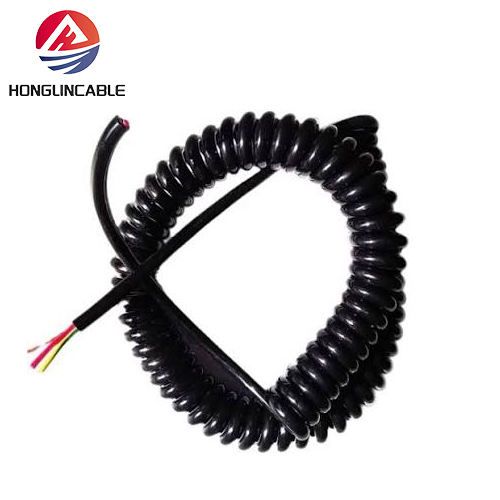
When sourcing spring cables for industrial equipment, automation systems, power tools, or mobile devices, price is only one part of the purchasing decision. The cable must also meet the required extension length, electrical performance, environmental conditions, and service life.
So, how much does a spring cable cost? The answer depends on its design, materials, technical specifications, order quantity, and customization requirements.
This guide explains the main factors that affect spring cable prices and the information buyers should prepare before requesting a quotation from a spring cable manufacturer.
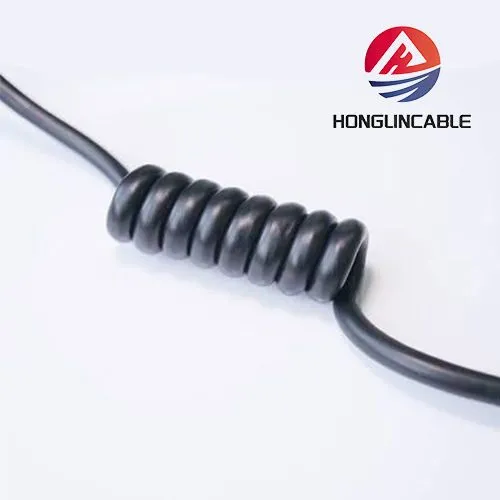
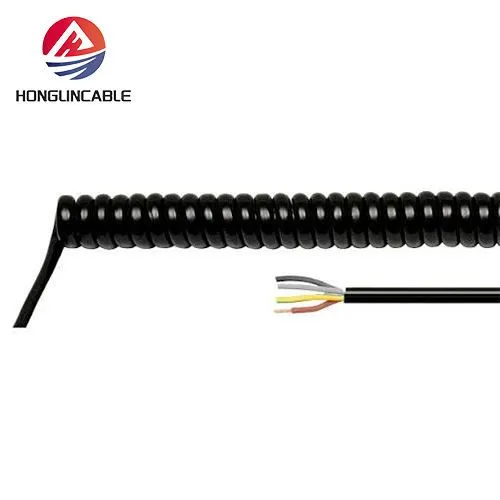
There is no single standard price for all spring cables. A simple PVC coiled cable with standard conductors may have a very different cost from a custom PUR spring cable with shielding, special connectors, and demanding performance requirements.
For an accurate quotation, suppliers need to understand both the cable's electrical specifications and its mechanical requirements.
The main factors affecting spring cable prices include:
Cable material and insulation type
Number of cores and conductor cross-sectional area
Cable length and extended coil length
Coil diameter, pitch, and retracted length
Required extension and retraction performance
Shielding, connectors, and additional components
Order quantity and customization requirements
Testing, packaging, and delivery requirements
Providing complete specifications at the beginning of the inquiry helps reduce repeated communication and makes supplier quotations easier to compare.
The jacket material is one of the factors that can influence the total cost of a spring cable.
PVC spring cable is commonly considered for general-purpose applications where cost, flexibility, and basic environmental resistance are important.
PUR spring cable may be suitable for applications requiring a combination of flexibility, abrasion resistance, and repeated movement. The exact performance depends on the polyurethane formulation and cable construction.
Other materials may be required for special temperature ranges, chemical exposure, or demanding operating environments.
When comparing quotations, do not evaluate material cost alone. Consider the expected operating conditions and replacement frequency as well.
The number of conductors and their cross-sectional area directly affect the amount of conductor material used and the overall cable construction.
For example, a two-core cable for a basic power connection may require a different construction from a multi-core cable carrying power and control signals.
Before requesting a quotation, specify:
Number of cores
Conductor cross-sectional area, such as 0.5 mm² or 1.0 mm²
Conductor material, if specified by your design
Required voltage and current
Whether the cable carries power, signals, or both
If the electrical requirements are not finalized, provide the equipment's voltage, current, and wiring requirements so the supplier can review a suitable construction.
Spring cable geometry is another major pricing factor. Suppliers need more than the total cable length to understand the required design.
Important dimensions include:
Retracted length: The overall length of the coiled section when it is not extended.
Extended length: The target length when the cable is stretched during operation.
Coil outer diameter: The outside diameter of the finished coil.
Coil inner diameter: The inside diameter, where applicable.
Coil pitch: The distance between adjacent turns in the coiled section.
Straight lead length: The length of the straight cable section at each end.
A cable designed for a short extension may differ significantly from one that must extend several meters and return repeatedly to its original shape.
Whenever possible, provide a drawing with dimensions. If a drawing is not available, share the required retracted length, working extension, available installation space, and connection layout.
Spring cables are often selected because they must extend and retract during equipment operation. Their mechanical requirements can influence material selection, coil design, and manufacturing controls.
Suppliers may need to know:
How often the cable will extend and retract
Whether the movement is manual or machine-driven
The expected extension force or flexibility requirements
Whether the cable will experience twisting, vibration, or continuous movement
The expected service life or target number of movement cycles
Do not assume that two cables with similar dimensions will have the same service life. Ask the supplier to confirm whether the proposed construction is suitable for your operating conditions and whether relevant test data is available.
Additional features can increase material and assembly costs, but they may be essential for the application.
Examples include:
Foil or braided shielding
Special conductor arrangements
Waterproof or dust-resistant connectors
Molded plugs or custom terminals
Reinforced jacket construction
Special colors, labels, or identification
Additional protection for harsh operating environments
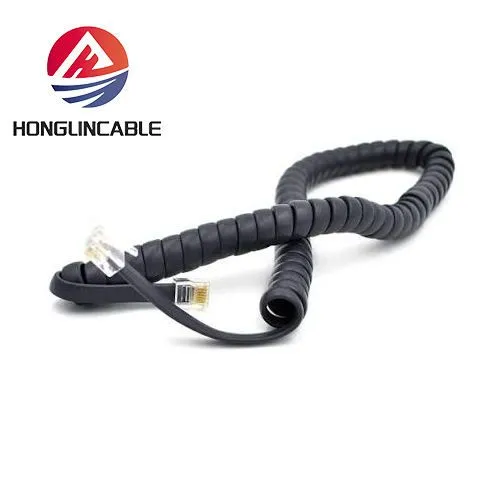
If the cable requires connectors, specify the connector model, pin assignment, cable-end treatment, and whether both ends need different configurations. Photos or drawings of the existing cable can also help clarify the requirements.
Order quantity can affect the quoted unit price because setup, tooling, production, inspection, and packaging costs may be distributed differently across order sizes.
Custom dimensions, non-standard materials, special connectors, or additional testing may also require extra engineering or production preparation.
For this reason, buyers should provide the expected order quantity and, if possible, an estimated annual demand. If the project will begin with samples and move to mass production, mention both stages in the inquiry.
Ask the supplier to clarify whether the quotation covers sample costs, tooling or setup charges, and any minimum order quantity.
The final quotation may also depend on quality documentation, inspection requirements, packaging, and shipping arrangements.
Before comparing prices, confirm:
Required inspection or test reports
Any applicable product or industry standards
Individual packaging or bulk packaging requirements
Delivery destination and preferred shipping method
Required delivery date
Quotation validity and payment terms
These details help ensure that the quoted price covers the same scope of supply.
A complete inquiry helps the supplier evaluate your requirements and prepare a more relevant quotation. Use the following checklist before contacting a manufacturer.
Product and application
Product type: PVC spring cable, PUR spring cable, shielded spring cable, or another construction
Application or equipment type
Operating environment, including temperature, moisture, oil, chemicals, or outdoor exposure where relevant
Electrical specifications
Number of cores
Conductor cross-sectional area
Rated voltage and current
Required conductor material or wiring configuration
Shielding requirements, if applicable
Coil and cable dimensions
Retracted coil length
Required extended length
Coil inner and outer diameters, if known
Coil pitch, if specified
Straight lead length at each end
Overall cable length or dimensional drawing
Mechanical requirements
Extension and retraction frequency
Expected movement cycles or service life target
Flexibility or extension-force requirements
Torsion, vibration, or other mechanical conditions
Connectors and finishing
Connector type and model
Pinout or wiring diagram
Terminal or plug requirements
Cable color, labeling, and packaging preferences
Commercial requirements
Sample quantity
Initial order quantity
Estimated annual demand
Delivery destination
Required delivery date
Required certifications, inspection reports, or documentation
You do not need to know every technical detail before making contact. If some specifications are still undecided, provide the application, available dimensions, photos, and known electrical requirements first. The supplier can then identify the missing information needed for a more accurate quotation.
The lowest unit price is not always the lowest total purchasing cost. When comparing offers from different suppliers, check whether each quotation uses the same specifications and scope.
Review the following items:
| Comparison item | What to confirm |
|---|---|
| Cable construction | Same material, core count, and conductor size |
| Coil dimensions | Same retracted length, extension length, and coil diameter |
| Mechanical requirements | Comparable movement and service-life expectations |
| Connectors | Same models, pinouts, and assembly scope |
| Testing | Same inspection and documentation requirements |
| Order quantity | Same quantity and pricing basis |
| Delivery | Same shipping destination, Incoterms, and lead-time assumptions |
| Commercial terms | Tooling charges, sample costs, payment terms, and quotation validity |
If one supplier quotes a standard cable and another quotes a fully customized assembly, their prices may not be directly comparable.
Request clarification on any excluded items, optional costs, or technical differences before making a purchasing decision.
Working directly with a manufacturer may help buyers communicate technical requirements, review customization options, and clarify production details.
For custom spring cable projects, useful questions include:
Can the supplier review a drawing or sample?
Which jacket materials and conductor configurations are available?
Can the supplier assess the required extension length and installation space?
What sample, testing, and production arrangements are available?
What information is needed to confirm the final specification and delivery schedule?
The answers should be confirmed for the specific project rather than assumed from a general product description.
At Honglin Cable, buyers can submit their spring cable requirements for review and quotation. To help the team evaluate your project, include the intended application, key dimensions, electrical specifications, required quantity, and any available drawings or photos. Product availability, customization options, and testing capabilities should be confirmed during the inquiry process.
The price depends on the cable material, conductor configuration, coil dimensions, extension requirements, connectors, order quantity, and other specifications. A supplier needs these details to provide a project-specific quotation.
Yes. If you do not have a drawing, provide the application, retracted length, required extension, available installation space, electrical requirements, and photos of the existing cable or connection points. The supplier can advise which additional dimensions are needed.
A larger order may reduce the unit price by spreading certain setup and production costs across more units. The actual pricing depends on the cable design, production process, order quantity, and supplier terms.
It can be, depending on the material grade, cable construction, and performance requirements. Compare the complete specifications and intended service conditions rather than material names alone.
Provide a clear specification covering electrical requirements, coil dimensions, working extension, materials, connectors, order quantity, and delivery destination. Attach a drawing or sample photos if available, and state which details are still flexible.
At minimum, include the application, required cable type, core count and conductor size, retracted and extended lengths, connector requirements, quantity, and delivery destination. Add drawings, photos, and testing requirements whenever possible.
Spring cable pricing depends on more than cable length or material. Electrical specifications, coil geometry, mechanical performance, connectors, customization, order quantity, and delivery requirements all contribute to the final quotation.
Before sending an inquiry, prepare the key specifications and clarify which requirements are mandatory and which can be adjusted. If a complete drawing is not available, start with the application, known dimensions, electrical needs, quantity, and photos.
Need a spring cable quotation? Send your requirements and available drawings to Honglin Cable for a project review. Confirm the final specifications, customization scope, pricing, and delivery schedule with the supplier before placing your order.
Previous post:
None