Oct. 12, 2026
Looking for a reliable spring cable manufacturer for industrial equipment, electrical devices, or customized cable assemblies? Choosing the right manufacturing partner means finding a supplier that understands your electrical requirements, cable dimensions, operating environment, and long-term reliability expectations.
Honglin Cable provides cable sourcing and technical support for customers seeking suitable cable solutions for their applications. For spring cable projects, the key is to confirm the required construction, materials, extension length, and performance specifications before moving to quotation and production.
Whether you are evaluating a custom coiled cable for equipment integration or comparing potential spring cable suppliers, this guide explains the manufacturing considerations, quality requirements, and information needed to start a project.
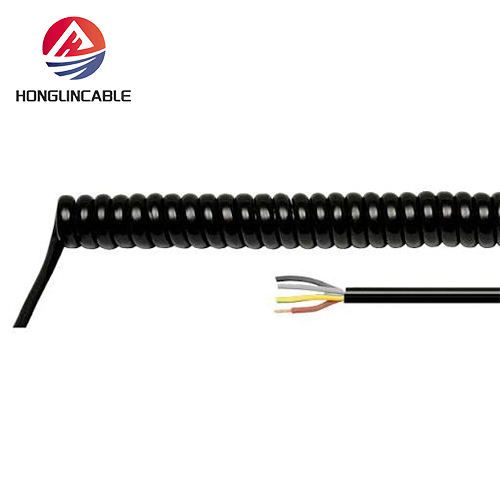
A spring cable manufacturer produces or arranges the production of electrical cables formed into a spiral coil. Also known as coiled cables or spiral cables, these products can extend when pulled and retract toward their original shape when released.
Unlike conventional straight cables, spring cables are designed for applications where the distance between connection points changes during operation. Their compact structure helps manage cable length while maintaining an electrical connection.
A qualified spring cable manufacturing partner should be able to evaluate important design factors, including:
Conductor material, cross-sectional area, and core count
Insulation and outer jacket materials
Coil diameter, pitch, and relaxed length
Required extension length and recovery characteristics
Voltage, current, and signal transmission requirements
Shielding, connectors, and environmental protection
Intended movement frequency and service conditions
These factors determine whether a proposed cable construction is suitable for the customer's equipment.
Spring cables are used in a wide range of electrical and electronic systems. The appropriate construction depends on the application's mechanical movement, electrical load, and working environment.
Industrial machinery may require flexible connections between control panels, sensors, operating devices, and moving components. A suitably designed coiled cable helps manage excess cable length as equipment changes position.
For these applications, buyers should consider abrasion resistance, cable routing, movement frequency, and the forces applied to connectors.
Electronic equipment may use spring cables to connect components that move relative to one another. Depending on the signal or power requirements, the design may require specific conductor arrangements, insulation properties, or electromagnetic shielding.
Handheld controllers, portable devices, and adjustable operating units may benefit from compact cable assemblies that extend during use and retract when the equipment returns to its resting position.
Some projects require more than a coiled cable alone. Depending on manufacturing capabilities, a complete assembly may include connectors, terminals, shielding, protective components, and a specified wiring arrangement.
Customers should confirm these requirements early so that the cable design and connection interfaces can be evaluated together.
The most suitable spring cable is not necessarily the one with the most features. It is the one that meets the application's requirements without unnecessary complexity.
When discussing a custom spring cable project, consider the following parameters.
Specify the conductor material, conductor cross-sectional area, number of cores, and electrical function. Power, signal, and control applications may require different conductor arrangements.
Copper is commonly used in electrical cables because of its conductivity. The appropriate conductor construction should also account for the expected movement and mechanical stress.
PVC, PUR, TPE, and other polymer materials may be considered for different applications. Material selection should account for flexibility, temperature, abrasion, oil exposure, chemical compatibility, and installation conditions.
For example, a project involving frequent movement and mechanical wear may require a different jacket specification from one used in a relatively controlled indoor environment.
The final choice should be based on the actual material grade and technical data, not just the generic material name.
Coil geometry is central to spring cable performance. Buyers should provide the relaxed cable length, required extension length, coil diameter, pitch, and available installation space whenever these values are known.
The cable should be designed for the intended working range. Repeated extension beyond its specified limits can reduce recovery performance and contribute to premature failure.
Shielding may be needed when electromagnetic interference could affect signal transmission. Connector requirements may include the connector model, pin configuration, termination method, mounting dimensions, and environmental sealing.
Providing drawings or samples can help reduce misunderstandings during design review.
A spring cable intended for indoor electronic equipment may have different requirements from one installed on industrial machinery.
Before selecting a construction, identify the operating temperature, humidity, exposure to oil or chemicals, abrasion risk, and movement frequency. Outdoor use or other demanding environments may require additional material and performance verification.
For buyers comparing spring cable manufacturers, quality control should be evaluated through documented procedures and verifiable test results rather than general claims.
The following checkpoints are relevant to a well-managed cable production process. The specific controls used for a Honglin Cable project should be confirmed with the company.
Conductor, insulation, jacket, shielding, and connector materials should be checked against the approved specifications. Material identification and incoming inspection help reduce the risk of using components that do not meet the design requirements.
Important manufacturing parameters should be controlled according to the product design. Depending on the production process, these may include conductor processing, insulation application, cable assembly, coiling dimensions, and connector termination.
For spring cables, coil consistency and the relationship between relaxed length and working extension deserve particular attention.
Electrical checks should match the cable's intended use and applicable requirements. Depending on the design, these may include conductor continuity, conductor resistance, insulation resistance, or dielectric testing.
The required tests, test methods, and acceptance criteria should be agreed upon before production. Not every test applies to every cable design.
Dimensional checks may include overall cable length, coil diameter, pitch, relaxed length, connector dimensions, and other drawing requirements.
These measurements help confirm that the cable can fit the customer's equipment and operate within the intended mechanical range.
For applications involving repeated movement, mechanical evaluation is particularly important. Relevant checks may assess extension and recovery behavior, coil consistency, connector retention, and performance under the specified operating conditions.
Any flex-life or cycle-life claim should be supported by test conditions and product-specific evidence.
Before shipment, the product should be checked against the approved order requirements. Depending on the agreement, documentation may include inspection records, test reports, product labels, packaging details, and traceability information.
Customers with special inspection requirements should communicate them before quotation and order confirmation.
Price is only one part of a sourcing decision. A supplier should also be able to understand the technical requirements, explain product limitations, and provide suitable documentation.
When comparing spring cable suppliers, evaluate these factors:
Technical understanding: Can the supplier review drawings, electrical specifications, and installation requirements?
Product suitability: Can the proposed cable construction meet the required extension range, environmental conditions, and electrical load?
Quality documentation: Are relevant specifications, inspection records, and test reports available?
Customization support: Can the supplier assess requested dimensions, materials, shielding, or connector configurations?
Communication: Are technical questions, quotation assumptions, and delivery requirements clearly addressed?
Commercial reliability: Are lead times, order quantities, packaging, and delivery terms clearly stated?
For OEM buyers and equipment manufacturers, a clear technical review before ordering can reduce sample revisions and production misunderstandings.
A manufacturer and a distributor may serve different sourcing needs.
A manufacturer or manufacturing partner may provide more direct support for product specifications, production feasibility, and design-related discussions, depending on its capabilities. A distributor may offer access to existing products, multiple brands, or smaller quantities.
However, the label alone does not establish quality or technical capability. Buyers should confirm who will manufacture the product, where it will be produced, what customization is available, and which party is responsible for inspection and documentation.
If a project requires a non-standard coil geometry, specific connectors, or application-specific testing, it is especially important to confirm the supplier's actual production and engineering capabilities.
To help evaluate a spring cable requirement, prepare as much of the following information as possible:
Required cable application and equipment description
Conductor material, size, and number of cores
Rated voltage and operating current
Insulation and jacket material preferences
Relaxed length and maximum extension length
Coil diameter, pitch, and dimensional drawing
Shielding requirements, if applicable
Connector model and wiring configuration
Operating temperature and environmental conditions
Estimated order quantity and delivery requirements
Applicable standards, certifications, or inspection requirements
If you do not have a complete specification, provide a sample, drawing, photograph, or description of the equipment. The available information can be reviewed to determine what additional details are needed.
Contact Honglin Cable to discuss your cable sourcing requirements. Share your drawings and technical specifications so that product availability, manufacturing feasibility, customization options, and quotation requirements can be confirmed before proceeding.
Look for a supplier that understands electrical and mechanical requirements, can assess the requested coil dimensions and materials, and can provide appropriate technical documentation. Verify actual manufacturing capabilities and quality controls before placing an order.
Depending on the manufacturer's capabilities, customization may include conductor size, core count, jacket material, coil dimensions, extension length, shielding, and connector configuration. Confirm which options are available for the specific project.
At minimum, provide the intended application, electrical requirements, required extension length, cable dimensions, and order quantity if known. Drawings, samples, connector details, and environmental requirements can improve quotation accuracy.
Relevant tests depend on the cable design. They may include electrical continuity, conductor resistance, insulation-related tests, dimensional inspection, and mechanical performance evaluation. Buyers should request the test records relevant to their product specifications.
PUR may be suitable for applications requiring particular combinations of flexibility and abrasion resistance, while PVC may suit less demanding applications. The choice depends on the material formulation, temperature range, chemical exposure, movement frequency, and other project requirements.
Customers should contact Honglin Cable with their drawings and requirements to confirm current product availability, production capabilities, customization options, and any applicable minimum order quantities.
Choosing a spring cable manufacturer requires a clear understanding of the product's electrical requirements, coil geometry, material selection, and operating conditions. Quality control should be supported by defined inspection criteria, relevant testing, and technical documentation.
For businesses sourcing coiled cables, the best starting point is a detailed specification review. By comparing verified manufacturing capabilities, product suitability, and quality evidence, buyers can make a more informed decision and reduce avoidable sourcing risks.
Honglin Cable welcomes cable-related inquiries. Contact the team with your application details, technical drawings, and quantity requirements to discuss a suitable sourcing solution.