Apr. 15, 2026
In industrial wiring, reliability starts with the cable. A machine may be designed well, a control panel may be organized neatly, and the system may be commissioned carefully, but if the wiring cannot hold up to daily use, the whole project suffers. That is where PVC insulated control cable has built its reputation. It is a practical solution for control systems that need clean installation, dependable signal transfer, and a construction that fits real-world industrial work. Product pages across the market consistently present it as a cable for controlling electrical equipment, instrument meters, monitoring and controlling return circuits, and protecting and measuring in power distribution.
A buyer looking for PVC insulated control cable is usually not searching for theory. They are searching for something that can be installed quickly, routed neatly, and trusted over time. That is why the first-page results focus so heavily on product structure and application. The cable is commonly shown as a copper conductor product with PVC insulation and often PVC sheathing, designed for low-voltage control and signal work. In several listings, the rated voltage is given as 450/750V or similar, which fits the practical needs of control cabinets, equipment panels, and industrial circuits.
One reason PVC insulated control cable remains so widely used is that it offers a useful balance between flexibility and protection. Control wiring often runs through crowded cabinets, tray systems, ducts, and machine frames where a rigid cable can make installation difficult. Search results from recent industrial suppliers describe this cable for signal transmission, monitoring and controlling loops, mechanical engineering, tooling machinery, production lines, and flexible applications where movement is present but tensile load is limited. That combination makes it a practical choice for many indoor and protected industrial environments.
For panel builders, this matters because cable handling affects the whole assembly process. A cable that routes cleanly can make the cabinet easier to build, easier to inspect, and easier to maintain later. A PVC insulated control cable helps support that kind of clean work because it is familiar, workable, and suitable for repeated use in control applications. The market’s homepage results keep pointing to the same use cases for a reason: control equipment, instrument systems, monitoring loops, and industrial machinery all benefit from cable that is easy to manage and dependable in service.
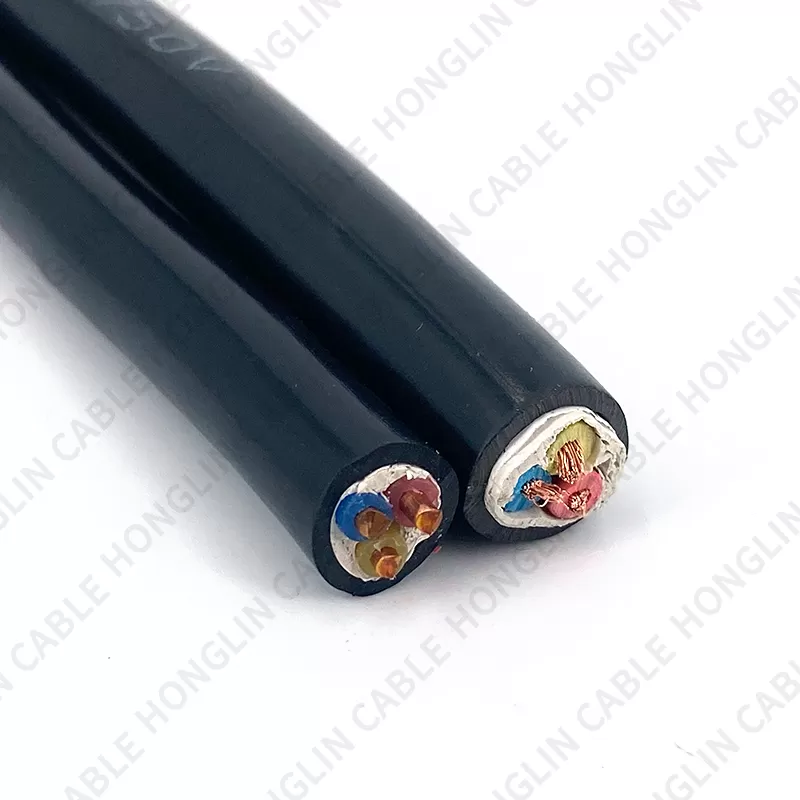
Another strength of PVC insulated control cable is its straightforward construction. Suppliers describe it with stranded copper conductors, PVC insulation, and often a PVC sheath. That is not a flashy structure, but it is a proven one. In industrial buying, simple and proven is often better than complicated and hard to source. The cable is meant to do a specific job well: carry control and signal circuits with stable performance and enough physical durability for daily use. That is exactly why it appears so often in manufacturer pages aimed at control systems and indoor electrical projects.
The commercial value of PVC insulated control cable is also easy to understand. It is a known product with a clear application range, so buyers can match it to a project without unnecessary confusion. Search results show it being positioned for electrical equipment, monitor and control loops, protection circuits, measuring systems, automation lines, and industrial machinery. That breadth gives it strong practical value while still keeping the specification clear. For distributors, OEMs, and panel shops, a cable that is easy to explain and easy to reorder is a real advantage.
A good PVC insulated control cable should also support operational stability. In a control system, the cable is not just a physical link; it is part of the communication path between devices, relays, meters, controllers, and other equipment. If the wiring is poorly chosen, the system can become harder to troubleshoot and more vulnerable to interruptions. The products appearing on the first page are not presented as general-purpose wire. They are presented as industrial control products intended for signal transmission and monitoring, which tells us that buyers value their ability to support stable operation.
Another reason PVC insulated control cable is popular is that it fits the way industrial projects are actually built. Many installations are indoors or in protected locations where the cable needs to perform consistently without requiring exotic materials. Manufacturers emphasize use in plant wiring, industrial machinery, control equipment, and automation systems because these are environments where a practical PVC-based construction makes sense. The cable does not need to solve every problem in the world; it needs to solve the wiring problem in front of the buyer.
For companies that build machinery or control panels repeatedly, the consistency of PVC insulated control cable is especially valuable. Once a cable proves suitable in one project, it can often become part of a standard build. That supports easier procurement, simpler documentation, and more predictable assembly. Several supplier pages present this cable family in a way that suggests repeat supply and standard industrial use, which is exactly what panel shops and equipment manufacturers want from a control cable line.

Maintenance is another point worth considering. A neat cabinet is easier to service, and a serviceable cabinet depends on wiring that is easy to understand. A well-chosen PVC insulated control cable helps create that kind of environment. It can be routed in a way that supports clear labeling, orderly bundling, and straightforward replacement when needed. In busy industrial settings, the ability to diagnose and repair quickly is a major source of value. The market results reinforce this by framing the cable around control, monitoring, and instrumentation rather than only raw power delivery.
Customers also care about suitability. Not every cable should be used outdoors, underground, or in heavy mechanical stress environments. Some of the current product pages explicitly limit flexible PVC control cable use to dry, wet, or indoor settings and to mechanical stress levels that fit the product structure. That is an important buying signal. A reliable PVC insulated control cable should be selected for the right environment, because the best cable is the one that matches the application rather than the one that sounds most impressive.
From a purchasing perspective, that kind of clarity is helpful. Buyers want to know what the product is for, where it should be used, and what kind of performance they can expect. Manufacturer pages that describe PVC insulated control cable as suitable for control equipment, instrument meters, monitoring loops, and low-voltage industrial wiring are doing exactly what buyers need. They are turning a technical product into a practical purchasing decision.
The product also has an important place in modern automation. As factories become more compact and more connected, the quality of internal wiring becomes more visible. A PVC insulated control cable helps support the kind of organized, dependable panel work that automation systems require. When the cable is selected correctly, the installer can move faster, the panel looks cleaner, and the system is easier to trust. That is why this product continues to appear across factory pages, wholesale pages, and industrial product catalogs.
A final advantage is purchasing stability. Industrial buyers often need the same cable again and again across multiple projects. A dependable PVC insulated control cable gives them a familiar specification, a known application, and a repeatable result. That is valuable for long-term supply planning, stock management, and project consistency. The first-page results show a mature product market with many suppliers presenting similar technical positioning, which is often a sign that the category is established and trusted.
For manufacturers, distributors, and end users alike, PVC insulated control cable is a practical industrial product that solves a real problem: how to keep control and signal wiring reliable, orderly, and cost-effective. Its construction is familiar, its applications are clear, and its market position is strong. In the kind of projects where stability matters more than novelty, that is exactly the kind of cable buyers want.