
Mar. 13, 2026
When your machinery runs in oily, muddy, mechanically abusive environments, the cable between the motor and the power source deserves the same attention you give bearings and seals. A thoughtfully specified oil resistant MYP mining cable for machinery prevents downtime, reduces emergency splices and keeps maintenance predictable. This is not marketing — it’s a practical procurement and engineering guide written for plant engineers, maintenance supervisors and procurement teams who need cables that actually last in the field.
Below you’ll find the technical markers to demand, the tests that prove performance, and the installation and lifecycle practices that make an investment in oil resistant MYP mining cable for machinery pay off. I’ve kept the language direct and practical so you can copy acceptance clauses into RFQs and hand the installation checklist to your crews.
Mobile and stationary machinery often encounter oils and fuels — hydraulic oil, engine oil, greases and occasional solvent exposure during cleaning. Standard rubber jackets can swell, soften or crack when repeatedly exposed to these chemicals. An oil resistant MYP mining cable for machinery uses jacket compounds and additives chosen to resist oil swell, retain mechanical toughness and preserve flexibility across the operating temperature range.
Put simply: a cable that resists oil exposure stays mechanically intact longer, avoids conductor exposure, and reduces the number of in-service splices and emergency fouls.
Don’t accept vague labels — insist on numbers and materials:
Jacket compound name and grade. Look for compounds specified as oil-resistant (for example, certain grades of CPE, neoprene with oil resistance formulation, or specially compounded TPU/PUR designed for hydrocarbons). Ask for the exact compound name and MSDS.
Oil-swell test data. The vendor should provide oil swell percentage after standardized exposure (e.g., ASTM D471) in the actual fluids used on site (hydraulic oil grade, diesel, etc.). Lower swell % = better material match.
Taber abrasion or equivalent. Abrasion cycles to a defined endpoint (and the test method) show how the jacket resists mechanical wear from rollers and chutes.
Conductor construction. Fine-stranded copper conductor (class 5 or higher) or tinned conductors for wet, corrosive environments. Strand count matters: more filaments = better flex fatigue life.
Flex/reeling validation. For cables that will be reeled or experience continuous flex, require a flex-cycle test at the actual drum ID you will use. Laboratory drum results at smaller diameters overstate in-service life.
Per-reel traceability. Each reel must be labeled with a lot/serial number and ship with a test pack showing insulation resistance, DC conductor resistance and the oil and abrasion test summaries (or reference to batch reports).
When these data points are present, “oil resistant” is measurable — not just a marketing line.
Paste this block into purchase requests for any oil resistant MYP mining cable for machinery:
Supplier to supply oil resistant MYP mining cable for machinery — [U₀/U rating], [cores × mm²], conductor strand count [n]. Jacket compound: name and grade required; attach MSDS. Provide oil-swell test report (method e.g., ASTM D471) for hydraulic oil [grade] and diesel — report must show % swell after X hours at Y °C. Provide Taber abrasion cycles to endpoint (method & endpoint definition). Provide per-reel certificates: insulation resistance (MΩ), conductor DC resistance (Ω/km), dielectric (kV) and flex/reeling test report at drum ID = [mm]. Each reel’s certificate must reference the printed reel lot number. Include packaging photos and lead time.
This language forces the supplier to either provide hard evidence or be silent — and that’s exactly what you need.
For machinery use look for these building blocks in the datasheet:
Conductor: annealed flexible copper, fine stranding. For wet or corrosive environments prefer tinned copper. State mm² and exact strand count.
Insulation: elastomeric insulation (EPR or equivalent) sized to the rated voltage; insulation thickness must be listed in mm.
Inner/bedding layers: fillers and bedding protect conductors from deformation and help maintain roundness under load.
Screening/armor: for demanding runs, a metallic screen or armor increases mechanical protection — but it raises bend radius. Specify if armor is required.
Outer jacket: oil-resistant compound name + minimum thickness (mm); Taber abrasion and oil-swell data must be supplied.
Water blocking (if needed): gel fills or swellable tapes for pump or wet-face leads.
Choose tinned conductors and an oil-rated jacket for machinery that is likely to see oil on a regular basis.
Objective tests separate robust suppliers from paper-promoters:
Oil swell (ASTM D471 or equivalent): vendor should report % volume or weight change after immersion in the exact fluids you use. Values under 10% in common hydraulic oils are typical of good formulations; ask about the method and test duration.
Abrasion (Taber): cycles to defined end-point or mass loss — the method and endpoint definition must be stated. Higher cycle counts = better abrasion resistance.
Flex/reeling cycles at application drum ID: ask for cycles-to-failure or pass-at-N cycles tested at your drum diameter. If you can, witness a sample test or request raw test logs.
Insulation resistance and dielectric (per-reel): these electrical checks confirm manufacturing quality and that no damage occurred during cutting or packing.
Oil/chemical compatibility sheet: a table showing oil swell in each fluid you use is ideal.
If a vendor refuses to provide the oil-swell method or test values, treat their claim with caution.
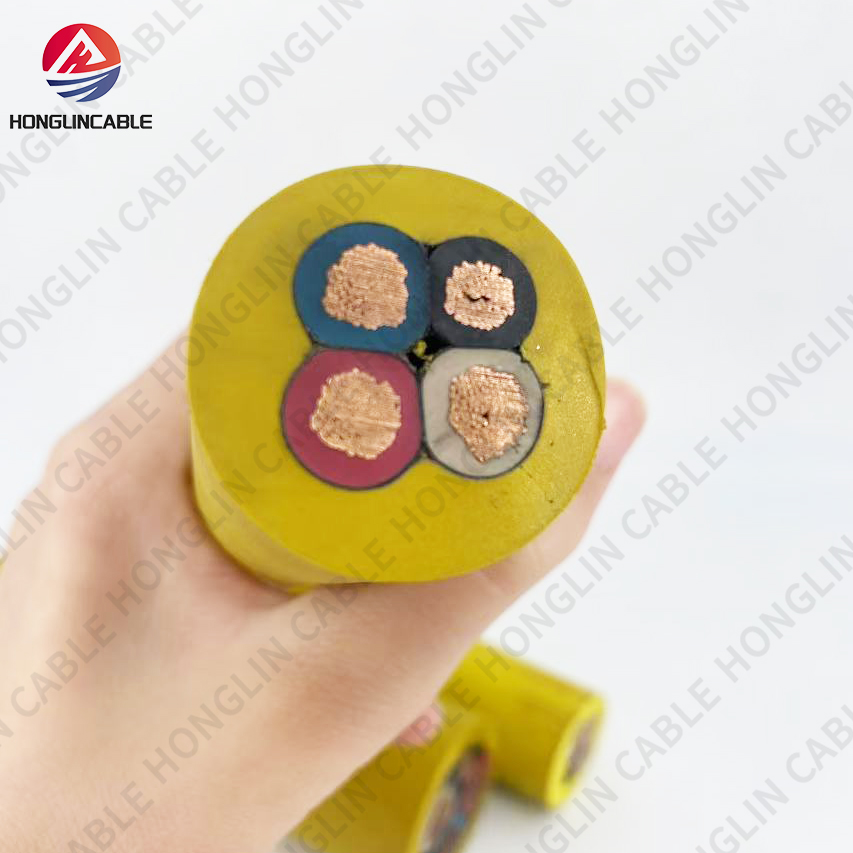
Even an excellent oil resistant MYP mining cable for machinery will fail early if handled poorly. Follow these rules:
Match bend radius and drum ID to supplier guidance. Tight bends concentrate stress and accelerate conductor fatigue.
Keep the cable free from sharp edges and abrasive chafe. Use rollers, protectors and spiral wrap on contact zones.
Control pulling tension and use soft grips. Avoid tight snatch pulls that embed conductors into the insulation.
Avoid mixing lubrication and solvents that the jacket hasn’t been tested against. If cleaning with solvents, confirm compatibility first — some solvents attack elastomers even if oil resistance to hydraulic fluids is good.
Label and log reel lot numbers at installation. Traceability makes any warranty or failure analysis straightforward.
Train installers on these simple points; they usually cut field failures by half.
Terminations are the most common field failure point. For machinery leads:
Prefer factory-prepared terminations for critical equipment. Factory terminations are controlled and routinely tested.
If field termination is required, use the manufacturer’s recommended glands and boots that are chemically compatible with the jacket compound. Improper glands can cause jacket breakdown and water ingress.
For oil-drenched environments, use boots and gland seals rated for hydrocarbon exposure. Ask the supplier for an approved accessory list.
Document each termination with a photo and add termination details to the reel’s test pack.
Treat these cables as assets:
Record reel lot and install location in your CMMS. Link the reel test pack PDF to the asset record.
Inspect visual condition weekly in high-exposure zones and monthly elsewhere. Look for softening, cracking or swelling.
Trend insulation resistance for critical feeders; a downward trend often predicts water ingress or jacket degradation.
Retire by measured wear (abrasion depth or diminishing insulation resistance) rather than by a calendar date.
Proactive replacement based on measured wear is cheaper than emergency splices and unplanned downtime.
Start with a small PPA (pre-production approval) batch to validate the supplier’s oil-swell and abrasion numbers on actual parts.
Require per-reel test packs and make final payment conditional on acceptance checks.
Negotiate spare-reel policy for critical machinery so you can swap quickly if a reel shows early wear.
Ask for factory photos of packing on high-value shipments — it reduces arrival surprises.
These steps turn a supplier claim into verified in-service reliability.
Match reel lot number to the supplied test pack.
Verify insulation resistance on a sample length.
Confirm conductor DC resistance within the supplier’s tolerance.
Inspect jacket surface for swelling, soft spots or extrusion defects.
If oil exposure is frequent, run a small solvent/wipe compatibility check before installation.
File the test pack and record reel lot and install location in the maintenance system.
If any item fails, quarantine the reel and request immediate remediation from the supplier.
An oil resistant MYP mining cable for machinery is a specific engineering choice: the right jacket chemistry, correct conductor construction and verified tests are the difference between a predictable maintenance schedule and endless emergency fixes. Specify compound names and oil-swell numbers, demand per-reel certificates, enforce simple handling and termination rules, and keep lot-matched spares for critical assets. Do these things and your cable purchases will stop being a recurring problem and start being a reliable part of your machine fleet.


