
Jul. 10, 2026
A strong OEM building wire manufacturer is not chosen because the quotation looks attractive on the first line. It is chosen because the buyer can trust the conductor, the insulation, the voltage rating, the size range, and the supplier’s ability to repeat the same specification on the next order. The first-page results make that obvious. They are dominated by manufacturer and supplier pages that talk directly about copper-core building wire, PVC insulation, fixed-wiring use, and practical project supply. That is exactly the information serious buyers want before they send an inquiry.
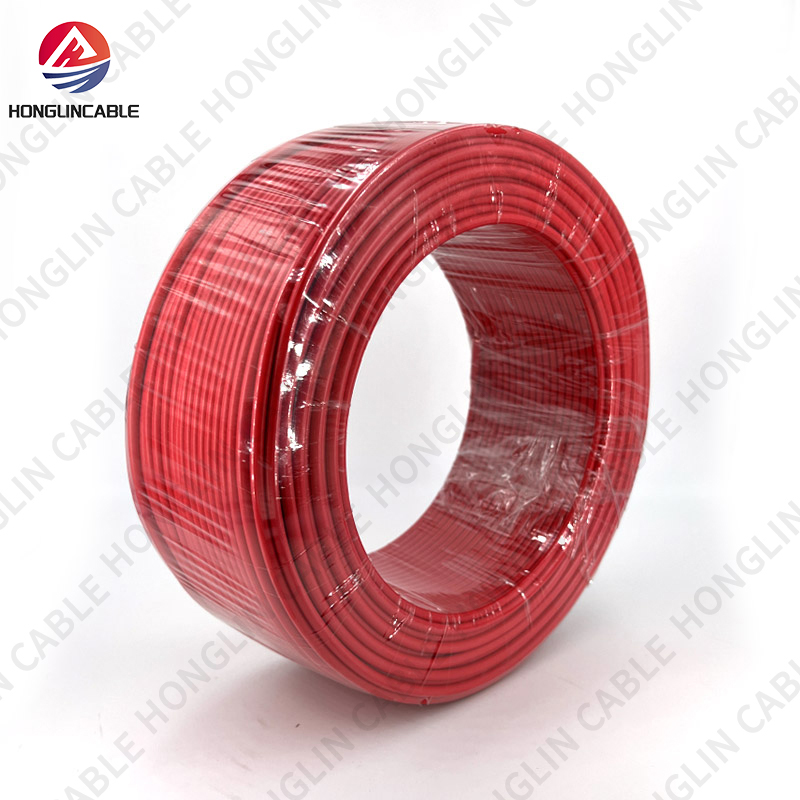
An OEM building wire manufacturer matters because building wire is usually a fixed-installation product that will stay hidden behind walls, inside conduit, or in protected routes for many years. Southwire describes OEM supply across wire, cable, copper rod, aluminum rod, and supply chain solutions for industries such as lighting, power distribution, control, HVAC, and home appliances. Alan Wire likewise presents itself as a long-standing manufacturer of 600-volt wire and cable for commercial, industrial, and utility markets. That kind of product has to be dependable, because once it is installed, replacing it is expensive and disruptive. Buyers know this, which is why the market rewards manufacturers that show clear product structure and stable quality rather than vague marketing language.
The current ranking pages are telling buyers to look for an OEM building wire manufacturer that can prove three things quickly: material quality, production consistency, and supply continuity. SSG’s BV cable page and Ruitian’s building-wire pages show how manufacturers position building wire as a copper-conductor, PVC-insulated fixed-wiring product for power and lighting circuits, conduits, and internal wiring. JENUIN also states that it supplies building wire and electric wire, with standards support for BS, AS/NZS, and IEC and approvals such as BASEC, TUV, SAA, and CE. That is the exact kind of commercial and technical language buyers look for when comparing suppliers.
A serious OEM building wire manufacturer should be very clear about conductor and insulation. The best-ranking pages consistently describe building wire as copper conductor with PVC insulation, often with a 450/750V rating and fixed-wiring use. Ruitian explains that solid electric wire is suitable for power and lighting circuits and building wiring, and that H05V-U / H07V-U is ideal for embedded conduits, closed installation ducts, and internal wiring of appliances. JENUIN similarly lists building wire alongside control cable, flexible cable, screened cable, armoured cable, and LSZH cable in a broad electrical portfolio. That technical language matters because buyers want a supplier that can match a project specification, not just quote a price.
An OEM building wire manufacturer proves consistency by showing more than one cable family, clear product ranges, and visible capacity. Conwire presents OEM cable manufacturing as a one-stop service covering bulk wire and cable, molded assemblies, wire harnesses, and box builds. Made-in-China’s OEM/ODM pages show that many Chinese exporters explicitly support custom orders and are geared toward online sourcing. MWS Wire and Marsh Electronics also show that custom wire suppliers often differentiate themselves through engineering support, ISO-certified facilities, and UL/CSA-compliant assemblies. For buyers, these are strong signals that the factory can handle both volume and repeatability.
A good OEM building wire manufacturer also needs to cover the sizes that buyers actually order. The search results show demand across common building-wire sizes and related low-voltage product families. Ruitian lists 1.5 mm², 2.5 mm², 4 mm², and 6 mm² classes for single-core building wire, while Made-in-China and other manufacturer pages show broader size coverage and MOQ-based quotation structures. That matters because buyers rarely need only one size. A supplier who can support a full building-wire family makes sourcing much easier, reduces mismatch risk, and helps wholesalers standardize their stock. The best suppliers also make the order structure transparent, showing MOQ, delivery, and quotation details in a way that procurement teams can use immediately.
A OEM building wire manufacturer should welcome verification. The search results show that manufacturers and suppliers increasingly present compliance and engineering support as part of the offer. JENUIN highlights approvals from BASEC, TUV, SAA, and CE, while Marsh Electronics emphasizes an ISO 9001:2015 certified facility and UL/CSA-compliant assemblies. In other words, the market is rewarding suppliers that can prove the cable is not just available, but validated. Buyers want confidence that the wire they receive is the wire they ordered, and that the quality will be consistent from batch to batch. When a manufacturer is serious, it treats inspection and certification as part of the sale, not as an afterthought.
An OEM building wire manufacturer in China is often attractive because Chinese factories and B2B platforms are already built around scale, standardization, and export-ready quotation systems. Made-in-China explicitly promotes OEM/ODM manufacturers for wire products, and JENUIN presents itself as a long-established Chinese cable manufacturer with building-wire capability and standards support. At the same time, Southwire, Prysmian, Alan Wire, and Century Wire & Cable show how major global brands position building wire and OEM supply through manufacturing depth, domestic production, and broad application coverage. Together, these results suggest that the strongest suppliers are the ones that combine manufacturing scale with repeatable technical specification.
A buyer evaluating an OEM building wire manufacturer should compare the whole package, not only the lowest number. The right quotation should show copper conductor, PVC insulation, rated voltage, cable size, order quantity, delivery support, and the supplier’s ability to repeat the same build on the next order. If one quote is lower but the conductor is unclear, the insulation is thin, or the supplier cannot prove capacity, that lower number may cost more later. The pages that rank well are successful because they make the comparison easy: they tell the buyer what the cable is, where it is used, and how the supplier supports bulk orders. That is the real value a serious procurement team wants.
In the current search landscape, an OEM building wire manufacturer is defined by clarity, consistency, and supply strength. The best pages do not hide behind generic promises. They show copper conductor, PVC insulation, fixed-wiring use, recognized standards, practical sizes, and real manufacturing capability. They also make it easy to distinguish building wire from other wire families, which helps buyers choose the right cable for the job. When a supplier can prove those points clearly, it becomes more than a wire seller. It becomes a long-term partner for construction, residential, and commercial electrical projects. That is why buyers searching this term are really looking for confidence, not just cable.


