
Nov. 16, 2026
When a purchase specification explicitly requires a chloroprene-based outer sheath, the supplier’s response should identify the actual base polymer. A general description such as rubber jacket leaves a material decision unresolved. Keep the requested compound designation, polymer identity and performance evidence together in the technical submission.
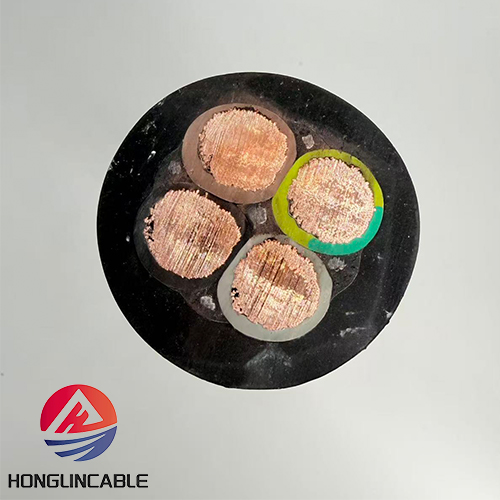
The Kabeltec reference describes its listed outer sheath as polychloroprene 5GM5. That is useful evidence about that supplier’s product; it is not proof that every other manufacturer uses the same formulation. This procurement review separates the buyer’s material requirement from the offered construction and the evidence supporting its intended service.
The NSSHOEU 5GM5 outer sheath designation should lead to a material specification and evidence, not an assumption about every ingredient. Ask separately which base polymer is proposed.
An NSSHOEU CR sheath cable enquiry should state that CR is a required material choice if substitution is unacceptable. The requirement belongs in the technical schedule and quotation response.
When specifying NSSHOEU neoprene sheath cable, clarify the required chloroprene-based material in writing. A familiar commercial description should not replace a controlled compound specification.
The CR vs CPE cable sheath decision begins with the contract: CR identifies a chloroprene-rubber system, while CPE identifies chlorinated polyethylene. A substitution requires technical review.
For NSSHOEU 5GM5 outer sheath, specify whether the purchaser requires a CR/PCP-based compound and which performance requirements must be demonstrated. Identify any alternative formulation.
For NSSHOEU CR sheath cable, ask for the proposed compound identity and the tests relevant to your service. Include immersion conditions separately when the cable will operate underwater.
For NSSHOEU neoprene sheath cable, require the supplier to identify the outer compound and its relationship to the purchaser’s CR/PCP requirement. Review any proposed material change.
When evaluating CR vs CPE cable sheath, compare the actual compounds and required tests. Avoid a universal better-or-worse ranking that ignores formulation and operating conditions.
| Requirement | Information to obtain |
|---|---|
| For NSSHOEU 5GM5 outer sheath | compound designation, base-polymer declaration and applicable material-test evidence. |
| For NSSHOEU CR sheath cable | CR material declaration, agreed compound performance and construction-specific service limitations. |
| For NSSHOEU neoprene sheath cable | base-polymer identification, performance requirements and approved drawing revision. |
| For CR vs CPE cable sheath | declared polymer, compound grade, test conditions, acceptance limits and any approved deviation. |
Compare NSSHOEU 5GM5 outer sheath proposals using both the performance schedule and the requested material identity. A compound code alone is not a complete answer to a CR-versus-CPE question.
Compare NSSHOEU CR sheath cable against other offers only after the material basis is clear. A CPE proposal can be reviewed as an alternative but should not be silently accepted as the same construction.
Review NSSHOEU neoprene sheath cable quotations without assuming every rubber jacket is equivalent. Confirm the material and then assess the actual oil, mechanical and immersion requirements.
Use the CR vs CPE cable sheath comparison to expose changes in an offer. Material identity, documented performance, service limitations and buyer approval should all remain visible.
If a buyer specifies CR and a bidder proposes CPE, first ask the bidder to identify the change openly. Next compare the proposed formulation and cable against the required mechanical, environmental and electrical criteria. Review the relevant reports, service conditions and any contractual restrictions on substitutions. The project’s technical authority can then accept the alternative, request additional evidence or retain the original requirement. A general material comparison should never be presented as proof that a particular alternative has passed the required tests.
Request a written declaration for the offered compound, linked to the construction. Include a clear statement of any deviation from the purchaser’s specified base polymer.
No. Material identity and permanent-immersion suitability are separate approval questions. Obtain evidence covering the actual cable and the required water conditions.
Ask for material identity, relevant test documentation and application limits. The description alone does not establish a specific manufacturer’s certification or water-depth rating.
A general comparison is not product approval. Assess the proposed compound and cable against the project requirements, obtain relevant evidence and secure acceptance of any deviation.
Send Honglin your required construction, quantity, continuous lengths, operating conditions and delivery destination. Ask for a written specification response and quotation. Supply capability, test evidence and delivery arrangements must be confirmed for the actual proposed product.
Request a technical review and quotation


