Feb. 24, 2026
When power lines must run close to furnaces, kilns, compressors, large transformers or any high-temperature process, ordinary flexible cable is a liability. Heat accelerates aging in insulation and jackets, reduces flexibility, and shortens service life — all of which translate to maintenance, unplanned downtime, and safety hazards. An MYP heat resistant cable is engineered to survive these conditions: it pairs high-temperature-rated insulation and jackets with flexible conductor constructions and validated test evidence so your teams can route power where it’s needed without constant fear of thermal failure.
This guide gives procurement and engineering teams everything they need to buy, inspect and install heat-resistant MYP cable with confidence: what “heat resistant” truly means for cable in technical terms, how MYP variants are constructed, where they are used, exactly what tests and documentation to require, and pragmatic installation and maintenance practices that protect your investment.
“Heat resistant” is not just a marketing term — for a cable it must be defined by measurable attributes:
Continuous operating temperature rating. The temperature the cable can carry rated current indefinitely without accelerated aging (for example +90 °C, +105 °C, +125 °C for different constructions).
Short-term or emergency temperature tolerance. The maximum temperature the jacket or insulation can withstand for brief events (for example short exposure to +250 °C in a localized hot spot).
Thermal ageing performance. Evidence that the insulation and jacket retain dielectric strength and flexibility after accelerated ageing tests at elevated temperature.
Hot-surface and hot-spot resistance. The ability of the jacket and underlying layers to tolerate localized hot surfaces without softening, melting or releasing damaging substances.
Maintained mechanical properties at temperature. Tears, puncture resistance and flexibility must remain adequate in the rated temperature range.
An MYP heat resistant cable should come with explicit ratings and test reports for these items so buyers know what level of heat exposure the cable truly tolerates.
A cable that survives heat is a product of material selection and layered engineering. Typical elements to specify:
Conductor design. Finely stranded copper conductors (flex class) are the norm for MYP families. For heat resistance, conductor sizing must balance ampacity and thermal limits; sometimes larger conductors improve heat dissipation and reduce operating temperature for a given current.
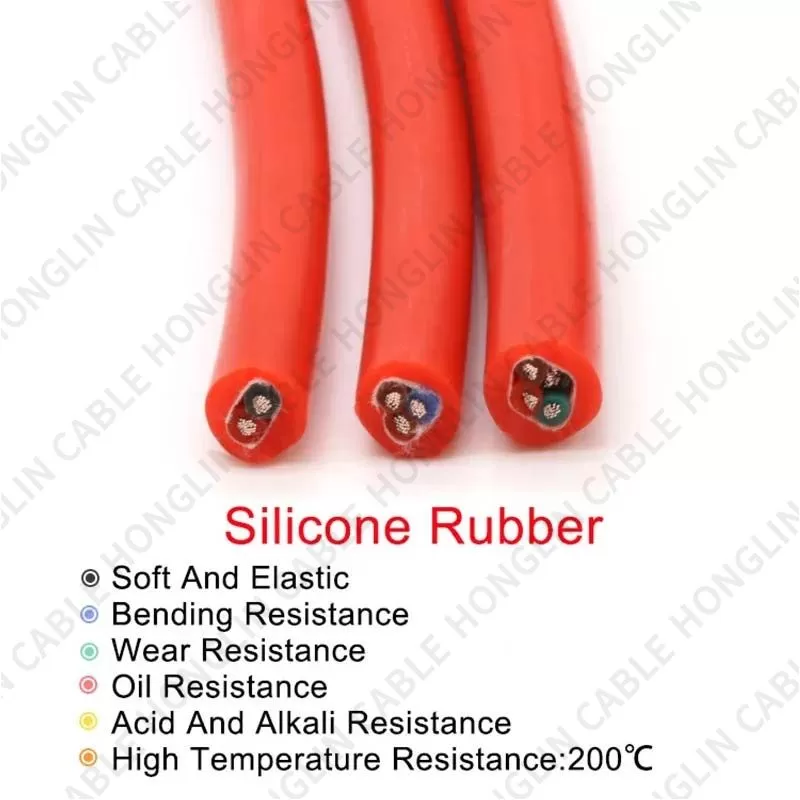
High-temperature insulation. Standard EPR/EPDM rubbers have good thermal behavior, but truly heat-resistant designs use specialized high-temperature elastomers or thermoset insulations (for example silicone-based rubbers, high-performance crosslinked compounds) that sustain dielectric strength at elevated temperatures.
Thermal barrier or bedding. Some designs include inner bedding or semi-conductive layers formulated to resist heat transfer to the core or to isolate hot external contact.
Heat-stable outer sheath. The jacket compound is critical. Heat-resistant jackets are formulated to resist softening and oxidation at higher temperatures; options include high-temperature neoprene variants, silicone-modified elastomers, or specially compounded chlorinated polyethylenes tuned for elevated temperature service.
Optional armor or reinforcement. In high-heat, high-mechanical stress zones, a reinforced construction can protect the jacket from physical damage without compromising thermal resistance.
Each of these layers must be selected to match your site’s temperature profile and mechanical demands.
Choose an MYP heat resistant cable when cable runs are exposed to any of the following:
Near process ovens, kilns or dryers — where ambient or radiant heat is high.
Adjacent to large motors or compressors — where surface temperatures can exceed ambient substantially.
Inside or near transformer enclosures — where localized heating occurs during high load.
Along hot piping or vessel walls in chemical and processing plants.
In foundry or glass plant environments — where spillage of hot material or radiant heat is common.
Portable feeds for high-temperature equipment — where mobility plus heat exposure combine.
In each case, the cable must be rated both for continuous exposure at the expected temperature and for occasional excursions or local hot spots.
To buy the right MYP heat resistant cable, make your RFQ measurable and unambiguous. Include these mandatory fields:
Continuous temperature rating (e.g., +90 °C, +105 °C, +125 °C).
Short-term temperature tolerance and duration (e.g., +250 °C for 15 minutes).
Insulation and jacket compound names and full material datasheets with thermal properties (glass transition, thermal decomposition onset, oxidation stability).
Thermal ageing test protocol and results (e.g., IEC/EN accelerated ageing showing dielectric retention after X hours at Y °C).
Hot surface contact test results or manufacturer data for localized temperature exposure.
Conductor temperature rise at rated current and confirm ampacity tables for the specified temperatures.
Mechanical property retention at elevated temperature (tensile, elongation, tear).
Minimum bend radius when hot (some compounds stiffen at temperature).
Per-reel batch certificates — electrical and thermal test evidence linked to lot numbers.
Recommended termination and gland materials compatible with the jacket’s temperature rating.
When suppliers respond with numeric test data and real certificates, you can accept with confidence.

Demand these documents with every delivery:
Thermal ageing certificates showing insulation and jacket retain a defined percentage of dielectric strength and elongation after accelerated exposure.
Dielectric and insulation resistance tests performed at standard temperature and, if possible, at elevated test temperatures.
Hot-surface exposure test reports or similar vendor test evidence for localized heating conditions.
Ampacity charts adjusted for the continuous temperature rating you specified.
Mechanical tests at temperature (tear, abrasion, puncture) where heat and mechanical wear coexist.
Lot-linked per-reel certificates so the installed reel corresponds exactly to the tested batch.
Traceable documentation is not optional — without it you can’t prove the cable will behave in service.
Even the right material can fail if installed poorly. Follow these rules:
Route to minimize direct contact with hottest surfaces; use standoffs or insulated saddles when possible.
Respect minimum bend radius when hot; heating may temporarily reduce flexibility — plan routing accordingly.
Ensure terminations use glands rated for the same continuous temperature; incorrect glands become the weak point.
Provide thermal shields or wraps where occasional spatter or radiant exposure could exceed the cable’s short-term tolerance.
Avoid bundling heat-resistant cables with large bundles of heat-generating equipment unless derating is applied; heat accumulates in tight bundles.
These practical steps preserve the cable’s rated performance and extend life.
Heat accelerates ageing, so adopt a maintenance plan:
Visual inspections for jacket discoloration, hardening, cracking or surface glazing.
Periodic insulation resistance and dielectric checks, particularly after a known over-temperature event.
Thermographic surveys at terminations and along runs during operation to detect hot spots.
Planned replacement intervals based on measured degradation rates from thermal ageing data and field history, rather than waiting for failures.
Collect data per reel lot to refine replacement schedules and supplier selection.
Heat-exposed cables can be a fire risk if insulation degrades. In environments where fire or smoke hazards are critical, consider heat-resistant and flame-retardant or low-smoke jacket formulations. Confirm that the cable’s high-temperature performance does not conflict with fire safety requirements; sometimes specially compounded halogen-free elastomers are needed to meet both objectives.
Also ensure protective earthing, bonding and short-circuit protection are coordinated because higher operating temperatures may influence fault currents and protective device behavior.
A cable with the correct heat rating may cost more per meter, but the alternative is frequent replacements, emergency splices, downtime and potential fire or equipment damage. Factor in the cost of lost production and safety risk reduction: in many installations, the premium for an MYP heat resistant cable is recovered quickly through fewer outages and extended service life.
Routing power through hot zones does not have to be a recurring maintenance problem. An MYP heat resistant cable selected to the site’s real temperature profile, purchased with traceable thermal test evidence, and installed with heat-aware practices will keep machines running and crews safe. If you want, I can convert the procurement checklist above into a one-page RFQ template you can send to suppliers — ready to copy and paste into your tender documents.