
Apr. 22, 2026
In the rapidly evolving industrial landscape of 2026, low voltage (LV) cables have transitioned from being simple commodities to becoming the critical nervous system of global electrification. With the global wires and cables market valued at over $312 billion, LV cables—defined as those operating at voltages up to 1,000V (1kV)—now command the largest market share due to their indispensable role in smart grids, AI-driven data centers, and renewable energy integration.
For procurement officers, project engineers, and infrastructure developers, selecting the right LV cables is no longer just a matter of conductivity. It is a strategic decision involving life-cycle costs, safety compliance (such as LSZH mandates), and the ability to withstand the increased thermal stresses of modern high-density power environments.
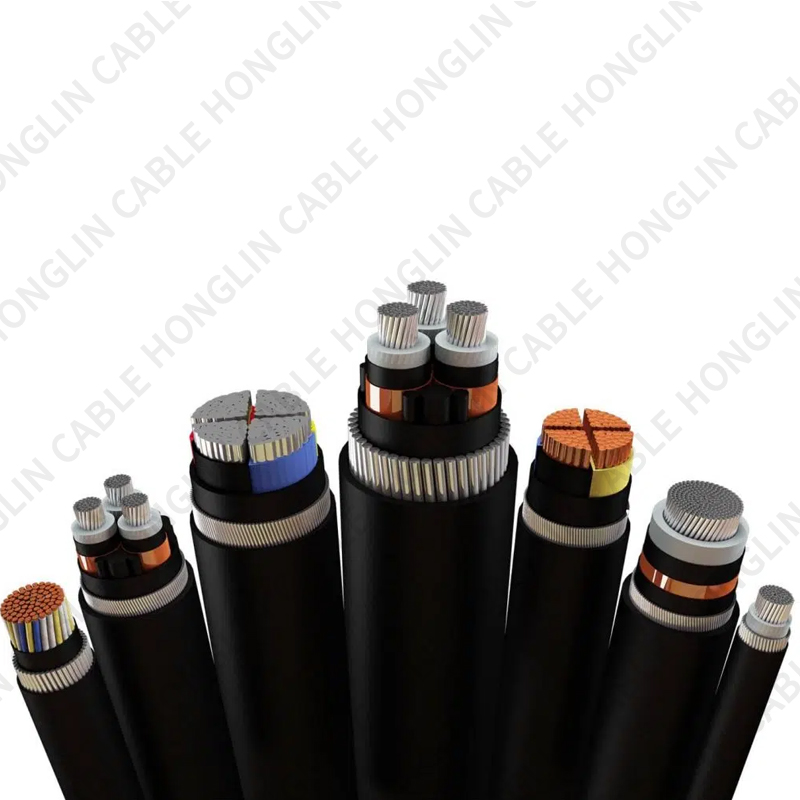
By international standards (IEC 60502-1), a low voltage cable is engineered to transmit power in systems where the rated voltage does not exceed $0.6/1kV$. However, in 2026, the definition has expanded to include "Smart Connectivity."
A high-performance LV cable today is a marvel of material science:
Conductors: Typically high-purity electrolytic copper or AA-8000 series aluminum alloy. Copper remains the gold standard for high-density urban and industrial applications due to its superior ampacity-to-size ratio.
Insulation: Moving beyond standard PVC, modern cables utilize XLPE (Cross-linked Polyethylene). This allows for higher continuous operating temperatures (up to $90^{\circ}C$) and better resistance to moisture and chemicals.
Armoring: For harsh environments, Steel Wire Armor (SWA) or Aluminum Wire Armor (AWA) provides mechanical protection against crushing and rodent damage.
The search intent for "LV cables" in 2026 is driven by four irreversible mega-trends:
Modern AI clusters require unprecedented volumes of power. Low voltage cables in these facilities must handle constant, high-heat loads. We are seeing a surge in demand for flexible busbar equivalents and high-strand count LV power cables that offer easier installation in cramped server environments.
Each Electric Vehicle (EV) charging station requires significantly more copper and LV cabling than traditional building infrastructure. As cities mandate "EV-Ready" construction, the volume of low voltage power cables used in residential and commercial parking structures has increased by over 400% compared to 2020 levels.
Traditional grids are being replaced by "Smart Grids" that require LV control cables to carry both power and sensor data. This has led to the rise of hybrid LV cables that incorporate fiber-optic cores for real-time monitoring.
To help you choose between various LV cable types, we have summarized the primary standards used in 2026:
| Cable Type | Standard | Common Application | Insulation Material |
| NYY / VLV | IEC 60502-1 | Indoor/Outdoor fixed power | PVC / PVC |
| YJV / N2XY | IEC 60502-1 | Industrial power distribution | XLPE / PVC |
| H07RN-F | EN 50525-2-21 | Mobile equipment, heavy duty | Rubber / Neoprene |
| LSZH Power | BS 8573 / IEC 61034 | Public buildings, data centers | XLPE / Halogen-free |
In any low voltage cable installation, the voltage drop ($V_d$) must be minimized to ensure equipment efficiency. For a three-phase system, the calculation is:

Where:
I: Load current (Amperes)
R & X: Resistance and Reactance of the cable ($\Omega/km$)
L: Length of the run (km)
In 2026, Low Smoke Zero Halogen (LSZH) is no longer an "optional upgrade"—it is a regulatory requirement in most jurisdictions.
Traditional PVC: In a fire, PVC releases toxic chlorine gas and thick black smoke, which is lethal to humans and corrosive to expensive electronics.
LSZH Advantage: These LV cables release minimal, translucent smoke and no acidic gases. This protects human life in evacuation zones and prevents the "chemical etching" of servers in data centers, potentially saving millions in equipment recovery costs after a minor fire event.
[Image comparing smoke density of PVC cable vs LSZH cable during a fire test]
A recurring debate for 2026 procurement is the choice of conductor material.
Space Efficiency: Copper has a higher conductivity, meaning the LV cable is thinner for the same power rating.
Reliability: Copper is less prone to oxidation at termination points, reducing the maintenance burden in high-vibration industrial settings.
Cost Savings: Aluminum is significantly cheaper and more stable in price.
Weight: Being 70% lighter, aluminum LV cables are the preferred choice for long-span overhead distributions and large-scale solar farms where transport costs are a major factor.
Buying low voltage cables wholesale in a supply-constrained 2026 market requires a shift in strategy.
Verify Certified Capacity: With copper supply tightening, ensure your supplier has "Certified Capacity." Look for manufacturers with integrated smelting or long-term hedging contracts.
Sustainability Tracking: Many Tier-1 contractors now require "Green Cable" certifications, documenting the percentage of recycled copper and the carbon footprint of the manufacturing process.
Third-Party Testing: Demand BASEC, KEMA, or UL certification marks on the cable jacket. In 2026, counterfeit cables with "reduced copper diameter" are a significant risk to project safety.
The longevity of an LV cable system depends heavily on the initial installation quality.
Bending Radius: Never exceed the minimum bending radius (typically $12 \times \text{OD}$ for armored cables). Over-bending causes microscopic cracks in the XLPE insulation.
Pulling Tension: Use calculated pulling lubricants to prevent jacket abrasion during long conduit runs.
Periodic Thermal Imaging: In 2026, high-performing facilities use AI-driven thermal cameras to spot "hot spots" in LV cable terminations, allowing for predictive maintenance before a failure occurs.
Q: Can I use 600V rated cables in a 1000V system?
A: No. You must always use a cable rated for the system's peak voltage ($U_m$). For $1kV$ systems, always specify $0.6/1kV$ rated LV cables.
Q: What is the lifespan of an XLPE insulated LV cable?
A: When installed correctly and operated within its thermal limits ($90^{\circ}C$), a high-quality XLPE low voltage cable has a design life exceeding 30 to 40 years.
Q: Are aluminum LV cables safe for residential use?
A: Yes, provided that AA-8000 series aluminum is used and terminations are made with dual-rated (AL/CU) connectors and antioxidant grease.
The low voltage cable is the foundation upon which the 2026 digital and green economy is built. As infrastructure projects become more complex and the demand for energy-efficient distribution grows, the value of a high-quality, certified LV cable system cannot be overstated.
Are you ready to secure your 2026 power infrastructure? Our technical team specializes in custom low voltage cable solutions—from LSZH data center feeders to heavy-duty armored industrial cables. Contact us today for a technical consultation and a competitive wholesale quote tailored to your project’s unique demands.
[Request a Wholesale Quote] | [Download the 2026 LV Cable Selection Guide] | [Consult with a Power Engineer]
Previous post:
None


