Apr. 01, 2026
When buyers search for KVVR cable price, they are usually not looking for a theory lesson. They want a practical answer: how much the cable costs, what drives the price up or down, and whether the product is worth the money in a real project. That is why the first-page results are dominated by supplier pages and marketplace listings rather than educational articles. The market treats this as a buying-intent keyword, and the most successful pages are the ones that combine clear specifications with a believable commercial offer. Current supplier and marketplace results consistently show KVVR as a copper conductor, PVC insulated, PVC sheathed flexible control cable, usually in the 450/750V class and used for indoor control and flexible laying.
A serious conversation about KVVR cable price has to start with one simple truth: there is no single fixed price. The value depends on conductor size, number of cores, shielding or non-shielding structure, sheath material, MOQ, and the supplier’s trade model. The search results make that obvious. One listing shows a very low per-meter factory price at a large minimum order, while another shows a higher range on a marketplace page with a smaller order profile. That spread is normal in industrial cable buying. It means the real question is not only “What is the price?” but “What specification is being priced?”
For buyers, that is actually good news. It means KVVR cable price can be optimized if the project requirements are clear. A simple indoor control cable with standard copper and PVC construction will generally sit in a more accessible range than a heavily customized version with special screening, unusual core count, or stricter order terms. The market pages show this clearly by listing many related KVVR, KVV, and KVVP variants side by side, each with different structures and pricing patterns. In other words, the cable is not priced as a single product family in the abstract; it is priced as a set of practical solutions for different industrial needs.
One reason KVVR cable price remains competitive is that the product is widely standardized. Search results repeatedly present KVVR as a copper conductor cable with PVC insulation and PVC sheath, commonly rated at 450/750V. That specification is familiar to buyers, easy to quote, and easy to compare across suppliers. When a cable is built from well-understood materials and uses a common industrial rating, price comparison becomes simpler and the buying process moves faster. That is one reason why this category performs strongly on supplier pages.
The flexible structure also matters to the final KVVR cable price. A cable that is designed for bending, routing, and indoor moving applications often uses stranded copper and a construction meant to handle installation stress more comfortably than a rigid cable. Supplier pages repeatedly emphasize flexibility and indoor use, which tells buyers exactly what they are paying for: convenience during installation, better routing in panels and equipment spaces, and a more practical control solution for real project work. That practical advantage is part of the value proposition, not just a technical detail.
In many purchasing decisions, the best way to evaluate KVVR cable price is to compare it with the installation cost it can reduce. A cable that bends well can save labor time in control cabinets, machinery enclosures, and narrow tray routes. A cable that matches the project specification can also reduce rework, which is often far more expensive than the cable itself. That is why buyers do not simply look for the lowest number. They look for a balanced price that still reflects reliable construction and easy installation. The current listings show the market offering many such balanced options, from factory-direct pages to large marketplace catalogs.
Another factor shaping KVVR cable price is order size. The search results show wide MOQ differences, from very small order quantities on some marketplace listings to large minimums on direct factory pages. That alone can change the apparent unit price significantly. A buyer ordering a full project volume can often get a much better rate than a customer buying a small sample quantity or a partial replacement order. This is why serious sourcing teams ask for both a sample quotation and a project quotation; they know those two numbers may be very different even for the same cable family.
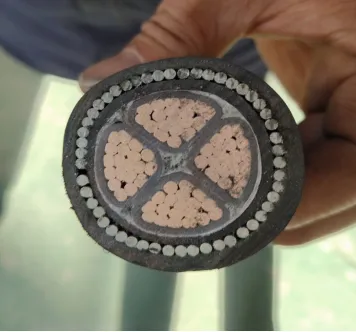
The number of cores also has a direct effect on KVVR cable price. Search results show related products in multicore layouts, and the same control-cable family appears in 2-core, 4-core, and 6-core forms, with the broader market using different core counts depending on the wiring need. A higher core count generally means more conductor material and more manufacturing complexity, which naturally changes the quotation. For buyers, that means the best pricing strategy is to identify the exact circuit requirement before asking for a quote. When the core count is clear, the supplier can price the cable more accurately and the comparison becomes more useful.
There is also a quality dimension behind KVVR cable price. Some of the higher-ranking pages do not simply list a number; they pair the number with the cable’s construction story. Copper conductor quality, PVC insulation consistency, and the cable’s suitability for indoor control use all help justify the pricing. That matters because the cheapest option is not always the best value if it creates installation issues or fails to match the intended application. Industrial buyers often accept a fair price when they can see the cable is built for the right use case and backed by a clear technical description.
For distributors and project suppliers, KVVR cable price is easier to sell when it is presented as part of a solution instead of just a commodity number. The strongest pages in the current search results do exactly that: they show the cable family, the voltage class, the conductor and sheath materials, and the intended indoor control environment. That gives the buyer confidence that they are not comparing random product names. They are comparing real supply options for a known industrial cable type. In a market like that, pricing must be clear, but it also has to be credible.

The current market also suggests that buyers respond to flexibility in commercial terms as well as product terms. Some suppliers offer direct pricing with large MOQ, while others show more accessible marketplace entries. That range is useful because different buyers have different priorities. A contractor may need a quick replenishment. A wholesaler may need a larger factory price. An exporter may need a stable quotation tied to volume and delivery terms. In each case, KVVR cable price only becomes meaningful when it is matched with the right purchasing context.
A good sales page for this product should therefore focus on practical value. The cable should be presented as a flexible control solution with copper conductors, PVC insulation, PVC sheath, and a familiar 450/750V rating. The buyer should understand immediately that the product is designed for indoor control, monitoring, and related electrical work where organized wiring and flexible installation matter. That is the language that appears again and again in the first-page results, and it is the language that converts.
When used correctly, KVVR cable price becomes more than a number. It becomes a signal of fit. A buyer who sees a fair quotation for the right size, right core count, and right construction can move faster with confidence. A supplier who understands the application can quote more accurately and build trust more quickly. That is why this keyword performs well in industrial search: it sits exactly at the point where technical specification meets commercial decision.
The strongest buying messages in this category are also the simplest. The cable is flexible. The conductor is copper. The insulation and sheath are PVC. The rating is familiar. The use case is indoor control and flexible laying. Those are the facts that matter, and those are the facts that help explain KVVR cable price in a way that feels honest and useful rather than promotional for its own sake. A buyer can understand the product quickly, compare it against alternatives, and decide whether it fits the project budget.
For industrial purchasers, repeat orders are often the real goal. If the cable performs well once, the buyer wants the same experience next time. That is why stable construction and consistent pricing matter so much. A supplier who can maintain dependable KVVR cable price across similar specifications, while still providing clear technical guidance, is usually in a stronger position than one who only competes on a headline number. In cable purchasing, reliability is part of the price.
In the end, KVVR cable price is best understood as a combination of specification, order size, and application fit. The search results show a market that is active, competitive, and highly commercial, with factory pages and marketplace listings offering many variations of the same core product. That means buyers have room to compare, but it also means sellers have to communicate clearly. A cable that is easy to understand, easy to install, and fairly priced for its use case will usually win more attention than a cheaper cable that creates doubt.If your project needs a dependable flexible control cable, the best approach is not to chase the lowest figure in isolation. It is to choose the right specification, confirm the MOQ, and match the quotation to the actual wiring job. That is the real logic behind KVVR cable price in today’s market. It is not just about cost. It is about value, suitability, and long-term confidence.