Apr. 03, 2026
When buyers search for industrial control cable, they are usually not trying to learn cable theory. They are trying to solve a real wiring problem in a factory, cabinet, machine, or control system. They want a cable that can be installed cleanly, routed without unnecessary difficulty, and trusted to perform once the system is running. That is why the best first-page results are supplier and manufacturer pages, not long educational articles. The market is clearly commercial, and the product pages that perform well are the ones that present the cable in a direct, practical way.
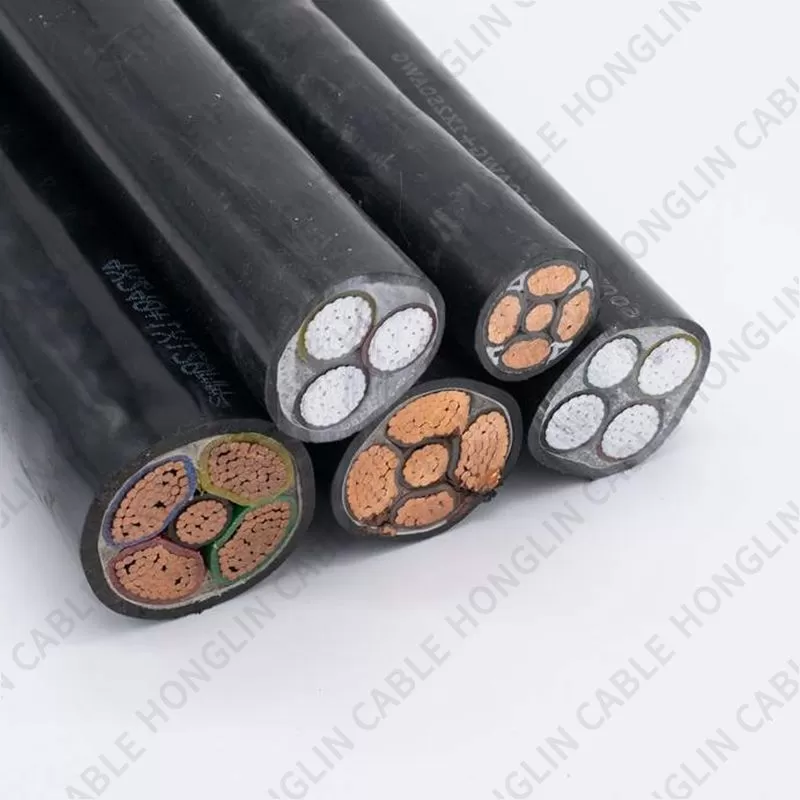
A good industrial control cable is usually built around copper conductors, PVC insulation, and a PVC sheath because that structure gives buyers a familiar balance of performance and cost. Current supplier pages repeatedly show these materials, along with flexible construction and indoor application descriptions. For many control jobs, that is exactly what the buyer wants: a standard cable that is easy to specify, easy to install, and easy to explain to the end customer. In this category, clear construction details matter more than decorative language.
Flexibility is one of the biggest reasons industrial control cable remains widely used. In real projects, cable routes are rarely perfect. They pass through cabinets, ducts, trays, machine frames, and equipment spaces where a rigid cable can slow the installer down. The visible results repeatedly emphasize flexible control cable, multicore control cable, shielded control cable, and similar indoor wiring products, which shows that flexibility is a central market expectation. A cable that bends more naturally makes the installation smoother and the final layout more organized.
The voltage class is another important part of the buying decision. The search results show common ratings such as 300/500V and 450/750V for control-cable products, and many listings place industrial control products squarely in that range. That helps buyers quickly understand where the cable belongs: control circuits, signal lines, monitoring systems, instrumentation, and other low-voltage industrial work. A well-positioned industrial control cable should make that clear right away so the buyer can decide whether it fits the project.
The market also shows that this is a mature and highly competitive category. Alibaba’s control-cable category shows 999+ products, while Made-in-China and other manufacturer platforms list large families of related products, including KVV, KVVR, KVVP, shielded flexible cables, and special-purpose variants such as oil-resistant or flame-retardant control cables. That means buyers are not looking for an abstract concept. They are comparing real products, real specifications, and real suppliers. In a market like this, industrial control cable pages win by being clear, credible, and easy to compare.
One of the strongest commercial advantages of industrial control cable is that it serves many different applications without losing its identity. The search results show use in control equipment, signal transmission, monitoring and measuring circuits, electrical protection, machinery, automation, and indoor distribution work. That broad but still focused application range is valuable because it allows the same product family to serve multiple customers. A panel builder sees it as a wiring solution. A machine manufacturer sees it as an assembly component. A wholesaler sees it as a repeat-order item.
For installers, the advantage is practical. A industrial control cable that is easy to route saves time. A cable that fits well into a control cabinet reduces clutter. A cable that is easy to trace later makes maintenance simpler. These benefits may sound small on paper, but in real projects they affect labor time, installation quality, and future service work. That is one reason the best first-page listings focus on the product’s use case rather than trying to overcomplicate the message.
Copper conductor quality matters because it is the part of the cable buyers trust most immediately. The visible results consistently show copper-based constructions, including stranded copper, pure copper, and related variants. That consistency is important because it tells the buyer this is a familiar industrial product family, not a niche specialty item. When a industrial control cable is built on copper, it becomes easier to compare across suppliers, easier to approve in procurement, and easier to standardize across multiple projects.
PVC insulation and sheath are equally important because they keep the product practical. The supplier pages repeatedly show PVC as the standard insulation and outer jacket material for control cables, especially for indoor use. That material choice gives the product a good balance of protection, durability, and cost control. For many industrial buyers, that is exactly what they need. They do not want unnecessary complexity. They want a industrial control cable that does the job reliably and fits the project budget.
The page structure of the search results also tells us something important about buyer behavior. The most visible pages are supplier directories, product catalogs, and factory listings with clear product titles, MOQ information, and price ranges. Some listings show very low per-meter factory pricing with large minimum order quantities, while others show wider marketplace ranges. That means the buyer is comparing both specification and supply terms. A strong industrial control cable page should therefore feel like a real commercial offer, not just a technical note.
For distributors and wholesalers, this kind of product is attractive because it is easy to explain and easy to repeat. Once a customer has used one specification successfully, they often come back for the same product in the next project. That repeat-order logic is powerful in industrial supply because the cable itself is standard, but the supply relationship can become very valuable. A dependable industrial control cable source can turn one successful delivery into a long-term customer relationship.
The best sales message for this product is simple. It is a cable for industrial environments where flexibility, organization, and reliability matter. It uses familiar materials. It fits standard voltage classes. It serves control, signal, and monitoring work. It is easy to install and easy to reorder. In a market crowded with similar products, the cable that communicates clearly is the one that stands out. That is why industrial control cable remains such a strong commercial term.

A strong product page should also help the buyer picture the real environment. The cable may be installed inside a control cabinet, routed through a production line, connected to monitoring equipment, or used in other indoor industrial systems. In each case, the buyer wants a cable that stays manageable and dependable. That is what the current search results reward: pages that present the cable as a practical tool for real wiring jobs. A well-written industrial control cable page should do the same.
Another important point is the product family around the term. The current results show related variants such as KVV for fixed control use, KVVR for flexible control use, KVVP for shielded control use, and other special forms such as fire-resistant, oil-resistant, and flexible shielded cables. That tells buyers the category is well developed and that different project requirements can be matched to different structures. A buyer looking for industrial control cable is usually choosing from within this family, so a good sales page should help narrow the choice rather than confuse it.
That is also why trust signals matter. Supplier pages that show product families, manufacturer directories, and commercial details are more persuasive than vague overview pages. The buyer wants to know whether the source is stable, whether the product line is broad enough, and whether the specifications are presented in a way that matches industrial buying habits. A reliable industrial control cable supplier earns attention by making those answers easy to find.
In the end, the keyword stays strong because it describes a real and recurring need in industrial wiring. Buyers need cable that is flexible, copper-based, PVC insulated, and suitable for control applications. They want a product that works in indoor equipment, automation systems, monitoring circuits, and cabinet wiring without creating extra problems. The current search results show that the market already treats this as a serious buying category. That is why a clear, practical, and trustworthy industrial control cable page can compete well on the first page.
In the end, this cable succeeds because it solves a real industrial problem in a familiar way. The market has already made the priorities clear: copper conductors, PVC insulation, suitable voltage ratings, flexible or fixed installation depending on the variant, and applications tied to control, monitoring, and protection circuits. A page that presents those facts clearly, confidently, and without unnecessary noise is the kind of page that can compete well on the first page