Apr. 22, 2026
In the high-stakes world of global mining, power is the lifeblood of production. From the deepest underground shafts to the most expansive open-pit operations, the reliability of mining cables dictates the boundary between operational success and catastrophic downtime. As the industry transitions toward "Mining 4.0"—characterized by autonomous fleets, electrification, and real-time sensor integration—the technical demands on cabling infrastructure have reached an all-time high.
For procurement managers, electrical engineers, and safety officers, selecting mining cables is no longer just about meeting voltage requirements; it is about ensuring mechanical survival against extreme abrasion, chemical exposure, and constant flexing. This comprehensive guide explores the engineering standards, material innovations, and economic logic that define high-performance mining cables in 2026.
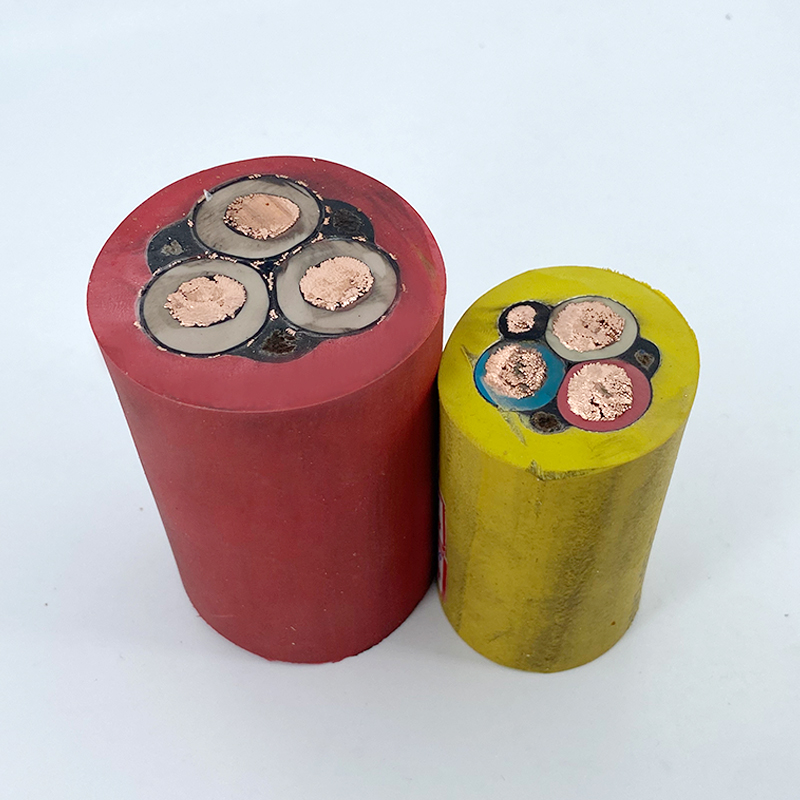
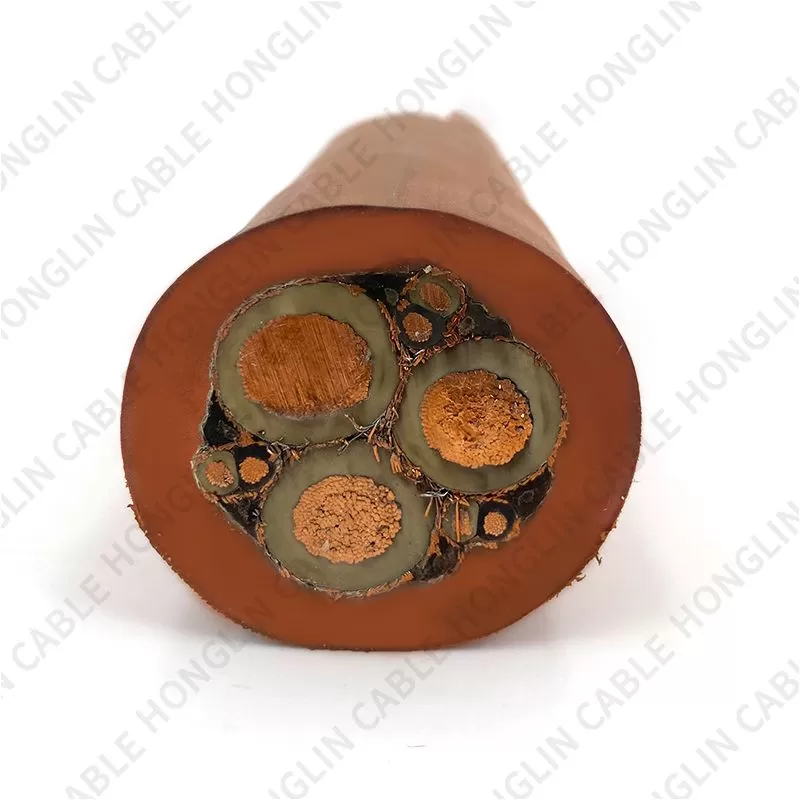
A standard industrial cable would fail within hours in a mine. Mining cables are specifically engineered to withstand the "Three Pillars of Stress": Mechanical, Environmental, and Electrical.
Modern mining cables utilize advanced thermoset materials for their outer sheathing.
CPE (Chlorinated Polyethylene): Offers exceptional resistance to oils, chemicals, and flame.
TPU (Thermoplastic Polyurethane): The gold standard for abrasion resistance in trailing cables for shuttle cars and LHDs (Load, Haul, Dump machines).
NBR/PVC: Provides the flexibility required for underground mobile equipment.
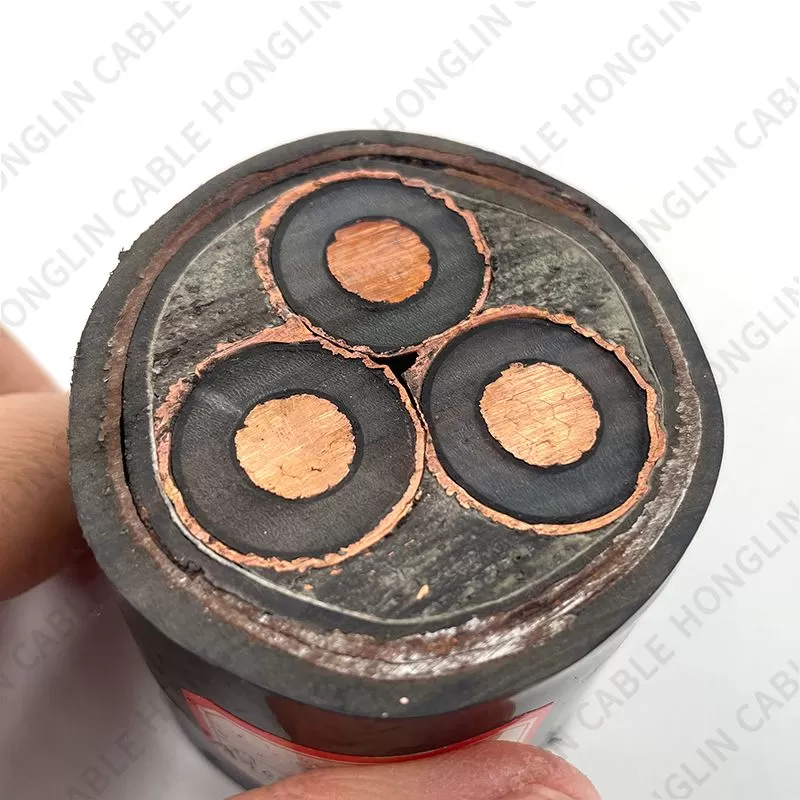
High-purity, soft-annealed stranded copper is used to ensure maximum flexibility. For high-voltage applications, specialized "Braid Shielding" (typically a mix of copper and nylon) is employed to provide both electrical protection and mechanical reinforcement.
To optimize your search for mining cables wholesale, you must understand the specific types used in different mining sectors.
| Cable Type | Designation | Primary Application | Key Feature |
| SHD-GC | Heavy-duty Trailing | Shovels, Draglines, Drills | Integrated Ground Check (GC) for safety |
| Type W | Portable Power | General mobile equipment | No ground check; extremely flexible |
| Type G-GC | Industrial Mining | Pumps, conveyors, portable power | Includes ground conductors and ground check |
| MP-GC | Mine Power Feeder | Stationary distribution | High voltage (5kV to 35kV) |
In 2026, safety protocols are non-negotiable. The Ground Check wire in SHD-GC cables provides a continuous monitoring loop. If the ground circuit is interrupted—perhaps due to a cable being crushed by a hauler—the system immediately trips the circuit breaker, preventing lethal "step potential" accidents.
In deep mines, power must travel kilometers from the surface. Calculating the voltage drop is critical to prevent equipment motors from burning out.
The voltage drop ($V_d$) can be calculated as:

I: Current (Amperes)
R: Resistance of the conductor
X: Reactance of the conductor
$\cos \phi$: Power Factor
L: Length of the cable run
Procurement Tip: When sourcing mining cables, always factor in the "Ambient Temperature Derating." A cable rated for $100A$ in a lab may only handle $70A$ in a poorly ventilated underground gallery where ambient temperatures exceed $40°C$.
The biggest trend in 2026 is the Hybrid Mining Cable. As mines become "smarter," they require real-time data from autonomous drills and remote-controlled loaders.
Leading manufacturers now integrate Fiber Optic cores directly into the power cable assembly.
Benefit 1: Real-time monitoring of cable temperature to predict failure before it happens.
Benefit 2: Low-latency control for autonomous vehicles.
Benefit 3: Eliminates the need for a separate communication cable, reducing installation complexity and weight.
In the mining industry, "un-certified" means "un-usable." When evaluating mining cables wholesale, ensure they carry the following marks:
MSHA (Mine Safety and Health Administration): The absolute requirement for cables used in U.S. mines. It ensures the jacket is flame-resistant.
CSA (Canadian Standards Association): Essential for cold-weather performance (often tested down to $-40°C$).
IEC 60332-1: The international standard for flame propagation in electrical cables.
The Total Cost of Ownership (TCO) in mining is measured in "Cost per Ton."
The Failure Scenario: A $5,000 trailing cable fails on a $100M dragline. The dragline is down for 4 hours. The lost production exceeds $200,000.
The Solution: By investing 20% more in a premium TPU-jacketed mining cable, you may extend the cable's life by 50% and reduce unplanned downtime by 80%.
Strategic Sourcing: High-performance cables reduce the "sheath-repair" frequency, which is one of the most labor-intensive maintenance tasks in a mine.
Even the toughest mining cable can be ruined by poor handling. In 2026, leading mines utilize:
Cable Reeling Systems: To manage tension and prevent "corkscrewing" (internal conductor twisting).
Cold Shrink Repair Kits: For immediate, MSHA-compliant repairs on the mine floor.
Visual Inspection AI: Cameras mounted on LHDs that use computer vision to spot nicks or bulges in the cable jacket before they cause a short circuit.
Q: Can I use aluminum conductors for underground mining cables?
A: While aluminum is lighter and cheaper, copper remains the standard for mobile mining equipment (like trailing cables) due to its superior flexibility and fatigue resistance. Aluminum is primarily reserved for stationary, permanent power feeders (MP-GC).
Q: What is the maximum voltage for SHD-GC cables?
A: Standard SHD-GC cables are available in ratings from 2kV up to 25kV, depending on the size of the equipment (e.g., massive electric shovels).
Q: How do I prevent cable "crushing" in open-pit mines?
A: Always use specialized "Cable Bridges" or fly-over towers at road crossings. Even the most robust mining cable cannot survive the repeated weight of a 400-ton haul truck.
The mining cable is no longer a passive component; it is a high-tech asset that powers the transition to a safer, more efficient, and more sustainable mining future. By prioritizing material science, adhering to MSHA standards, and embracing hybrid power-and-data technologies, mining operations can ensure that their most critical equipment remains energized in the face of the world's most brutal conditions.
Are you ready to secure your mine’s power infrastructure? Our 2026 series of heavy-duty mining cables is engineered for zero-failure performance. Contact our technical team today for a project-specific quote and material compatibility audit.
[Request a Wholesale Quote] | [Download the 2026 Mining Cable Technical Catalog] | [Consult with a Mining Electrical Engineer]