Sep. 18, 2026
If you’re responsible for powering mobile equipment underground — pumps, shuttle cars, reeling feeders, face conveyors or mobile crushers — the right flexible MYP mining cable for underground mines reduces downtime, speeds installation and keeps people safe. This article explains what buyers actually want (and what first-page results prove buyers click), how a robust flexible MYP mining cable for underground mines is built, which numeric specs to demand, the exact acceptance and handling checks that protect installations, and practical purchasing clauses you can drop straight into RFQs and POs.
(Throughout the article the phrase flexible MYP mining cable for underground mines appears naturally so the content reads like human technical advice — not a thin product sheet.)
Underground mining environments are mechanically and chemically punishing:
frequent repetitive bending (reeling and unspooling),
abrasive contact with rollers, ribs and rock,
oil, hydraulic fluid and chemical exposure,
wet or submerged service for pump leads, and
the critical need to minimize splices — each splice is a failure point underground.
A purpose-designed flexible MYP mining cable for underground mines addresses these demands with a combination of conductor geometry, insulation type, screening and a tough elastomeric jacket. The goal is reliable power delivery plus predictable mechanical life under real mine handling.
The durable performance of the cable starts with measurable design choices — ask suppliers for these numeric fields:
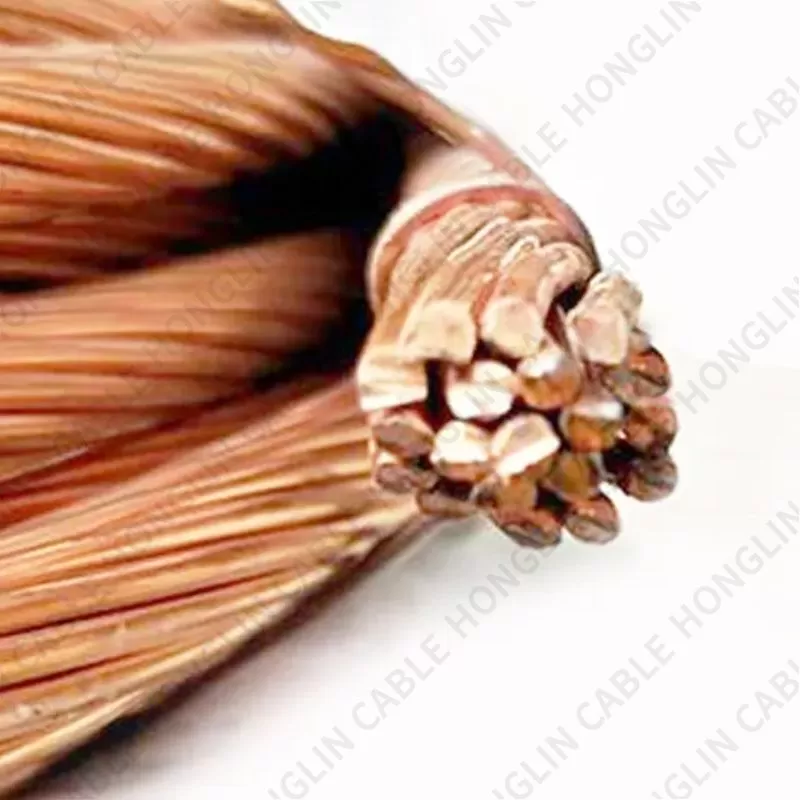
Conductor — fine-stranded annealed copper (or tinned copper for corrosive, wet environments). Specify mm² and exact strand count (e.g., 95 mm², 1333 strands). Strand count matters for flex-fatigue life.
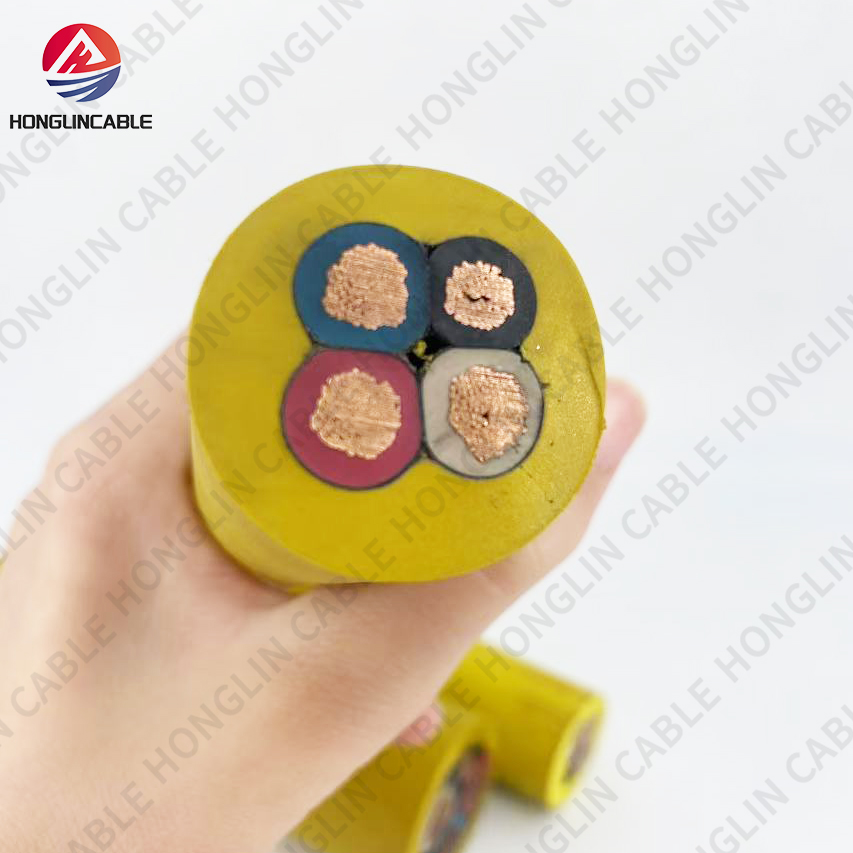
Semiconducting screens — inner/outer semicon layers around insulation for uniform field control (important for medium-voltage MYPs). Specify construction method and materials.
Insulation — elastomeric compounds (EPR/EPDM, specially compounded rubber or equivalent) with stated insulation thickness (mm) for the rated voltage. The datasheet must quote thickness per core.
Metallic screen / earthing — concentric earth conductors or copper braid: specify material and coverage.
Bedding / water-blocking — gel fills, swellable tapes or sealed cores with hydrostatic or immersion test numbers if pumps or wet faces are anticipated.
Outer jacket — compound name (CPE, neoprene, TPU/PUR, or custom elastomer), minimum jacket thickness (mm), Taber abrasion cycles or equivalent abrasion index, tear strength (N/mm), and oil/chemical compatibility test results.
Armor (optional) — wire or tape armor when crush/impact protection is required; specify effect on minimum bend radius.
Every numeric item above should appear as a datapoint on the supplier’s datasheet — not as marketing adjectives. A true flexible MYP mining cable for underground mines datasheet will list the numbers you can test against on delivery.
When you prepare an RFQ for a flexible MYP mining cable for underground mines, require the supplier to return measured results, not vague claims. Essential acceptance metrics:
Per-reel insulation resistance (MΩ) and date of test.
Per-reel conductor DC resistance (Ω/km) with tolerance.
Dielectric/hipot test result (test voltage and duration).
Flex / reeling cycles — vendor must provide cycles-to-failure or pass-at-N-cycles performed at the actual drum ID you will use on site; drum ID is essential (lab drum vs field drum life differs drastically).
Abrasion resistance — Taber or equivalent cycles to endpoint, plus endpoint definition (e.g., % mass loss or through-cut).
Puncture/crush/impact numbers — Newton or Joule values for expected hazards.
Hydrostatic/immersion results for pump/submersible leads — include test temperature and duration and post-test insulation resistance.
Jacket chemical compatibility — oil swell percentages after X hours in hydraulic oil or diesel.
Per-reel traceability — every physical drum must be labelled with a lot/serial number that matches the test pack glued to the reel face.
Insist that each delivered reel includes a test pack that references the reel’s lot number. This traceability is the single most effective defense against substitution or nonconforming batches.
Add this block to your RFQ to force comparable vendor responses for a flexible MYP mining cable for underground mines:
Supplier shall supply flexible MYP mining cable for underground mines — [rated voltage U₀/U], [cores × mm²], conductor strand count [n]. Cables must be manufactured to [state your applicable standard] and delivered with per-reel certificates including insulation resistance (MΩ), conductor DC resistance (Ω/km), dielectric (kV), and flex/reeling test report at drum ID = [mm]. Jacket compound and MSDS to be provided. For pump leads or wet service, provide hydrostatic/immersion test results. Each reel’s certificate must reference the reel lot printed on the drum. Acceptance conditional on matching documents and buyer spot checks.
This clause removes ambiguity and makes acceptance objective.
Even the best flexible MYP mining cable for underground mines will fail early if mishandled. Enforce these on every job:
Respect minimum bend radius and recommended drum ID for reeling. Smaller drums dramatically reduce flex life.
Controlled spooling tension during reeling/unreeling to avoid local conductor stress.
Use wide, smooth rollers and rounded guides at direction changes; protect edges with rollers or polymer edge guards.
Apply sacrificial spiral wraps at predictable wear points and contact surfaces; they’re inexpensive and highly effective.
Use manufacturer-approved glands and boots matched to the jacket compound to avoid chemical incompatibility and water ingress.
Record reel lot numbers at installation and in the maintenance log to preserve traceability.
Training crews on these practices typically doubles field life versus ad-hoc handling.
Most cable failures underground start at terminations and splices. To reduce risk:
prefer factory-prepared terminations for critical pump leads and medium-voltage jumpers — the factory controls potting materials and sealing methods better than field crews.
when field termination is necessary, follow the supplier’s kit and method exactly and witness the seal cure conditions.
avoid adding extra splices; plan cable lengths to eliminate field joints where possible. A flexible MYP mining cable for underground mines supplied in the correct lengths reduces splice count and failure points.
Document termination certificates and add them to the reel’s test pack for future reference.
Managing lifecycle for reeling and trailing cables is a data-driven task:
Track reel lot and install location and log hours or cycles for reeling reels.
Trend insulation resistance monthly for critical feeders — a steady decline often precedes water ingress or abrasion damage.
Retire by measured wear (abrasion depth or cycle counts) rather than arbitrary calendar rules.
Stock lot-matched spares for mission-critical systems to avoid mixed compound or strand inconsistency.
Plan pre-emptive replacements when flex cycles approach vendor fatigue numbers; vendor test data should inform your replacement thresholds.
A small investment in matched spares from the same production lot can cut emergency downtime dramatically.
Ask for pre-production samples and, if practical, witness the vendor’s flex test at the drum ID you will use.
Purchase a PPA batch (pre-production approval) of a few reels with full test packs before committing to large orders.
Define acceptance criteria in the PO and link warranty to passing per-reel tests and correct handling.
Negotiate spare-reel policies or consignment stock for critical sites.
Prefer vendors who publish sample per-reel reports and who will mark each reel with a unique serial number.
These simple procurement steps reduce surprises and let you enforce quality on arrival.
A well-specified flexible MYP mining cable for underground mines is a reliability asset: it reduces splices, survives reeling and abrasion, and gives maintenance teams predictable life metrics. To get predictable performance, insist on numeric datasheets, per-reel test packs, flex tests at your drum ID and strict handling/termination discipline on site. Suppliers that publish measured evidence and follow traceable per-reel workflows are the ones that will keep your site running.
Previous post:
Heavy duty MYP mining cable for coal mine