Feb. 27, 2026
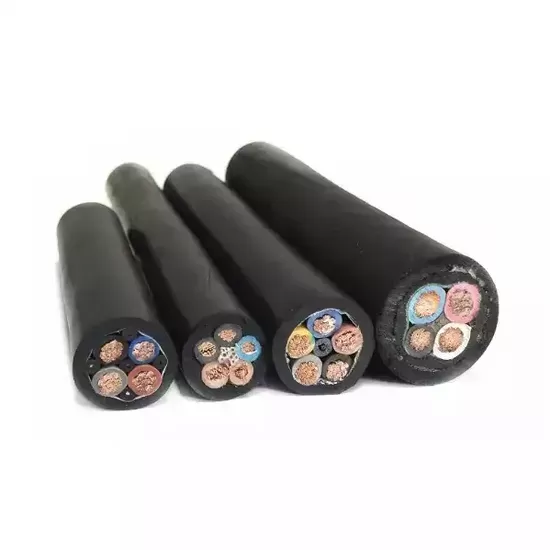
When electrical runs must live in close proximity to people, escape routes or sensitive equipment, fire performance is not negotiable. Yet many installations also require mobility, oil resistance and mechanical toughness. That intersection is where a well-specified flame retardant rubber cable delivers the best of both worlds: a flexible, durable rubber-sheathed cable whose jacket and construction slow or stop flame spread while still surviving hard, real-world use.
This guide helps you buy the right cable — not the cheapest — for applications that demand both mechanical resilience and documented flame behaviour. It explains the meaningful standards and test evidence, compares jacket materials, describes construction choices, and gives a practical RFQ/acceptance checklist you can paste into procurement documents.
“Flame retardant” and “fire resistant” are sometimes used loosely. For procurement, here’s the difference that matters:
Flame retardant (reaction to fire): the cable does not propagate a fire along its run and meets standardized tests for flame spread (e.g., IEC/EN 60332). This prevents a short-circuit or local ignition from turning into a linear fire along cable trays. A flame retardant rubber cable is designed to pass these tests.
Fire resistant (circuit integrity): the cable can continue to carry current for a specified period during and after exposure to fire (different and more demanding tests, e.g., IEC 60331 / BS 6387). Use this when you need life-safety circuits to stay powered during a fire.
For most mechanical, mobile or industrial uses where the goal is to prevent fire spread while retaining flexibility, a flame retardant rating combined with rubber compound performance is the correct specification.
When a vendor claims flame retardant performance for a rubber cable, ask for the precise tests and certificates:
IEC/EN 60332-1 (single-cable vertical flame test) or IEC/EN 60332-3 (category tests for bunched cables) — shows flame non-propagation.
Reaction to fire / CPR classification (EN 50575) — the CPR class (e.g., Eca, Dca) is often required on construction projects in Europe.
UL 1581 / UL 1277 or equivalent for markets that use UL references.
BS 6387 or IEC 60331 only when circuit integrity is required (fire-resistant cable). Don’t confuse this with simple flame retardancy — they’re separate levels of performance.
Manufacturer material datasheets showing the exact compound, its filler and any flame-retardant additives — not just a marketing phrase “flame retardant rubber.”
Demand per-reel test certificates or batch reports that reference the specific standards and show results — that’s the evidence you can rely on at acceptance time. (Vendors that publish datasheets for H07RN-F family or H07BN4-F, for example, usually list these standards.)
Not all rubber is the same. When you need both flame retardancy and durability, choose the compound deliberately:
Neoprene (polychloroprene / CR)
Balanced toughness, weather and ozone resistance; many neoprene formulations are inherently flame retardant or can be made to pass IEC 60332.
Good oil and abrasion resistance makes neoprene a pragmatic choice where mechanical abuse and flame performance are both required.
CPE / Chlorinated Polyethylene
Thermoplastic with strong weather, oil and heat resistance. Often used in heavy industrial and mining cables. CPE jackets are durable and can be formulated with flame retardants for compliance.
Polyurethane (TPU / PUR) blended with flame additives
Exceptional abrasion and cut resistance with good flexibility; when compounded for flame performance, TPU gives a premium mechanical/firetolerance mix (useful on moving cables and energy chains).
Silicone rubber
Excellent high-temperature stability and inherent flame behaviour; best for high-temperature points but usually softer and less abrasion-resistant than TPU.
Specialty HFFR / LSZH rubber blends
When low smoke and low corrosive gas are required in addition to flame retardancy, halogen-free flame retardant (HFFR/LSOH) compounds are available. They balance flame retardancy with reduced smoke/toxicity — often mandated in enclosed public or transport spaces.
Choosing the correct compound should reflect the dominant onsite hazards: mechanical abrasion, oil exposure, UV/ozone, or smoke/toxicity concerns in an escape route. Do not choose only on price.

A robust flame retardant rubber cable is an engineered assembly. Don’t ignore these layers:
Conductor stranding and tinning: fine stranded (flex) conductors reduce breakage when cables move; tinned copper resists corrosion if the jacket is compromised.
Insulation material: EPR, silicone or specially compounded elastomers preserve dielectric properties at elevated temperatures and after exposure to mechanical stress.
Inner bedding and water-blocking: for outdoor or damp environments, water-blocking tapes or swellable fillers prevent moisture migration if the jacket is nicked.
Screening / braid: for control and instrumentation lines, include appropriate screens; ensure braid materials are compatible with the jacket’s flame performance.
Co-extruded layers and adhesion: good manufacturing practice uses co-extrusion or priming to avoid delamination between layers — important in thermal events.
Ask vendors to provide cross-section drawings and layer descriptions for the exact part number you’ll order — not just a generic family brochure.
These are common, practical use cases where the combination of mobility, toughness and flame retardancy matters:
Mining and tunnelling mobile leads where cables run in confined spaces and flame spread must be limited.
Temporary power on construction sites near occupied areas and escape routes.
Marine and offshore services where flexible power leads require flame retardancy and oil resistance.
Industrial machines and cranes installed in workshops and warehouses with people present.
Public transport and tunnel lighting where reduced fire propagation and smoke are mandated.
In all cases, match the exact CPR/IEC/UL class to the project’s regulatory needs.
To get comparable and verifiable offers, include these mandatory fields in your RFQ:
Exact cable part number or construction (conductor mm², strand count, cores).
Required flame test standards (IEC/EN 60332-1, EN 50575 class, UL test if relevant).
Required mechanical & environmental specs (flex class, temperature range, oil/abrasion resistance).
Jacket compound name + MSDS and any low-smoke/halogen-free requirement.
Per-reel batch test certificates for flame tests and electrical tests (insulation resistance, DC resistance).
Life/handling tests if the cable will be reeled or move frequently (flex/spool cycles at your drum radius).
Termination/gland compatibility and spare part recommendations.
Minimum bend radius and installation guidance for your routing.
Warranty and acceptance test procedures tied to measured criteria rather than vague promises.
Vendors who return numeric test reports and batch certificates matching these items are credible. Accept vendors that provide traceable evidence per reel.
A cable’s spec only helps if it’s installed and handled properly:
Respect minimum bend radius at pulleys and terminations — tight bends stress conductors.
Use compatible glands and boots matched to the jacket compound so seals don’t degrade.
Protect cables from sharp edges with rollers, plates or sacrificial sleeves.
Limit exposure to direct flames or high-temperature points even if the cable is flame retardant — every compound has limits.
Record reel lot numbers at installation for future tracebacks and warranty claims.
Proper handling usually doubles the service life compared with ad hoc installations.
Before installation, perform these acceptance checks:
Visual inspection for consistent marking, extrusion finish and reel labels.
Verify per-reel certificates for flame tests and electrical parameters.
Spot electrical tests (insulation resistance on a sample length).
Flex check if cable will be reeled (confirm feel and minimum bend radius).
Confirm termination kits and torque settings with the supplier’s recommendation.
Install only after acceptance tests pass.
A flame retardant rubber cable protects both people and operations. By specifying exact standards, demanding per-reel evidence and matching jacket chemistry to the real hazards on site, you get a cable that slows fire spread and survives the daily abuse of real industrial life. Spend procurement time up front asking for the test evidence — it saves emergency repairs, reduces regulatory risk and keeps systems running safely.