
Mar. 16, 2026
If you specify or buy mining power leads for tunnels, haul roads, or plant machinery, the label flame retardant MYP rubber cable manufacturer should mean measurable fire behaviour plus mining-grade toughness — not a marketing sticker. This article explains what buyers actually find on the first page, what measurable construction and tests to demand, and gives procurement language you can paste into tenders so your acceptance is objective and enforceable. The text is original, technical, and focused on converting purchasing intent into reliable in-service performance.
A flame-retardant rubber jacket reduces the risk of a fire propagating along cable runs in tunnels, substations and cable trays — a critical safety factor in confined mining installations. But fire behaviour is only one dimension: cables in mining environments also face abrasion, oil exposure, impact, reeling and bending stresses. A credible flame retardant MYP rubber cable manufacturer provides both fire test evidence and mechanical test numbers so your teams can accept reels without guesswork.
In short: demand proof for flame behaviour and proof for mechanical survival. Don’t accept either in isolation.
When you see the phrase associated with a manufacturer, insist on specific reports and standards:
Flame propagation tests: Ask for the lab report and the exact method used (for example the vertical single-cable test family, or bunched-cable tests). The report should show specimen details (OD, core configuration, jacket compound) — not just a pass/fail sticker.
Reaction-to-fire classification where used in buildings or escape routes: request the applicable classification and the test report used to assign it.
Smoke and gas metrics if low smoke or low toxicity is important: request measured smoke density or toxic gas indices, not vague low-smoke claims.
Per-batch traceability: flame test evidence must match the exact cable construction you’re buying. Vendors must show that the tested specimen is the same formulation and construction as the reels they ship.
A real flame retardant MYP rubber cable manufacturer hands you lab reports that list specimen drawings, test rig details, and the lab signatory — then ties those reports to the product part number.
Flame retardancy helps in a fire — mechanical resilience keeps the cable alive every day. Your specification should demand:
Conductor: fine-stranded annealed copper, mm² and exact strand count (this affects flex fatigue life). Tinned strands for wet, corrosive conditions.
Insulation: elastomeric insulation (type and per-core thickness in mm), sized to the rated voltage.
Semiconducting screens: inner and outer semicon where applicable for medium-voltage designs.
Armor or metallic screen (optional): if crush protection or fault current path is needed — specify type and its effect on minimum bend radius.
Water-blocking: gel, swellable tape or sealed core options for pump leads and wet faces.
Outer jacket: flame-retardant rubber compound name and minimum thickness in mm; explicit Taber abrasion cycles or equivalent abrasion metric; oil-swell percentages for relevant fluids.
Minimum bend radius: both static and dynamic (for reeling), and recommended drum ID for spool use.
Every field above should appear numerically on the manufacturer’s datasheet — avoid pages that only use adjectives.
Write these into your RFQ to make acceptance objective:
Flame test report (exact method and specimen drawing) tied to the product part number.
Per-reel electrical tests: insulation resistance, conductor DC resistance and dielectric/hipot results — each certificate must reference the reel lot number.
Flex / reeling cycles reported for the drum ID you will use on site (not a generic lab drum).
Abrasion resistance (Taber cycles or equivalent) with endpoint definition.
Impact/puncture/crush numbers where run-over or falling debris is likely.
Hydrostatic/immersion evidence if the cable will be used in pumps or submerged service.
Material data sheets (MSDS) for jacket and insulation and oil compatibility tests for onsite fluids.
Per-reel traceability and packaging photos showing the test pack attached to each reel.
When the manufacturer supplies these items, you can accept reels confidently.
Use this block in tenders and purchase orders so bids are comparable:
Supplier (flame retardant MYP rubber cable manufacturer) shall supply part number [X], rated voltage U₀/U = [Y kV], configuration [cores × mm²], conductor strand count [n]. Cables must pass the specified flame propagation test (method: [insert method]) — supplier to provide the full lab report and specimen drawing used for testing. Supply per-reel certificates: insulation resistance (MΩ), conductor DC resistance (Ω/km), dielectric test (kV), and flex/reeling report at drum ID = [mm] where applicable. Jacket compound and MSDS to be supplied; Taber abrasion cycles and oil swell data for hydraulic oil [grade] are required. Each reel must be marked with a lot number that matches the attached weatherproof test pack. Final acceptance is conditional on matching certificates and buyer spot checks.
This contract language turns marketing phrases into enforceable procurement conditions.
When a vendor hands you a flame report:
confirm the test method and clause used (it must be relevant to your installation),
confirm the exact specimen construction matches what you will receive, including jacket thickness and compound,
verify the lab accreditation or independence of the test house if project risk demands it, and
check whether smoke/toxicity metrics were captured and whether they meet your site requirements.
If the report lacks a specimen drawing or lot reference, ask for clarification — that report may be meaningless for your purchase.
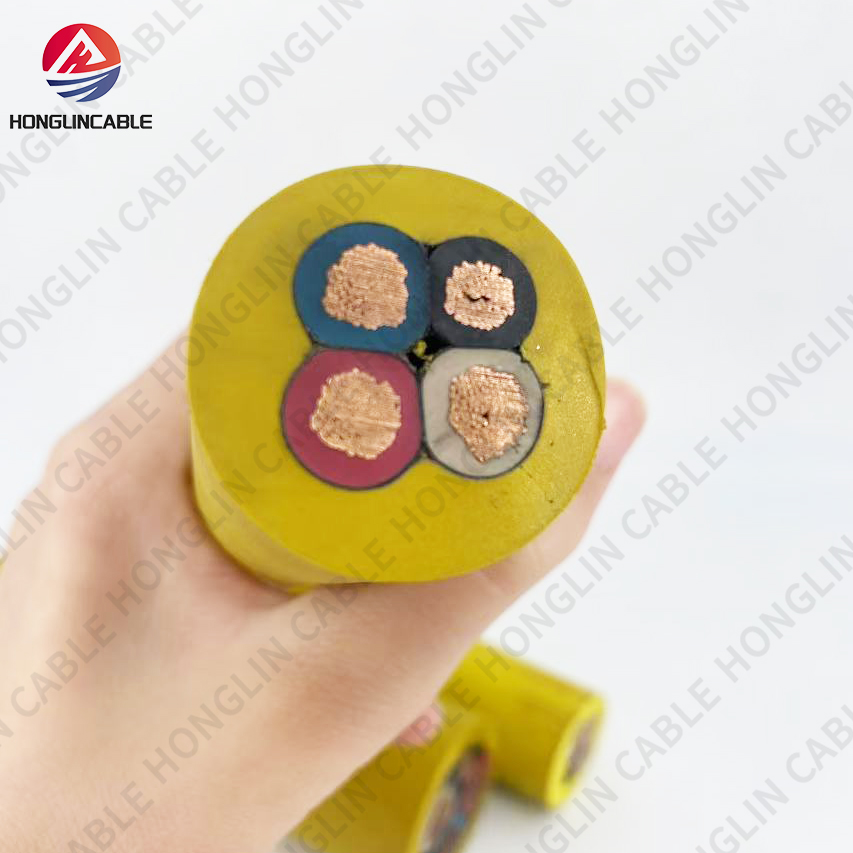
Handling affects service life and fire safety:
avoid mechanical damage to the jacket during pulling — nicked jackets can expose insulation and conductors to fire and moisture.
maintain minimum bend radius and recommended drum ID; tight bends both shorten flex life and can expose conductors that exacerbate post-fire faults.
protect cables from sharp edges and chafing using rollers, guards or spiral wraps; this reduces hot spots and prevents local damage that can ignite under electrical faults.
use manufacturer-approved glands and boots to maintain overall system integrity; poor terminations can negate a cable’s flame rating in practice.
Good installation preserves the flame performance and the everyday durability you paid for.
Inspect reel face and verify printed lot number.
Open weatherproof pouch and confirm per-reel certificates match the reel marking.
Spot-test insulation resistance on a short sample and compare to the certificate.
Check conductor DC resistance on a sample length to confirm cross-section.
Visually inspect the jacket for extrusion defects, soft spots or shipping damage.
For reeling cables, perform a short spool/unspool test on the actual drum to confirm behaviour.
If any item fails or documentation is missing, quarantine the reel and contact the manufacturer for immediate remediation.
Include these clauses to protect yourself:
acceptance tied to per-reel certificates and buyer’s spot checks,
replacement obligations for any reel where certificates do not match the physical marking or measured values,
a defined response time for replacements (for example 7 business days for critical feeders), and
retention of production records by the manufacturer for at least 3 years, available for audit on reasonable notice.
These practical conditions make a flame retardant MYP rubber cable manufacturer accountable for what they ship.
Green flags (good signs): numeric datasheets, downloadable per-batch test reports, clear packing photos showing test packs on reels, MSDS for compounds, and willingness to witness or share raw flex-test logs.
Red flags (avoid): vague “flame retardant” claims without a test method, refusal to provide per-reel certificates, test reports that do not match the product drawing, and no proof of abrasion or reeling validation.
A reputable flame retardant MYP rubber cable manufacturer treats test packs and lot traceability as part of quality — not marketing.
“Flame retardant” should be a measurable attribute in a mining cable, and a reliable flame retardant MYP rubber cable manufacturer backs the claim with lab reports, mechanical test evidence, and per-reel traceability. Demand numbers for flame performance and numbers for mechanical survival; use the copy-ready procurement language above; enforce simple on-site acceptance checks; and require manufacturers to retain production records. Do this and your purchase will be a predictable asset rather than a recurring maintenance headache.
Next chapter:
Oil resistant MYP mining cable for machinery


