May. 26, 2026
A good fixed wiring cable is one of the most practical products in the electrical market because it does a simple job very well. Buyers do not search for it because it sounds exciting. They search for it because they need a conductor they can trust in real installation work, a specification they can compare quickly, and a supplier that can support repeat orders with consistent quality. The ranking pages show exactly that behavior. They are not broad theory articles. They are product pages that show conductor material, insulation type, voltage class, and application right away, which is exactly what serious electrical buyers want to see.
At the center of any quality fixed wiring cable is copper. Copper remains the benchmark conductor for electrical work because of its high conductivity, ductility, malleability, and corrosion resistance. The product pages in the search results repeatedly place copper at the core of the offer, whether they are describing BV, BVR, H07V-U, or H07V-R style cable families. IEC 60227-1 and IEC 60227-3 define PVC-insulated cable families for rigid, flexible, and fixed-wiring applications up to 450/750V, and several product pages also reference BS6004 6491X and related designations. In practical terms, that means a fixed wiring cable built on copper is not an experiment. It is a proven solution for ordinary and demanding installation work alike.
The insulation side matters just as much. The pages ranking well repeatedly show PVC-insulated wire and cable in the 300/500V and 450/750V families. For a buyer evaluating fixed wiring cable, that matters because it means the product belongs to a known low-voltage installation category that can be specified, installed, and reordered with more confidence. A cable that fits a recognized standard is much easier to trust in real project work. One supplier page explicitly positions a 450/750V copper conductor PVC-insulated cable as a building wire, while another shows single-core copper wire for fixed wiring installation and a separate page shows PVC-insulated single-core copper for fixed wiring.
One of the biggest reasons people choose fixed wiring cable is that it is easy to work with on site. Flexible or stranded conductor versions are easier to route through conduit, easier to bend around corners, and easier to keep neat inside panels, distribution boxes, and switching equipment. The search results repeatedly connect this product family with light fittings, switching and control equipment, cable trays, conduit, and trunking because that is where installation convenience matters most. In real work, a cable that cooperates with the layout is often more valuable than a cheaper cable that creates extra labor. That is why product pages keep emphasizing fixed protected installation and indoor use.
A useful fixed wiring cable also needs a practical size range. The market shows common sections such as 1.5mm², 2.5mm², 4mm², 6mm², 10mm², and larger family ranges extending well beyond that. One product page shows 1.5–10mm² for industrial fixed wiring, another shows 1.0–35mm² for BVR/H07V-K style flexible single-core use, and another lists a broad range from 0.75 square mm up to 630 square mm in the same cable family. That breadth matters because real projects rarely need only one conductor size. Lighting circuits, socket lines, control circuits, and building feeds all call for different sections. A supplier who can cover multiple sizes under one familiar family makes sourcing much easier for contractors, distributors, and project buyers.
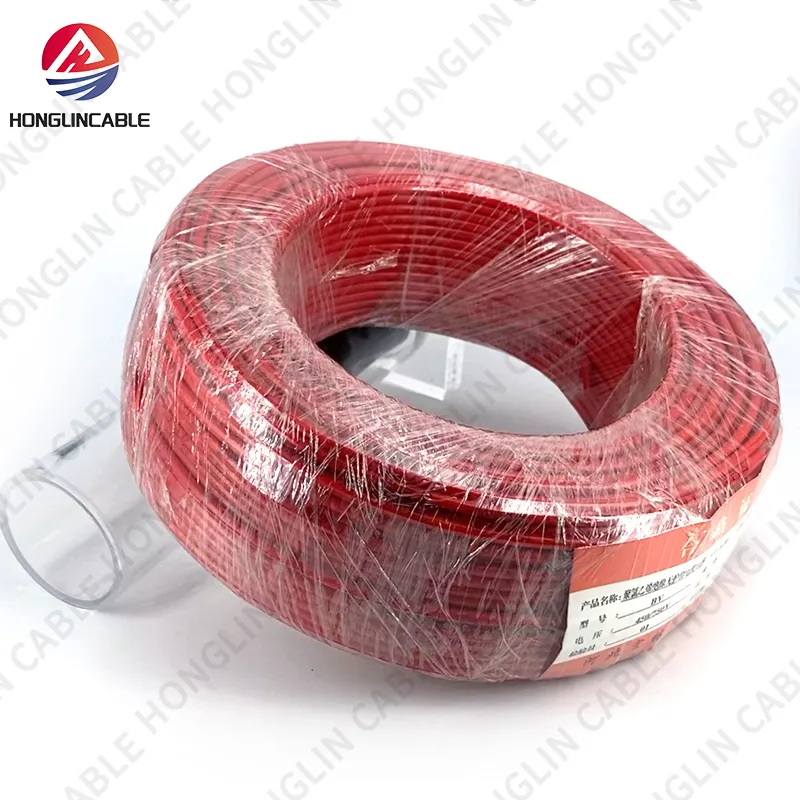
A strong fixed wiring cable offering also has to be easy to understand from the product page alone. The best-ranking listings do not hide the important details. They show conductor type, insulation type, voltage rating, and application directly. One supplier presents a 450/750V copper-conductor PVC-insulated building wire, another shows a 450/750V single-core solid copper conductor building wire for fixed protected installation inside appliances and lighting fittings, and another lists PVC-insulated single-core copper for fixed wiring with clearly stated voltage and use case. That kind of direct presentation matters because buyers often compare several options at once and need clear facts before they request a quotation.

For installers and electricians, fixed wiring cable is attractive because it helps create a clean and serviceable installation. Inside a building, wiring has to be organized so that it can be inspected, maintained, and extended later if needed. Flexible copper and standard PVC-insulated constructions are easier to label, route, and terminate in a neat way. That is why the search results repeatedly connect this product family with house wiring, building wiring, indoor wiring, lighting systems, control panels, and power installations. The best wire is not only the one that carries current well; it is also the one that makes the whole installation easier to live with over time.
The commercial side of fixed wiring cable is also straightforward. The search results show meter-based pricing, roll-based offerings, and bulk trade listings with MOQ thresholds, which means buyers are actively comparing value rather than just browsing. Some listings are aimed at small project orders, while others are clearly built for wholesale or factory-direct supply. That is useful because electrical buying is often about matching specification to budget without sacrificing reliability. When the product page gives the buyer enough information to make that decision quickly, the supplier becomes much easier to trust.
A reliable fixed wiring cable should also match the correct application environment. The pages ranking well repeatedly connect these products to fixed wiring, home circuits, power lighting, appliances, instruments, communication equipment, and electrical equipment. Some listings also mention suitable use in indoor wiring, conduit, trunking, and fixed protected installation, which is exactly the kind of environment buyers need to understand before they place an order. That broad use profile matters because it shows the product family is not a niche item. It is a standard electrical solution that fits many of the ordinary wiring needs found in homes, buildings, and equipment systems.
For distributors, fixed wiring cable is a repeat-order product. Houses, apartments, offices, workshops, and small commercial projects all need wiring. Once a contractor trusts one conductor family and one supplier, the same product often gets reordered for the next job. That recurring demand is one of the biggest strengths of this category. It is familiar, practical, and easy to restock, which is exactly what makes it valuable across the supply chain. The first-page results make that obvious because they are mostly manufacturer and marketplace listings built around standardized product families.
The trust factor behind fixed wiring cable is also reinforced by standards language. IEC 60227, IEC 60228, BS6004 6491X, and related designations appear in the supplier pages, and the voltage classes are usually stated clearly as 300/500V or 450/750V. For buyers, that matters because the cable is often hidden inside walls, enclosures, or conduit after installation. They want confidence that the product belongs to a known technical family and can be documented in a real project. When the standard, voltage class, and application are clear, the buyer can move forward with much more confidence.
A strong sales message for fixed wiring cable should therefore stay simple and practical. It is a copper conductor with PVC insulation, designed for common low-voltage installation tasks in homes, buildings, lighting systems, control equipment, and electrical appliances. It is easy to install, easy to specify, and easy to trust when the supplier gives clear technical information. That simplicity is not a weakness. In electrical supply, it is one of the biggest strengths a product can have. The current search landscape makes the buying logic very clear: buyers want dependable wire they can trust in real installations, and the strongest pages are the ones that present the facts directly.
In the end, fixed wiring cable succeeds because it does what a good electrical product should do. It offers copper conductivity, PVC insulation, recognized low-voltage compatibility, practical installation behavior, and a broad size range that fits many common projects. The current search landscape shows buyers looking for dependable wire they can trust in real installations, and the strongest supplier pages are the ones that make the technical facts obvious from the start. That is why this category continues to hold such a strong place in the market.