Oct. 12, 2026
Looking for a custom spring cable designed to meet your equipment's electrical and mechanical requirements? Standard cables do not always provide the right combination of extension length, coil dimensions, flexibility, connector compatibility, and environmental resistance. A customized coiled cable can help address these challenges while keeping electrical connections organized during movement.
Honglin Cable welcomes cable-related project inquiries from equipment manufacturers, industrial buyers, distributors, and OEM customers. By sharing your application details, technical drawings, or existing cable specifications, you can begin evaluating a suitable cable solution for your project.
Whether you need a custom spiral cable for industrial equipment, a coiled control cable for a mobile device, or a cable assembly with specific electrical characteristics, the first step is to define the requirements clearly.
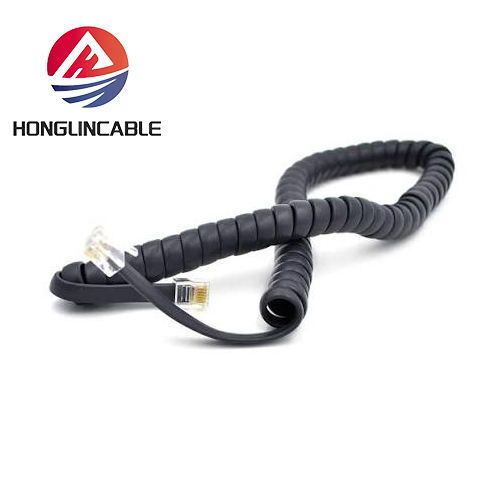
A custom spring cable is an electrical cable formed into a spiral coil and configured to meet application-specific requirements. Also called a custom coiled cable or spiral cable, it can extend when pulled and retract toward its original coiled shape when released.
Unlike an off-the-shelf cable, a custom spring cable may be specified according to its conductor size, number of cores, insulation material, outer jacket, coil geometry, extension length, shielding, and connector configuration.
Customization is particularly useful when a standard cable cannot meet the installation space, movement range, electrical performance, or connection requirements of the equipment.
Common reasons to specify a custom spring cable include:
Matching a defined extension and retraction range
Fitting a limited installation space
Meeting specific voltage, current, or signal requirements
Selecting a suitable jacket for the operating environment
Integrating connectors or terminals into a cable assembly
Maintaining compatibility with an existing device or cable design
The goal is not simply to produce a cable with a different shape. It is to create a cable specification that suits the actual application.
The available customization options depend on the cable design and the manufacturer's production capabilities. The following parameters are useful starting points when planning a custom coiled cable project.
The conductor design affects electrical performance, cable dimensions, and mechanical behavior. Customers should specify the conductor material, cross-sectional area, number of cores, and whether the cable carries power, control signals, communication signals, or a combination of functions.
Copper is widely used in electrical cables because of its conductivity. For applications involving repeated movement, the conductor construction must also be evaluated for the expected mechanical conditions.
If the cable replaces an existing product, provide the original specification or a sample whenever possible.
The insulation and outer jacket should be selected according to electrical requirements and the working environment.
Common material options to evaluate include:
PVC: May suit applications with moderate mechanical demands and appropriate temperature and environmental conditions.
PUR: Often considered when abrasion resistance and flexibility are important, depending on the material formulation.
TPE and other engineered polymers: May be relevant for applications requiring particular combinations of flexibility, temperature performance, or environmental resistance.
The appropriate material depends on the specific grade, operating temperature, chemical exposure, movement frequency, and expected service life. No material should be selected solely by name without reviewing its technical data.
Coil geometry is central to the performance of a custom spring cable. Relevant dimensions may include:
Coil diameter
Coil pitch
Relaxed cable length
Straight lead length at each end
Overall cable length
Available installation space
These parameters influence the cable's fit, compactness, extension behavior, and routing. If the equipment has limited clearance, provide a drawing showing the cable's installed position and surrounding components.
The maximum required extension should be specified alongside the relaxed length. The cable must be suitable for the distance it needs to cover during normal operation.
Repeatedly stretching a coiled cable beyond its permitted working range can affect its recovery characteristics and mechanical integrity. For this reason, extension requirements should be reviewed together with coil geometry, cable construction, and movement conditions.
Some custom spring cables carry signals that may be sensitive to electromagnetic interference (EMI). In these cases, a shielded construction may be worth evaluating.
The design should consider the signal type, electrical environment, grounding arrangement, and connector configuration. Shielding does not automatically guarantee signal integrity; the complete electrical system must be assessed.
For power cables, the rated voltage, current capacity, insulation system, and operating temperature should be confirmed before the specification is approved.
Certain projects require a complete coiled cable assembly rather than a cable alone. Depending on available capabilities, the required configuration may include connectors, terminals, specified pin assignments, protective components, or custom lead lengths.
To reduce design errors, provide connector part numbers, mating connector details, pinout diagrams, or clear photographs. Any special strain-relief, mounting, or sealing requirements should also be identified.
Custom coiled cables can be used in equipment where electrical connections must accommodate movement without leaving excessive loose cable.
Industrial systems may use custom spring cables to connect control panels, sensors, movable controls, and machine components. The cable design should account for the movement path, mechanical wear, installation space, and electrical load.
Electronic devices may require compact cables that extend during use and retract when the connected components return to their resting positions. Core count, conductor size, and shielding requirements depend on the device's electrical design.
Handheld controllers and adjustable operating devices can benefit from coiled cable assemblies that help manage cable length during operation. Connector compatibility and strain relief are important when the cable is handled frequently.
OEM customers may need a cable that matches an existing product design, installation interface, or equipment specification. Providing engineering drawings, sample cables, and annual demand estimates can help clarify the requirements during supplier evaluation.
Each application should be assessed individually. The fact that a cable is coiled does not automatically make it suitable for continuous flexing, high temperatures, or demanding industrial environments.
A structured development process helps align the cable design with the customer's actual requirements before production begins.
Start by describing the equipment, cable function, electrical requirements, working environment, and expected movement. If available, provide drawings, samples, photographs, or an existing product specification.
The cable requirements should be reviewed for completeness and feasibility. Important points include conductor construction, insulation and jacket materials, coil dimensions, extension length, connectors, and applicable standards.
If information is missing, clarify the open items before finalizing the design.
Before sampling or production, confirm the agreed specification, available customization options, order quantity, delivery expectations, packaging, and any inspection requirements.
If engineering changes are required, document the revisions so all parties work from the same approved version.
When samples are available, evaluate whether the cable fits the equipment and meets the agreed requirements. Depending on the application, checks may include dimensions, connector compatibility, electrical performance, extension behavior, and recovery characteristics.
Any changes identified during evaluation should be documented and reviewed before approval.
Before placing a production order, agree on the applicable drawings, technical specifications, acceptance criteria, inspection documentation, and delivery requirements.
The appropriate checks depend on the product design and intended use. Product-specific testing should be defined rather than assumed.
For a customized cable project, quality control should be linked to the approved technical specification.
Relevant quality checkpoints may include:
Material verification: Checking supplied materials against the agreed specification.
Electrical inspection: Performing applicable continuity, resistance, insulation, or other specified electrical tests.
Dimensional inspection: Confirming cable length, coil dimensions, lead lengths, and connector interfaces.
Mechanical evaluation: Assessing extension, recovery, and other specified movement-related characteristics.
Final inspection: Checking the completed cable or assembly against the approved order requirements.
Documentation: Providing agreed test reports, inspection records, or product identification information where available.
Not every test is applicable to every cable. Required methods and acceptance limits should be agreed upon according to the product's design, application, and relevant standards.
For OEM projects, clear quality requirements are especially important because the cable may become part of a larger equipment assembly.
A custom spring cable can offer practical advantages when a standard product does not match the application's requirements.
Better equipment fit: Coil dimensions and lead lengths can be evaluated against available installation space.
Application-specific construction: Conductor, insulation, jacket, and shielding requirements can be defined for the intended electrical and environmental conditions.
Connector compatibility: Specifying the connection interface helps reduce integration problems during assembly.
More controlled procurement: An approved drawing and specification provide a consistent reference for quotations, samples, and repeat orders.
Clearer quality expectations: Agreed inspection criteria make it easier to evaluate whether the supplied product meets project requirements.
These benefits depend on accurate specifications, appropriate design decisions, and verification of the finished product. Customization alone does not guarantee improved reliability.
To request a quotation from Honglin Cable, prepare the information that best describes your project.
| Required information | Examples |
|---|---|
| Application | Industrial machinery, electronic equipment, control device |
| Electrical specification | Voltage, current, conductor size, core count |
| Cable construction | Insulation, jacket, shielding, conductor type |
| Coil dimensions | Coil diameter, pitch, relaxed length |
| Extension requirement | Maximum working extension and movement range |
| Connections | Connector model, pinout, terminal configuration |
| Environment | Temperature, oil, chemicals, abrasion, moisture |
| Order details | Estimated quantity, prototype needs, delivery schedule |
| Documentation | Drawing, sample, product specification, inspection requirements |
If the complete specification is not available, start with the application description and any existing cable sample. The missing information can then be identified before the design is finalized.
Request a custom spring cable consultation from Honglin Cable. Share your technical drawings, cable dimensions, electrical requirements, and estimated quantity so that product availability, customization feasibility, and quotation details can be reviewed.
A standard coiled cable is typically supplied in predefined configurations. A custom spring cable is specified around the requirements of a particular application, which may include coil dimensions, extension length, conductor configuration, materials, shielding, or connectors.
Connector integration may be possible depending on the manufacturer's capabilities and the requested configuration. Provide connector part numbers, pin assignments, drawings, or samples so compatibility can be evaluated.
Start with the distance between the connection points at maximum extension, then consider the relaxed cable length, coil geometry, routing path, and required movement range. The final design should remain within the cable's specified working limits.
PVC, PUR, TPE, and other materials may be suitable under different conditions. Consider abrasion, temperature, oil and chemical exposure, flexibility, and expected movement cycles. Confirm the actual material properties before selecting a construction.
OEM sourcing depends on the supplier's product range, production capabilities, order requirements, and technical agreement. Share the equipment specifications, drawings, expected volume, and quality requirements to establish feasibility.
Pricing may depend on conductor size, core count, material selection, coil dimensions, extension requirements, shielding, connectors, order quantity, testing, and packaging. A complete specification generally allows a more meaningful quotation.
Please contact Honglin Cable to confirm current product availability, sample arrangements, customization capabilities, minimum order quantities, and production lead times for your specific requirements.
A successful custom spring cable project begins with a clear understanding of the electrical, mechanical, and environmental requirements. Conductor construction, jacket material, coil geometry, extension length, connectors, and quality criteria should be evaluated as parts of one complete design.
For OEM customers, equipment manufacturers, distributors, and industrial buyers, a detailed specification review can help reduce uncertainty before sampling and production.
Contact Honglin Cable with your cable drawings, existing samples, technical requirements, and estimated order quantity. The team can review the inquiry and confirm the appropriate next steps based on available product and manufacturing capabilities.