Apr. 09, 2026
In modern industrial environments, machinery depends on precise coordination between sensors, actuators, motors, and control units. At the center of this coordination lies one critical component: the control cable for machinery. It acts as the communication bridge that ensures commands are transmitted accurately, systems respond instantly, and production processes remain stable and efficient.
A control cable for machinery is designed to carry low-voltage control signals that regulate machine operations. Unlike power cables, which deliver electrical energy, control cables transmit instructions—start, stop, adjust, monitor—between control panels and equipment. These signals enable machines to operate in synchronization, forming the backbone of automation and intelligent manufacturing systems.
The first-page results emphasize this functional role repeatedly. Control cables are described as essential for connecting machinery, sensors, and automation systems, ensuring smooth operation across production lines and industrial equipment. This is why buyers searching this keyword are typically focused on performance, durability, and compatibility with machinery environments rather than just price.
Machinery environments are fundamentally different from standard electrical installations. Equipment often operates under continuous movement, vibration, oil exposure, and electromagnetic interference. Because of this, a control cable for machinery must meet much higher standards than ordinary wiring.
Industrial cable manufacturers consistently highlight several key requirements:
Flexibility is critical because machinery often involves moving parts such as robotic arms, conveyor systems, and CNC equipment. Control cables must bend repeatedly without breaking or losing signal integrity.
Mechanical durability is equally important. Machinery environments expose cables to abrasion, tension, and vibration. High-quality cables are designed with robust outer sheaths to resist wear and maintain performance over time.
Resistance to interference is another major factor. Industrial machinery generates electromagnetic noise from motors, drives, and switching devices. Shielded cables are often required to ensure stable signal transmission.
Environmental resistance also plays a role. Oil, chemicals, moisture, and temperature variations can all impact cable performance. Premium cable designs use materials like PVC, PUR, or LSZH to withstand these conditions.
These requirements explain why standard cables cannot replace a purpose-built control cable for machinery. The wrong choice can lead to signal failure, equipment malfunction, or costly downtime.
A typical control cable for machinery is engineered with multiple layers to ensure both electrical and mechanical performance.
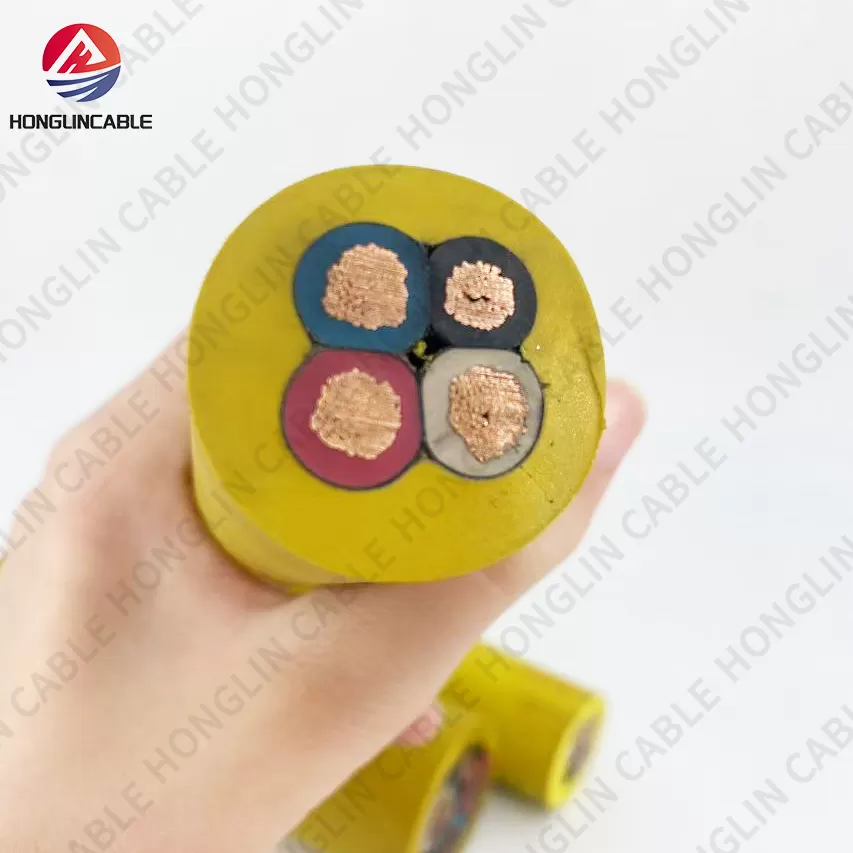
The conductor is usually made of stranded copper, which provides excellent conductivity and flexibility. Fine-stranded designs allow the cable to bend easily without fatigue.
The insulation layer is commonly PVC, XLPE, or LSZH, depending on temperature and safety requirements. PVC is widely used for general applications, while LSZH is preferred in environments where fire safety is critical.
Core arrangement is another defining feature. Control cables typically contain multiple cores—ranging from 2 to over 50—each carrying a separate signal. This multi-core design simplifies wiring and reduces installation complexity.
Shielding may be included in the form of aluminum foil or copper braid. This protects signals from electromagnetic interference, which is especially important in machinery with variable frequency drives or high-power equipment.
The outer sheath provides protection against mechanical stress, oil, and environmental factors, ensuring long-term durability.
This layered construction is what allows a control cable for machinery to perform reliably in demanding industrial conditions.
The application scope of control cable for machinery is broad but highly focused on industrial and automated systems.
In manufacturing equipment, control cables connect PLC systems with motors, sensors, and actuators, ensuring synchronized operation across production lines.
In CNC machines and machine tools, they transmit precise control signals required for accurate machining operations.
In robotics, control cables support movement commands and feedback signals, enabling complex and repetitive tasks.
In conveyor systems, they ensure coordinated movement and process control, maintaining efficiency in material handling.
In control cabinets, they organize internal wiring, connecting relays, switches, and controllers to field devices.
These applications highlight why the control cable for machinery is often referred to as the “nervous system” of industrial equipment. Without it, machines cannot communicate or operate effectively.
The first-page supplier content reveals that buyers are highly focused on practical selection criteria. Choosing the right control cable for machinery involves several important considerations.
Core size and cross-section must match the application. Typical sizes range from 0.5 mm² to 2.5 mm² for control signals, with larger sizes used for longer distances or higher mechanical strength.
Core count should include spare capacity. Engineers often select cables with additional cores to allow for future expansion or maintenance flexibility.
Shielding requirements depend on the environment. High-interference areas require shielded cables, while simpler installations may use unshielded versions.
Flexibility requirements depend on movement. Static installations can use standard cables, while dynamic machinery requires highly flexible designs.
Temperature and environmental conditions must be considered to ensure the cable can withstand operational stress.
Compliance with standards such as IEC, VDE, or UL ensures safety and compatibility in international projects.
A well-selected control cable for machinery improves system reliability, reduces maintenance, and supports long-term operation.

From a commercial perspective, the best-performing pages in search results position control cables not as commodities but as solutions. Buyers are looking for suppliers who can provide consistent quality, technical support, and customization.
A high-quality control cable for machinery offers several advantages:
It ensures stable signal transmission, reducing the risk of system errors or downtime.
It simplifies installation through flexible design and multi-core configuration.
It enhances safety by maintaining reliable communication between control systems and equipment.
It supports scalability, allowing systems to expand without rewiring.
It reduces long-term costs by minimizing maintenance and replacement frequency.
Suppliers that clearly communicate these benefits are more likely to win buyer trust and secure long-term cooperation.
The dominance of manufacturer and product pages on the first page shows that this keyword has strong transactional intent. Buyers are actively comparing specifications, materials, and supplier capabilities.
There is also a clear trend toward higher-performance cables. As machinery becomes more automated and data-driven, the demand for flexible, shielded, and durable control cables continues to grow.
Industrial buyers are no longer satisfied with basic products. They want cables that integrate seamlessly with automation systems, support continuous operation, and perform reliably under stress.
The keyword control cable for machinery represents a highly commercial and technically focused search intent. Buyers are looking for reliable, flexible, and durable cable solutions that can support modern industrial equipment.A well-designed control cable for machinery is more than just a component. It is a critical part of the system that ensures machines operate smoothly, efficiently, and safely. By focusing on quality materials, proper construction, and application-specific design, suppliers can provide real value to industrial customers.In a competitive global market, the difference between a standard product and a well-engineered solution often determines success. When the cable performs reliably, the machinery performs reliably—and that is exactly what every buyer is ultimately looking for.