Jan. 09, 2026
If you’re evaluating a cable control purchase for automation, access systems, generator interfaces or instrumentation, this guide will help. It translates web-search signal into a practical procurement checklist and sales narrative: what to ask for, how to compare quotes, which construction choices matter on the job, and the small installation habits that multiply cable life. Read on for a clear, field-tested approach to selecting cable that performs as promised.

Searchers using the term cable control are often looking for one of three things: a) multi-conductor cables used for control and signaling in automation and security systems, b) mechanical control cables (push-pull / Bowden type) for motion control, or c) combined power/control composite cables for generator and HVAC interfaces. Clarify the intended function early — electrical control cabling has very different specs from mechanical control cables — and the right product category will become obvious.
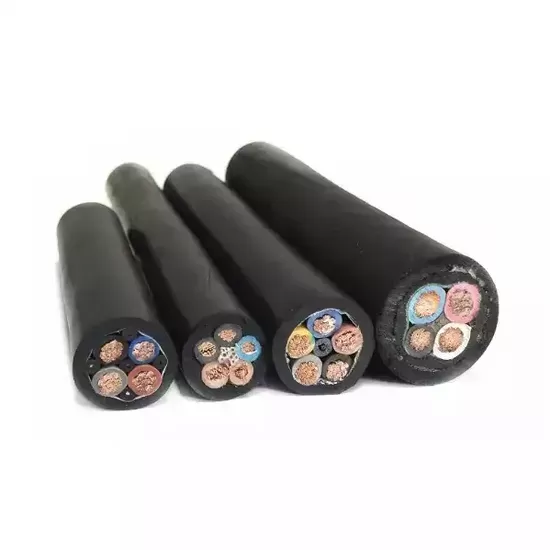
When a vendor answers one question well, the rest follow: what exactly is the conductor and shield build? For electrical control uses that means strand class, conductor gauge, shield type (foil, braid or both), insulation material and whether the assembly is overall-armoured. Ask for a datasheet that shows strand geometry and DC resistance; those numbers are the best predictors of voltage drop, termination behaviour and flex life for a cable control application.
If your control runs pass near variable-frequency drives, heavy motors, or large power feeders, choose shielded cable control. Foil shields provide high-frequency protection with low profile; braided shields give mechanical protection and high coverage for low-frequency fields. Combined foil-plus-braid shields are common where both EMI mitigation and durability matter. Remember: shields must be grounded correctly to work — a floating shield often makes noise worse, not better.
Jacket selection often determines whether a cable control installation survives the first winter or lasts many years. For indoor, dry runs PVC is typical. For plenum spaces or areas requiring lower smoke and halogen content, choose LSZH jackets. Outdoors or in oily/chemical environments favor PE, UV-stabilized jackets or specialized elastomers (EPDM) that resist oils and ozone. A small per-metre premium for the right jacket usually beats the cost and disruption of mid-life replacements.
Mechanical control cables (push-pull, Bowden, aircraft-style) are designed for motion transfer — throttle, brake, linkage — and are rated by tensile load, fatigue life and lubrication. Electrical cable control is for signals and power; it’s rated by conductor size, insulation, shield and approvals. Don’t use an electrical control cable for mechanical loops or vice versa — both will fail quickly if misapplied. Manufacturers who specialize in both typically label their product families clearly; match family to function.
Flex life is dictated by strand count and filament diameter. For frequently moved or flexed cable control runs choose fine-strand or “flex” classes — the many small filaments distribute bending stress and reduce individual strand fatigue. For static panel wiring you can accept coarser strands and save cost. Always request strand count and filament gauge from suppliers and, if possible, request sample reels for a hands-on flex test before major purchases.
Sizing a cable control installation requires modeling voltage drop for power conductors and impedance/attenuation for data lines. Use supplier DC resistance and characteristic impedance figures to calculate end-voltage at expected currents and to ensure data pairs meet the required signal margin. For long runs consider increasing conductor size or adding repeaters for sensitive communication links. Good vendors supply ampacity tables and voltage-drop examples — ask for them.
Cables are sold as cut lengths, coils, or full spools. Convenience coils and factory-terminated assemblies save immediate labour but usually carry a higher per-metre price. For fleet or multi-site outfitting, spools reduce unit cost and let your crews control terminations. When comparing quotes for cable control, normalize to the same conductor and jacket specs: strand geometry, shield type, insulation thickness, and whether the vendor includes test certificates. This apples-to-apples approach avoids buying the wrong “lookalike” cable.
Many cable problems are self-inflicted during installation. For reliable cable control installations:
respect minimum bend radius and avoid kinking,
use eyelets/grommets where cables pass through panels to prevent abrasion,
avoid tight bundling of power and sensitive signal pairs (separate or shielded routing), and
secure and strain-relieve terminations so movement isn’t concentrated at the lugs.
Following these simple habits typically doubles mean-time-between-failure for flexible control runs. Practical installation guidance can be found in manufacturer design documents — insist your vendor provides them.
Correct termination is as important as the cable itself. For shielded cable control runs terminate shields to ground at one point (usually the controller end) to avoid ground loops. Use ferrules on stranded conductors to prevent strand splay, and torque lugs to the manufacturer’s spec. For aluminum power conductors take proper anti-oxidant and lug selection steps. Factory-terminated assemblies remove this variable but add per-metre cost.
Large projects require cables with the right approvals. Look for UL, CSA, VDE, or IEC marks as applicable, and check for fire performance ratings (FT4, IEC 60332, or low-smoke zero-halogen where needed). An approved cable control product reduces inspection delays and ensures compatibility with local code.
Before commissioning a cable control run:
continuity and insulation resistance checks will catch construction damage,
a short load test verifies voltage at the far end under expected demand, and
a quick thermal check during initial load will reveal bad crimps or asymmetric joints.
Document batch numbers and reel IDs so you can trace problems to a production run if issues arise.
For demanding sites consider:
tinned conductors for high-moisture or marine environments,
extra pairs for future-proofing control expansions, and
printed sequential markings to ease inventory and fault tracing.
Small spec upgrades for your cable control purchase often pay back through lower lifecycle costs and faster troubleshooting.
Use this RFQ template to force apples-to-apples quotes for cable control:
conductor material and strand spec (exact strand count + filament gauge),
conductor gauge/size and DC resistance @20 °C,
shield type (foil, braid, foil+b, % braid coverage) and drain conductor,
insulation type/thickness and rated temperature,
jacket chemistry and UV/oil resistance,
approvals (UL/CSA/IEC) and fire rating,
minimum bend radius and outer diameter, and
packaging options (cut-length, coils, spool) and sample policy.
Vendors who provide full answers reduce procurement risk and speed deployment.
Treat a cable control purchase as an engineering decision, not a commodity buy. Define the application, insist on strand counts and shield details, match jacket chemistry to the environment, and require sample acceptance tests where duty is mission-critical. When you buy to the numbers and verify on-site, the cable you select will deliver consistent performance, fewer service calls, and a lower installed cost over its lifetime.