Jan. 15, 2026
When a machine’s safety, repeatability, or uptime depends on reliable command and feedback loops, the wiring between controllers, sensors and actuators is not a commodity — it’s part of the control system. The right control cable wire reduces troubleshooting, shortens commissioning, and lowers lifecycle cost. In this guide I’ll explain what makes premium control cable wire different, how to specify the right construction for each application, and how to present the product to buyers so your offering gets chosen and installed correctly.
(From here on I use the phrase “control cable wire” naturally and will include it 12 times across the article.)
A control cable wire is a multicore or single-core cable engineered to carry control signals, small-power feeds, and instrumentation lines in industrial and building automation systems. Unlike generic building wiring, control cable wire is built to handle electrical noise, mechanical stress, and environment-specific demands (oil, sunlight, temperature). Typical control cable wire constructions include individually insulated cores laid up into cores, optional pair/two-level screening, and an outer jacket tailored for the application.
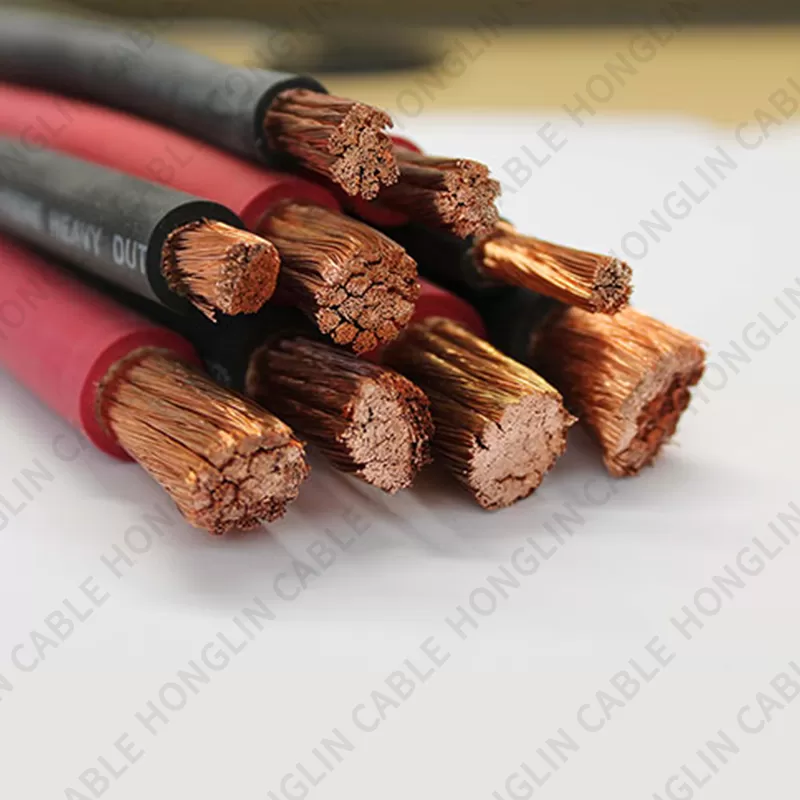
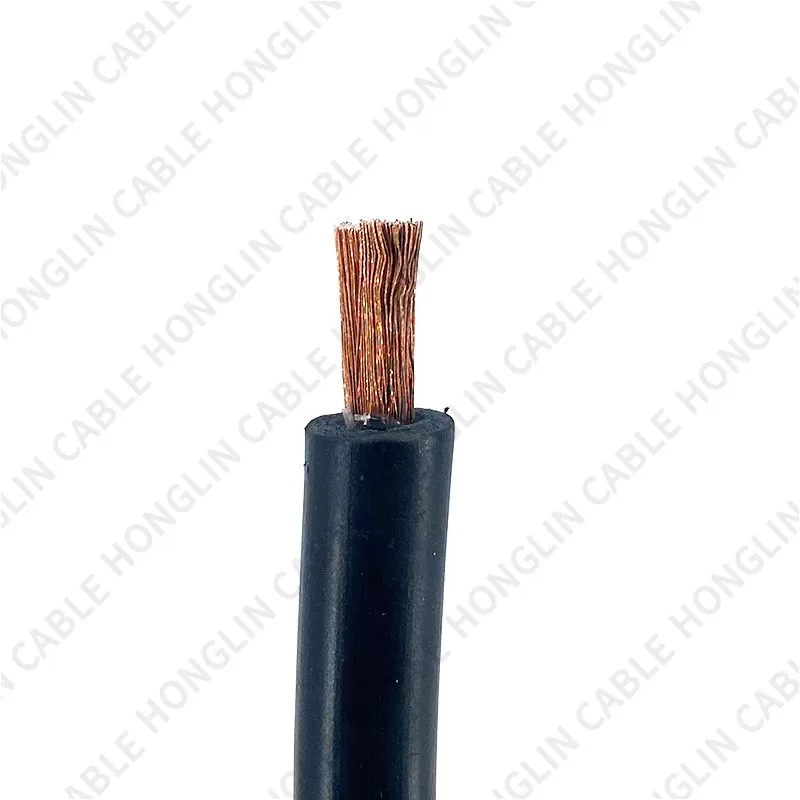
At the heart of any control cable wire is the conductor. For most control duties, manufacturers use high-purity copper in a stranded construction to balance conductivity and flexibility. Strand class (fine vs coarse) determines long-term fatigue life: a flexible machine cable needs very fine stranding whereas a fixed panel interconnect can use coarser strands. When you specify control cable wire, call out conductor size (AWG or mm²), strand count and the DCR (Ω/km) so electrical teams can model voltage drop and thermal limits.
Control signals — analogue or digital — are sensitive to capacitance and dielectric losses. Insulation materials such as PE, XLPE, or selected PVC compounds are chosen to control these parameters. A well-designed control cable wire keeps pair capacitance low and predictable, which preserves waveform edges for robust digital links and minimizes phase shifts on analogue loops.
In industrial spaces full of motors, frequency converters and welding equipment, shielding is the most cost-effective insurance policy for signal integrity. Control cable wire commonly uses foil shields for HF suppression and braided tinned copper for LF noise and mechanical robustness. Many professional parts combine foil + braid for mixed environments. Insist on published braid coverage percent and whether the shield includes a drain conductor — those numbers predict real-world immunity far more reliably than marketing copy.
The outer sheath converts a good cable into an installable one. Common jacket options for control cable wire include:
PVC — economical and durable for general indoor use.
LSZH / FRNC — low smoke, zero halogen for plenum/egress and occupied spaces.
Oil-resistant compounds and polyurethane (PUR) — for machine floors and drag-chains.
UV-stabilized jackets — for exposed outdoor routing.
Always specify the required fire and smoke ratings (e.g., CMP, CMR, CPR/CPD classes) in procurement documents to avoid costly rework on inspection.

Many failures occur when installers use fixed cable where motion-rated cable is required. If your control cable wire will live in a cable carrier, robotic arm or any application with repeated bending, choose a flex-rated construction with fine-stranded conductors, elastomeric insulation, and a jacket tested for drag-chain duty. Vendors typically publish recommended cycle life or a flex class — require those numbers for high-duty applications.
For runs that risk mechanical damage, armoured control cable wire (steel tape or galvanized wire braid) offers protection. Armoured constructions sacrifice some flexibility for crush and rodent resistance and are common in tunnels, tray fills under heavy loads, or outdoor buried ducts. Decide early whether protection, flexibility or a balanced compromise is the priority — that determines the correct product family.
To receive accurate bids specify these fields for each control cable wire line item:
cores & conductor size (AWG/mm²) and strand class,
shield type (foil/braid/both), braid coverage % and drain wire spec,
insulation and jacket materials plus temp rating,
voltage class and approvals required,
min bend radius and flex rating, and
packaging (spool, coil, cut length), samples and lead time.
Vendors who return datasheets and mill/test certificates reduce procurement risk and speed approval.
Good cable choices fail when installed badly. Key installation rules for control cable wire:
keep control runs separated from high-power feeders or cross at right angles,
respect minimum bend radius while pulling through trays and conduits,
avoid kinking and use grommets at metal edges,
terminate shields deliberately (single point vs equipotential as design dictates), and
use ferrules on stranded conductors to prevent strand splay.
Document these rules in the project handover so maintenance teams follow the intended practice.
On delivery and before permanent installation, perform acceptance tests: continuity for all cores, insulation resistance between conductors, shield continuity, and for power cores a loaded voltage drop test if applicable. For large orders ask for factory test certificates (DCR, HV, insulation resistance). Traceability is critical — a reliable control cable wire supplier will provide batch numbers and QA records so issues can be tracked back to production runs.
A low per-metre price can hide higher lifetime costs. A properly specified control cable wire that resists EMI, endures mechanical duty, and meets fire codes reduces downtime and labour for replacements. For capital projects evaluate total cost of ownership — fewer failures and less rework almost always justify investing in the correct product family.
Competitive cable vendors offer customization: printed jackets, colour coding, numbered cores, spare pairs, tinned braid for marine sites, and bespoke lengths pre-cut to room drops. These small extras make installation and future maintenance faster and cheaper. When presenting your product, highlight pragmatic choices buyers love — e.g., pre-printed part IDs or Banana-peel jackets that speed stripping.
Choose suppliers who publish clear datasheets, provide sample reels, and can custom-manufacture if needed. Manufacturer reputation, local support, and reliable lead times are as important as the product spec. For high-volume or long-term programs prefer vendors who can lock part numbers and guarantee consistent production runs to avoid form/fit/function drift between deliveries.
Control cable wire is everywhere: machine tool I/O, PLC distributed I/O, motor control cabinets, building automation buses, access control, and instrumentation. In each case the cable influences installation time, signal stability and maintenance load. Highlighting real use cases — for example a packaging line with continuous motion that used flex-rated cable to eliminate a recurring failure — helps buyers visualize the product’s practical benefits.
When you create a product page for control cable wire, include:
precise conductor and strand details,
shield type and braid coverage % (with drain spec),
insulation and jacket chemistry with code approvals,
flex rating and minimum bend radius, and
available service documentation (test certificates, installation notes).
Concrete numbers beat vague adjectives — engineers trust the data.
Treat control cable wire as an engineering decision. Specify conductor, shielding and jacket to the expected duty, demand datasheets and samples for mission-critical runs, document installation rules, and require acceptance testing. When done right this one component removes a huge chunk of commissioning risk and becomes invisible infrastructure that operators forget — which, for an engineer, is the highest compliment.