Nov. 28, 2025
If you’re considering a 10mm welding cable, you want a lead that carries high current reliably and survives daily handling. The 10 mm² cross-section is a popular size for many welding, battery and generator applications because it balances current capacity with flexibility and manageable weight. But the cross-section alone won’t tell you how the cable performs in the field: strand geometry, insulation/jacket chemistry and proper terminations determine whether a 10mm welding cable becomes a long-lived tool or a recurring maintenance headache.
A 10mm welding cable is often chosen when operators need a flexible conductor that still handles substantial welding currents without excessive voltage drop over short to moderate runs. For service vehicles, portable welders and many workshop tasks, a 10 mm lead gives reach and manageable bulk. It’s also a practical size for battery interconnects and inverter feeds where flexibility and current capacity must coexist.
Saying “10mm” only identifies the conductor area. Before you buy a 10mm welding cable, insist on these datasheet items:
conductor construction (strand count and strand diameter),
DC resistance at 20 °C (for accurate voltage-drop calculations),
rated voltage and operating temperature range, and
jacket/insulation chemistry and minimum bend radius.
Vendors that publish these numbers let you make an engineering decision instead of guessing from pictures.

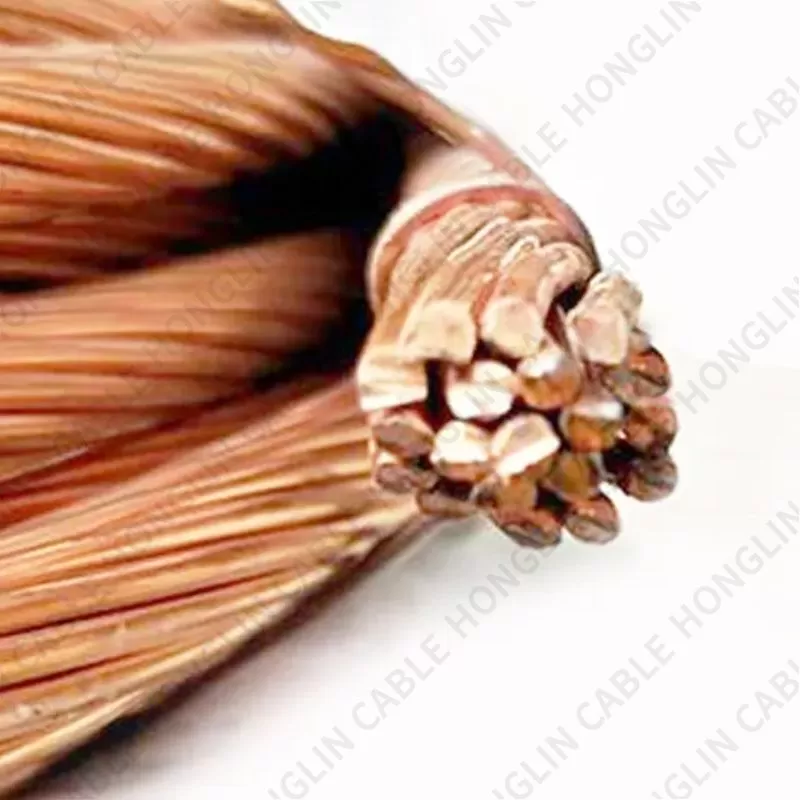
One of the most practical differences between two 10 mm leads is how the copper is stranded. A 10mm welding cable built from many fine filaments behaves far better under repeated flexing than one made from a few coarse strands. Fine-strand construction:
increases flex fatigue life on reels,
creates cleaner crimps with fewer stray wires, and
reduces the risk of fractured strands at terminations.
If the cable will be reeled and unreel frequently — as in rental fleets or busy shops — prefer a high-strand product and ask for the strand count on the datasheet.
The jacket protects the conductor from oil, abrasion, ozone and sunlight. For heavy use choose elastomeric jackets such as EPDM or neoprene that remain flexible in low temperatures and resist chemical attack. A 10mm welding cable with a nitrile-butadiene PVC compound may be appropriate for certain battery or automotive environments, but for general heavy duty use an EPDM or neoprene jacket usually lasts longer and reduces whole-life cost.
Even at 10 mm², long runs cause voltage drop. Use the supplier’s DC resistance to compute end-voltage at expected currents. For welding duties, where peak and average currents differ, check ampacity tables specific to welding duty cycles. A correctly sized 10mm welding cable will preserve arc stability and protect inverter/battery performance. If your calculations show marginal end voltage, step up to the next cross section or reduce run length.
Most field failures appear at the termination, not mid-span. To keep a 10mm welding cable reliable:
use compression lugs sized for the conductor and stud; ensure the lug barrel fully captures strands,
crimp with manufacturer-specified dies and check the mechanical integrity,
fit strain relief boots and heat-shrink to stop bending forces concentrating at the lug, and
commission critical joints with a thermal scan to detect high-resistance points before they cause failure.
Proper termination preserves the conductor’s low resistance and prevents dangerous heating.
How you handle reels affects cable life dramatically. For every 10mm welding cable in your inventory:
choose reels with drum diameters that respect the cable’s minimum bend radius,
protect pass-through edges with grommets to prevent chafing,
clean jackets before rewinding to remove grit that abrades the sheath, and
rotate reel usage so that wear is distributed across lengths.
These straightforward habits significantly increase mean time between replacements.
A 10mm welding cable is ideal for:
portable welding leads for field fabrication and maintenance,
battery interconnects and inverter feeds in vehicles and backup systems,
generator hookup leads for temporary distribution, and
flexible feeder leads for compressors and portable motors.
In each case, pick the jacket chemistry and strand geometry to match expected mechanical and environmental stress.
To make quotes comparable, include these fields when requesting a 10mm welding cable:
conductor area and exact strand breakdown (strand count + filament diameter),
DC resistance at 20 °C and rated voltage,
jacket/insulation chemistry and operating temperature range,
minimum bend radius, outside diameter and reel/packaging options, and
required test documentation (mill test, hipot, insulation resistance) and sample acceptance policy.
A precise RFQ prevents substitutions and ensures the delivered cable performs as intended.
Per-metre price for a 10mm welding cable varies with strand construction and jacket chemistry. Short cut lengths and pre-terminated kits carry a premium for convenience, while bulk reels drive unit price down. But the cheapest per-metre cable can be the most expensive over time if coarse strands and poor jackets cause early failures. Factor termination labour and replacement frequency into your total cost assessment.
For demanding uses consider premium variants:
tinned conductors for marine or corrosive environments,
ultra-flex constructions with very high strand counts for extreme flex cycles, and
specialized double insulation or flame-retardant jackets for hazardous locations.
A modest premium on a 10mm welding cable with these features can reduce downtime and replacement costs in hostile environments.
A short, repeatable maintenance program extends cable life:
visually inspect jackets and terminations before each use,
thermal-scan critical joints during commissioning and periodically,
replace any cable with exposed strands or deep cuts immediately, and
record reel IDs and batch numbers for traceability and warranty claims.
A few minutes of preventive checks saves hours of reactive repairs.
When you order a 10mm welding cable, treat procurement as a systems decision: demand strand counts and DC resistance on the datasheet, choose jacket chemistry to match the environment, request a sample for mission-critical deployments, and ensure terminations are performed with the right tooling and inspection. Do this and your 10 mm leads will be dependable, safe and economical to operate.