Nov. 26, 2025
If you’ve searched 1 awg welding cable, you want more than a big copper rope. You want a lead that carries heavy current, reels easily, survives jobsite abuse and terminates cleanly. The phrase “1 awg welding cable” describes conductor size, but the real performance comes from strand geometry, jacket chemistry and termination quality. Choose carefully and the cable will be a dependable tool; choose poorly and you’ll be replacing leads, troubleshooting hot joints and losing hours on the next job.
Saying 1 awg welding cable tells you the conductor cross-section — but not the whole story. Two cables with the same AWG can behave very differently depending on:
how many strands make up the conductor (high strand counts = better flexibility),
strand diameter (many fine filaments flex far better than a few thick wires), and
jacket and insulation chemistry (EPDM/neoprene vs. PVC, etc.).
When you buy a 1 awg welding cable, demand the strand breakdown and DC resistance on the product page — those numbers predict real-world behaviour far better than gauge alone.
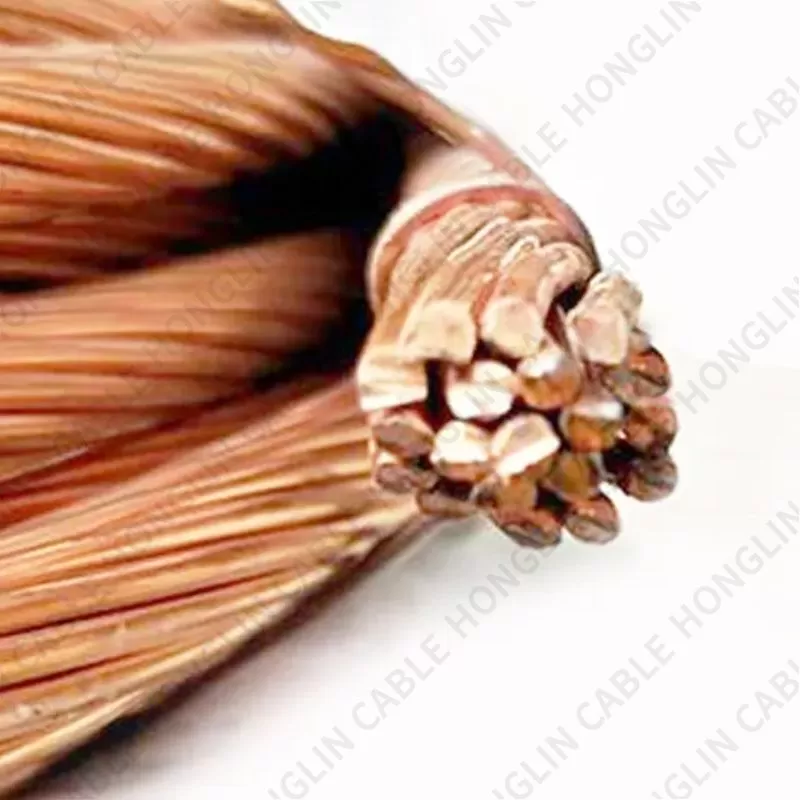
The conductor is the heart of any 1 awg welding cable. Fine-stranded conductors are built from many tiny filaments that braid into a flexible rope. The practical benefits are clear:
far greater flex fatigue resistance when reels are deployed repeatedly,
cleaner crimps with fewer stray strands, and
reduced likelihood of strand fractures near terminations.
If your leads are handled frequently or stored on reels, insist on a high-strand conductor and confirm the strand count on the datasheet before you buy 1 awg welding cable.
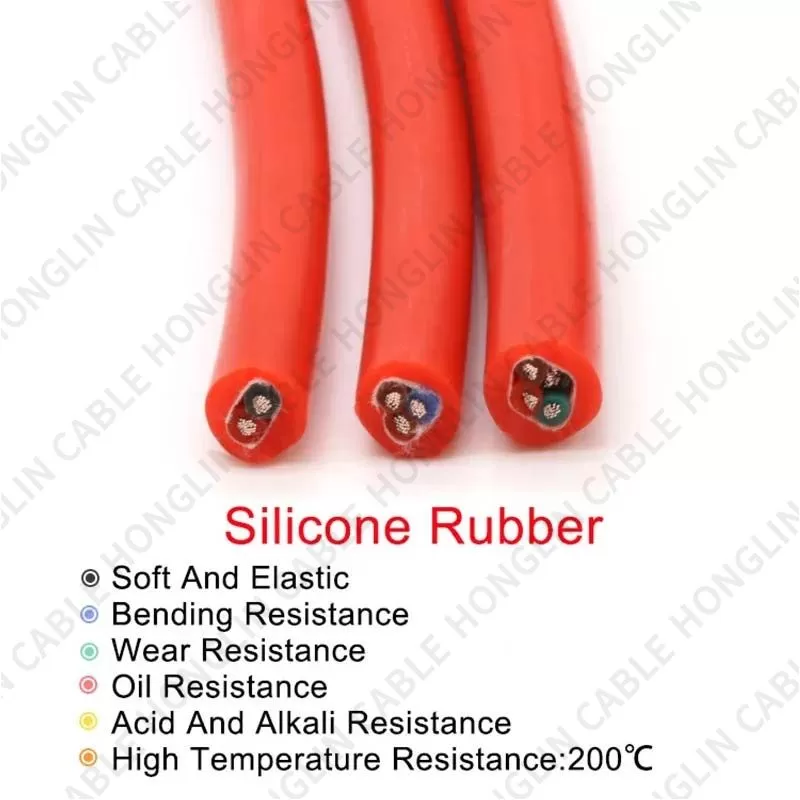
A cable’s jacket protects it from the real world. For robust performance, prefer elastomeric jackets:
EPDM — excellent oil and abrasion resistance, retains flexibility at low temperatures.
Neoprene (PCP) — good cut and abrasion resistance with reliable outdoor performance.
PVC — inexpensive and OK indoors, but brittle in cold and poor versus oil/abrasion.
For most field uses, a 1 awg welding cable with EPDM or neoprene jacketing will outlast cheaper PVC alternatives and reduce the total cost of ownership.
When evaluating any 1 awg welding cable, require these datasheet values:
conductor strand breakdown (exact filament count),
DC resistance at 20 °C (Ω per 1000 ft or per metre),
rated voltage and operating temperature range, and
minimum bend radius and outside diameter.
These allow voltage-drop calculations and ensure the cable meets both electrical and mechanical needs.
A 1 awg welding cable is often chosen for short to medium runs where flexibility and current capacity matter:
for handheld welding leads under 10–30 ft, 1 AWG provides low resistance and good arc stability;
for battery interconnects and inverter feeds, 1 AWG keeps voltage losses down during heavy cranking or draw;
for longer feeder runs, calculate voltage drop — you may need to step up to 1/0 or 2/0 to keep the end voltage within equipment limits.
Always model current, duty cycle and run length rather than relying on rule-of-thumb sizing.
Most field failures occur at terminations, not mid-span. For a reliable 1 awg welding cable installation:
use compression lugs sized for 1 AWG and compatible with the stud,
crimp with the correct tooling and verify mechanically where possible,
apply strain relief boots and heat-shrink to prevent bending stress at the lug, and
thermally scan terminations under load during commissioning to catch marginal joints.
A proper termination keeps joint resistance low and prevents hot spots.
Because these leads are handled frequently, small habits make a big difference:
use reels with a large enough drum diameter to respect the cable’s minimum bend radius,
avoid dragging over sharp edges and protect entries with grommets,
clean the jacket before rewinding to prevent grit from embedding and abrading, and
rotate reel use so wear is spread across the fleet.
Follow these routines and your 1 awg welding cable inventory will last far longer.
The 1 awg welding cable is a versatile conductor that fits many roles:
portable welding leads for field repairs and maintenance,
battery interconnects in vehicles and inverter systems,
generator hookup leads for temporary distribution, and
portable equipment feeds for compressors and motors.
In each case, select jacket chemistry and strand geometry to match mechanical stress and the environment.

To avoid ambiguous quotes, require suppliers to supply:
AWG and exact strand breakdown (e.g., number of filaments and filament diameter),
DC resistance at 20 °C and rated voltage,
jacket and insulation material with temperature rating,
minimum bend radius and outside diameter,
packaging (length per reel and cut tolerances) and test certificates.
This ensures apples-to-apples quotations and avoids wrong-product deliveries.
A low unit price for 1 awg welding cable can be tempting, but poor cable often leads to higher lifetime costs: more replacements, emergency labour and downtime. A modest premium for a high-strand conductor and durable jacket typically pays back quickly through fewer failures and lower maintenance.
Adopt a short inspection program:
visual pre-job checks for cuts, nicks or exposed strands,
torque check and thermal scan of terminations after commissioning,
immediate replacement for cables with deep jacket cuts, and
log reel serials and batch numbers to spot manufacturing defects quickly.
A little discipline reduces most cable-related outages.
For marine or corrosive environments, consider tinned copper conductors to protect strands and terminations. Oxygen-free copper (OFC) is marketed for slightly better conductivity; while conductive gains are marginal at this scale, OFC plus the right construction can be justified where every millivolt matters.
prefer listings that publish strand counts and DC resistance;
match jacket chemistry to exposure (EPDM/neoprene for outdoors);
for friction-heavy reel use choose high-strand (fine filament) constructions;
require sample reels for mission-critical orders and insist on test certificates.
These steps convert a product labelled 1 awg welding cable into a reliable field tool.
Treat your 1 awg welding cable choice as a systems decision: pick conductor geometry for flex life, choose a jacket suitable for the environment, demand measurable datasheet numbers and use correct terminations and inspection. Do that and the cable becomes a dependable asset instead of a recurring maintenance headache.