Nov. 25, 2025
When you’re welding on-site, moving generators, or connecting battery banks, the cable is more than a copper rope — it’s the last mile that determines whether you have a clean arc, predictable voltage, and a safe, durable connection. The 1 0 gauge welding cable strikes the practical balance: plenty of copper cross-section for low resistance, yet engineered with many fine strands and a rugged jacket so it reels, flexes and survives the real world. For maintenance crews, rental fleets and fabricators, picking the right 1 0 gauge welding cable means fewer failures, fewer emergency replacements and better uptime.
Saying “1 0 gauge welding cable” tells you the conductor size (1/0 AWG), but it doesn’t tell you everything you’ll experience on the job. Equally important are how that conductor is built and what materials surround it. Two seemingly identical 1 0 gauge welding cable SKUs can behave completely differently if one is coarse-stranded and the other is made of many thin filaments. Practical buyers therefore look for strand count, strand diameter, jacket chemistry and datasheet numbers — not just the AWG marking.
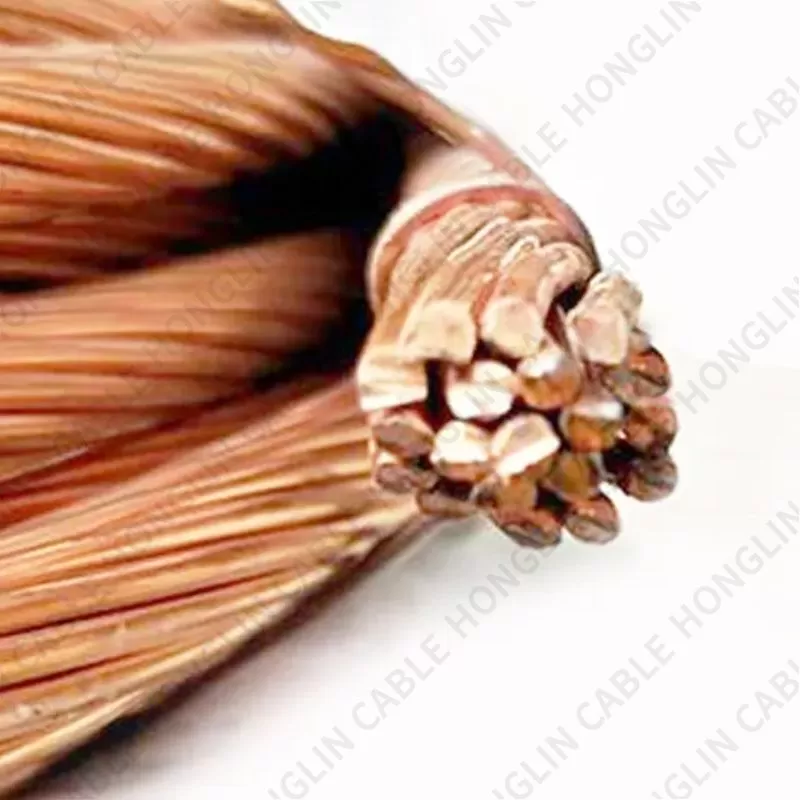
The heart of any good 1 0 gauge welding cable is the stranded conductor. Manufacturers use many thin filaments to form the 1/0 cross-section; those filaments flex more reliably than a few thick strands. The advantages are concrete:
Improved flex life: more cycles to failure when reeled and unreeled repeatedly.
Cleaner terminations: fine-stranded cable crimps and lugs better, with fewer stray wires and lower joint resistance.
Better mechanical fatigue resistance at bend points and terminations.
When comparing quotes, look for specific strand constructions — numbers like 990×30 or 1026×30 are common and give a direct read on flexibility.
A durable 1 0 gauge welding cable must also survive mechanical abuse and contaminants. That’s where the insulation and jacket chemistry matter:
EPDM elastomer is widely used because it stays flexible at low temperatures, resists oil and ozone, and tolerates abrasion — ideal for jobsite reels and outdoor work.
Neoprene / PCP compounds are another field-proven option for abrasion and oil exposure.
PVC is fine for light-duty indoor uses but is less forgiving in oily, cold or heavily abraded contexts.
Choose the jacket after assessing where the cable will be dragged, coiled and stored — the wrong jacket shortens service life more quickly than any conductor choice.
A responsible specification for a 1 0 gauge welding cable always includes precise datasheet values. At minimum, require:
Rated voltage: many welding cables are rated for up to 600 V. prioritywire.com
Operating temperature range: commonly −50°C to +105°C for heavy-duty EPDM-insulated welding cable. Windy Nation Inc
DC resistance at 20°C: used for voltage-drop calculations — don’t skip it.
Strand count and strand diameter: these predict flex life and termination behaviour. iewc.com
Minimum bend radius and outer diameter for reel and conduit planning.
Asking suppliers for these values gets you useful engineering data rather than marketing language.

Sizing a 1 0 gauge welding cable requires thinking about both continuous ampacity and short-term peak currents typical of welding or motor starts. Practical guidance:
For short welding leads (say up to 10–30 ft), 1/0 is a common choice because voltage drop remains low and arc performance is solid. powerassemblies.com
For battery interconnects and inverter feeds, the low DC resistance of 1/0 preserves end-voltage under high current draw.
For long generator feeders, run a voltage-drop calculation: long runs may justify stepping to 2/0 or larger to keep end voltage within acceptable limits. powerassemblies.com
Always calculate voltage drop for your actual run length and duty cycle — the datasheet DC resistance makes the math straightforward.
Most field failures appear at the joint. For consistent, low-resistance connections with a 1 0 gauge welding cable:
Use compression lugs sized for the conductor and the stud/bolt. Ensure the lug captures all strands.
Crimp with proper tooling (the correct die) and, where appropriate, use soldering only where compatible with the jacket.
Fit strain relief and insulated boots so bending forces are absorbed away from the lug.
Commission with thermography under load to detect high-resistance joints before they become problems.
A good termination regime prevents the cable from being the weak link.
Fields crews who handle reels all day can extend cable life significantly with a few simple practices:
Use reels with adequate drum diameter so the cable never exceeds its minimum bend radius.
Protect routes where the cable runs over edges with grommets or guards.
Clean cable before rewinding to avoid grit embedding itself in the jacket.
Rotate usage across your fleet so individual reels aren’t worn out prematurely.
Paired with a properly specified 1 0 gauge welding cable, these habits drop replacement rates and save labour.
The 1 0 gauge welding cable is widely used for:
Welding leads and electrode holders that see constant reeling and unreeling.
Battery interconnects for mobile equipment and inverters where low resistance is critical.
Portable generator hookups for construction sites and events.
Short-run distribution for portable motors, compressors and temporary feeds.
In all these roles, pick jacket and strand geometry to match mechanical stress and environmental exposure.
To get comparable quotes and avoid substitution risks, include:
AWG designation and exact conductor breakdown (e.g., 1,026/30). wireandcableyourway.com
Insulation and jacket chemistry with rated temperature range. centurywire.com
DC resistance at 20°C and rated voltage. prioritywire.com
Minimum bend radius, outer diameter and reel packaging (ft/m per reel).
Required test certificates (hipot, insulation resistance) and batch traceability.
Sample reel acceptance policy for mission-critical runs.
A crisp RFQ gets you apples-to-apples bids and removes ambiguity at delivery.
A low per-foot price may look attractive, but poor specification costs more in replacements, emergency labour and downtime. Investing a modest premium in a correct 1 0 gauge welding cable—right strand geometry, robust jacket and proven test documentation—reduces whole-life cost and improves on-site reliability, especially for rental fleets and heavy-use shops.
Adopt a short, regular routine:
Visual inspection of jackets and terminations before each job.
Thermal imaging of high-current connections at commissioning.
Immediate replacement for cables with exposed strands or deep cuts.
Logging reel batch numbers to isolate manufacturing issues quickly.
A few minutes of maintenance prevents many common failures.
When your work depends on portable high-current leads, treat the 1 0 gauge welding cable as a system component: specify conductor geometry for flex life, pick a jacket suited for exposure, demand datasheet numbers and sample acceptance, and terminate with the right lugs and strain relief. Do this and your cable becomes a reliable, low-maintenance part of operations — not a recurring headache.