Sep. 26, 2026
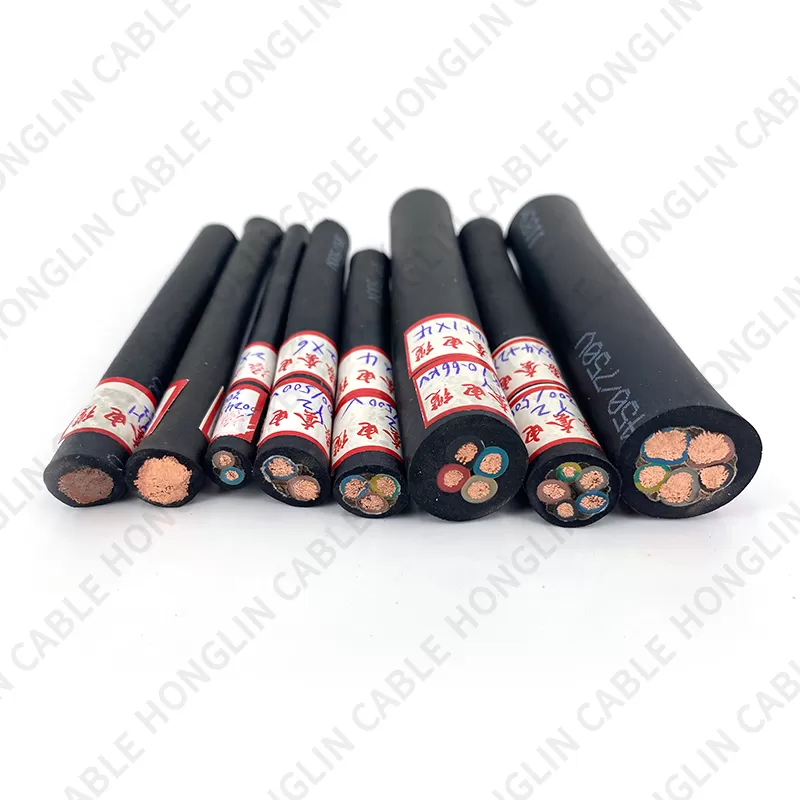
A 0.6/1kV XLPE cable is a low-voltage power cable designed for electrical power transmission and distribution systems with a rated voltage of 0.6/1kV (U₀/U). It uses cross-linked polyethylene, commonly known as XLPE, as the primary insulation around the conductor.
Compared with conventional PVC-insulated power cables, XLPE-insulated cables are widely selected for applications where higher conductor operating temperature, electrical performance, and long-term reliability are important.
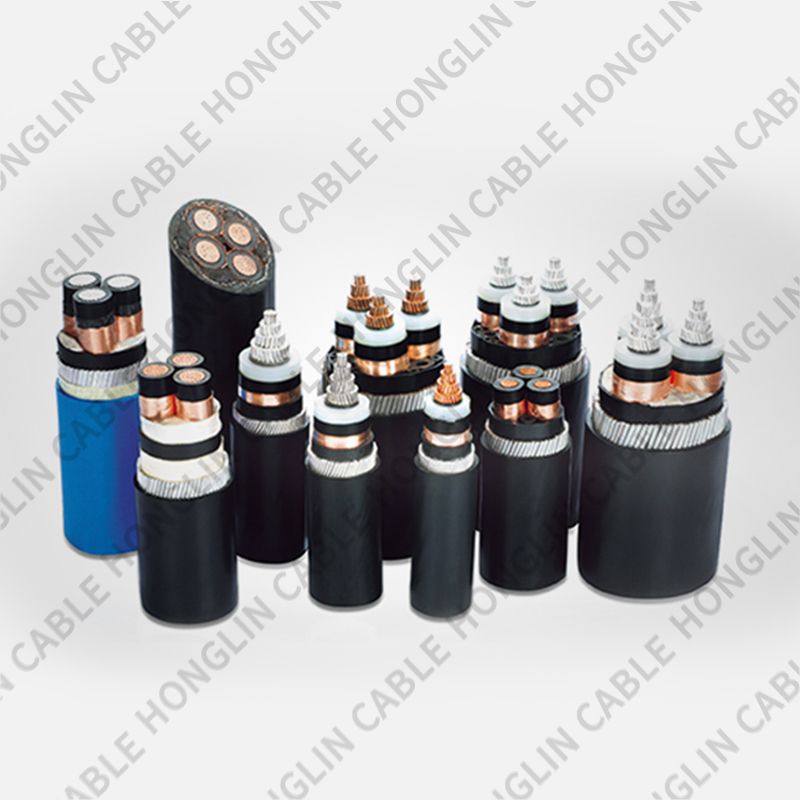
A 0.6/1kV XLPE cable can be manufactured with copper or aluminum conductors, multiple core configurations, PVC or LSZH outer sheaths, and armored or unarmored constructions.
This makes the cable suitable for a broad range of applications, including industrial power distribution, commercial buildings, infrastructure, underground installations, renewable energy systems, and electrical equipment.
This guide explains what a 0.6/1kV XLPE cable is, how XLPE insulation works, which cable constructions are available, what standards apply, how to select the correct size, and what buyers should consider when sourcing from a cable manufacturer.
A 0.6/1kV XLPE cable is a power cable with a rated voltage of 0.6 kV between conductor and earth and 1 kV between conductors.
The cable uses cross-linked polyethylene (XLPE) as its insulation material.
A typical cable construction may look like:
Conductor → XLPE insulation → Inner sheath/bedding → Armor → Outer sheath
Not every cable contains every layer.
For example, an unarmored single-core cable may simply consist of:
Copper conductor → XLPE insulation → PVC sheath
An armored multi-core cable can contain additional bedding and metallic armor for mechanical protection.
Commercial 0.6/1kV XLPE products are commonly available in copper and aluminum conductor versions, with both armored and unarmored configurations.
The designation 0.6/1kV represents the rated voltage of the cable.
The two values refer to:
0.6 kV (U₀): rated voltage between conductor and earth
1 kV (U): rated voltage between conductors
The cable's complete electrical performance depends on the applicable standard and system conditions.
For international low-voltage power cable applications, 0.6/1kV is a widely used voltage class, and IEC 60502-1 is a major reference standard for power cables with extruded insulation up to and including 1 kV.
The voltage rating should always be checked against the actual electrical system rather than selected based only on the equipment's nominal voltage.
XLPE stands for cross-linked polyethylene.
The cross-linking process changes the physical properties of polyethylene and makes it suitable for demanding electrical insulation applications.
One of the most important advantages is its thermal capability.
Many 0.6/1kV XLPE power cable constructions specify a maximum continuous conductor operating temperature of approximately 90°C. Under specified short-circuit conditions, the conductor temperature can commonly reach 250°C for a maximum duration of 5 seconds, depending on the applicable standard and cable construction.
This higher thermal capability is one reason XLPE has become widely used in power-distribution cables.
Other important characteristics include:
Good electrical insulation
High thermal stability
Good resistance to moisture
Long-term electrical performance
Suitable mechanical properties
Efficient power transmission
Compatibility with a wide range of cable constructions
XLPE is not automatically the right insulation for every cable application, but it is a strong choice for many low-voltage power-distribution systems.
The exact construction depends on whether the cable is single-core, multicore, armored, unarmored, copper, aluminum, PVC-sheathed, or LSZH-sheathed.
The conductor carries the electrical current.
Two materials dominate the 0.6/1kV XLPE cable market:
Copper
Copper provides high conductivity and is commonly selected where compact conductor dimensions and strong electrical performance are important.
Aluminum
Aluminum has lower density than copper and can provide a significant weight advantage, especially for large cross-sectional areas.
Commercial 0.6/1kV XLPE cable ranges are available with both copper and aluminum conductors.
The conductor may be solid or stranded depending on its size and the applicable standard. Class 2 stranded conductors are commonly used in power cable constructions.
XLPE surrounds each conductor and electrically separates it from other conductive components.
The insulation thickness depends on:
Rated voltage
Conductor size
Cable standard
Cable construction
The purpose is not simply to prevent short circuits. The insulation system must maintain electrical integrity under normal operating conditions, overloads, and specified short-circuit conditions.
In multicore cables, fillers may be used between insulated cores to create a suitable circular cable assembly.
Non-hygroscopic materials are commonly used in certain cable designs.
Binder tape can then hold the cable components together before the inner sheath or armor is applied.
Armored cables may include an inner sheath or bedding layer between the assembled cores and the armor.
This layer helps protect the insulation and provides a suitable surface for armor application.
Armor is optional.
Depending on the application, an XLPE cable may use:
Steel wire armor (SWA)
Steel tape armor (STA)
Aluminum wire armor
Other metallic protection
A typical armored construction can provide additional mechanical protection for underground or industrial installations.
For example, manufacturers offer 0.6/1kV XLPE cable with galvanized steel wire armor for multicore designs and aluminum armor options for certain single-core constructions.
The outer sheath protects the completed cable from the surrounding environment.
Common sheath materials include:
PVC
PE
LSZH compounds
PVC remains widely used for general-purpose power cables.
LSZH can be selected for projects where low smoke and halogen-free characteristics are required.
The term “0.6/1kV XLPE cable” covers many different products.
A copper conductor combined with XLPE insulation is widely used for low-voltage feeders and power distribution.
A common construction is:
Cu/XLPE/PVC
Typical applications include:
Industrial power distribution
Commercial buildings
Electrical panels
Machinery
Distribution boards
Equipment feeders
Aluminum XLPE cables can be useful for larger power-distribution systems where cable weight and material cost are important.
A common construction is:
Al/XLPE/PVC
Aluminum 0.6/1kV XLPE cables are available in a wide range of conductor sizes, and commercial product data includes applications in industrial facilities, urban networks, underground installations, cable ducts, and distribution systems.
Unarmored cable can be used when the installation environment already provides sufficient mechanical protection.
Typical locations include:
Electrical rooms
Cable trays
Conduits
Protected indoor installations
Equipment areas
The absence of armor can reduce cable weight and simplify handling.
Armored XLPE cable adds mechanical protection around the cable assembly.
It is commonly considered for:
Underground power distribution
Direct-burial installations
Industrial sites
Cable trenches
Outdoor installations
Locations exposed to mechanical damage
The correct armor type depends on the cable construction and project requirements.
PVC sheathing is widely used because it provides a practical balance of:
Mechanical protection
Environmental resistance
Electrical insulation
Cost efficiency
LSZH stands for Low Smoke Zero Halogen.
LSZH sheaths can be considered for buildings and infrastructure where smoke and corrosive halogen gases are concerns during a fire.
LSZH cable should not be selected simply because it is described as “safer.” The exact fire, smoke, toxicity, and flame-performance requirements should be specified according to the project.
For international applications, IEC 60502-1 is one of the most important standards associated with 0.6/1kV XLPE power cables.
IEC 60502-1 covers power cables with extruded insulation for rated voltages up to and including 1 kV.
IEC 60228 is commonly referenced for cable conductor requirements.
Depending on the destination market, additional standards may include:
BS 5467
BS 6724
EN standards
DIN/VDE standards
UL standards
National electrical standards
Utility-specific specifications
The standard must be confirmed before manufacturing.
A cable designed according to IEC 60502-1 should not automatically be assumed to satisfy the requirements of another national standard.
Some manufacturers offer the same basic 0.6/1kV XLPE concept in different constructions according to IEC, British, Australian, or project-specific specifications.
Temperature is one of the most important reasons engineers select XLPE insulation.
For many standard XLPE power cable constructions:
Continuous conductor operating temperature: approximately 90°C
Short-circuit conductor temperature: up to approximately 250°C for a limited duration
Published manufacturer specifications commonly state 90°C continuous and 250°C short-circuit limits for 0.6/1kV XLPE cables.
These values should not be interpreted as permission to operate the cable continuously at any ambient temperature.
Actual ampacity depends on:
Ambient temperature
Installation method
Cable grouping
Soil thermal conditions
Number of loaded conductors
Conductor size
Cable spacing
Ventilation
The manufacturer's datasheet and applicable calculation method should be used for final engineering.
Factories use XLPE power cables to supply:
Motors
Pumps
Compressors
Production lines
Distribution panels
Industrial equipment
XLPE is particularly useful where thermal performance and reliable power distribution are important.
0.6/1kV XLPE cables can be used for:
Main feeders
Sub-distribution
HVAC systems
Electrical rooms
Building equipment
Distribution boards
Depending on the building and local regulations, LSZH or special flame-performance cables may be required.
Armored 0.6/1kV XLPE cables can be used in underground systems where mechanical protection is needed.
The cable selection should account for:
Burial conditions
Soil characteristics
Water exposure
Mechanical loading
Installation temperature
Cable spacing
XLPE low-voltage power cables can be used in electrical systems associated with:
Solar power
Wind power
Battery energy storage
Inverters
Transformers
Auxiliary distribution
However, the cable must be suitable for the actual AC or DC application.
For solar DC circuits in particular, a standard 0.6/1kV AC XLPE power cable should not automatically be treated as a dedicated photovoltaic cable.
0.6/1kV XLPE cables may be used in:
Airports
Hospitals
Rail facilities
Water-treatment plants
Tunnels
Data centers
Public buildings
Fire and smoke performance can become particularly important in enclosed or high-occupancy infrastructure.
Choosing the correct cable requires more than selecting the voltage and conductor size.
Confirm that 0.6/1kV is suitable for the electrical system.
Also determine whether the application is AC or DC.
The conductor size must support the expected load under the actual installation conditions.
Do not select a cable based only on a generic ampacity table.
For long cable runs, voltage drop can become a critical design factor.
A cable may have adequate current-carrying capacity but still be too small because of excessive voltage drop.
Choose copper when conductivity, compact dimensions, and connection characteristics are priorities.
Consider aluminum when lower weight and material cost provide meaningful advantages.
Common configurations include:
1 core
2 core
3 core
4 core
5 core
3+1 core
Customized configurations
The appropriate arrangement depends on the electrical system.
Use armored cable when mechanical protection is required.
Use unarmored cable when the installation system already provides adequate protection.
PVC is suitable for many general-purpose applications.
LSZH may be required for specific building and infrastructure projects.
Specify the applicable standard before placing the order.
For international 0.6/1kV XLPE power cable, IEC 60502-1 is a common reference.
0.6/1kV XLPE cables are manufactured in a wide range of conductor cross-sections.
Common sizes include:
1.5 mm²
2.5 mm²
4 mm²
6 mm²
10 mm²
16 mm²
25 mm²
35 mm²
50 mm²
70 mm²
95 mm²
120 mm²
150 mm²
185 mm²
240 mm²
300 mm²
400 mm²
500 mm²
630 mm²
800 mm² and larger, depending on cable construction
Published manufacturer ranges demonstrate that 0.6/1kV XLPE cable can extend from small single-core sizes to very large conductors used for high-current distribution.
However, cable size should never be selected from a generic size list alone.
The correct cross-section depends on current, voltage drop, installation method, conductor material, ambient conditions, grouping, and short-circuit requirements.
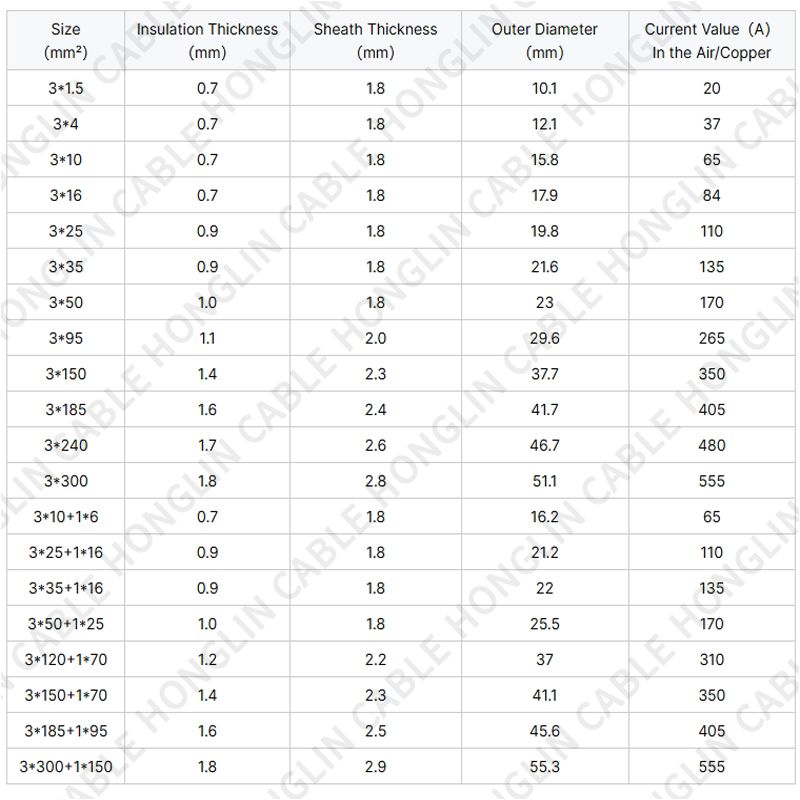
Ampacity is affected by several variables.
For example, the same cable size may have different allowable current ratings when installed:
In free air
In a cable tray
In conduit
Underground
Directly buried
Grouped with other loaded cables
A manufacturer may therefore publish separate current ratings for air and ground installation.
Commercial aluminum 0.6/1kV XLPE cable data, for example, lists different current capacities for installation in air and underground conditions.
For an engineering project, the final ampacity should be calculated using the applicable standard and installation parameters.
One of the most common selection questions is whether XLPE is better than PVC.
The answer depends on the application.
| Feature | XLPE | PVC |
|---|---|---|
| Typical conductor operating temperature | Higher | Lower |
| Thermal performance | Excellent | Good |
| Common power cable use | Very common | Very common |
| Cost | Generally higher | Generally lower |
| Power distribution | Excellent | Suitable for many applications |
| Short-circuit temperature capability | Higher | Lower |
| Typical insulation use | LV/MV power cables | General LV cables |
XLPE is often preferred when higher thermal performance is valuable.
PVC can be a cost-effective solution where the application's thermal requirements are moderate.
The decision should be based on the complete cable design rather than insulation material alone.
A 0.6/1kV XLPE cable is designed for a higher rated voltage class than a 450/750V cable.
The two products should not be treated as interchangeable.
If an electrical system requires a 0.6/1kV-rated cable, a 450/750V cable should not be substituted simply because its conductor size is sufficient.
Voltage rating is a fundamental cable-design parameter.
Both LV and MV cables can use XLPE insulation, but their electrical designs are different.
A typical LV XLPE cable may consist of:
Conductor → XLPE insulation → Sheath
Medium-voltage XLPE cable generally requires additional electrical field-control layers, including conductor screens and insulation screens.
Therefore, XLPE does not mean that LV and MV cables are interchangeable.
The cable voltage class determines the complete insulation system and construction.
A professional cable request should include enough information for the manufacturer to identify the exact construction.
For example:
4 × 120 mm² Cu/XLPE/PVC, 0.6/1kV, IEC 60502-1
This specification tells the manufacturer:
4 cores
120 mm² conductor
Copper conductor
XLPE insulation
PVC sheath
0.6/1kV rated voltage
IEC 60502-1 standard
For an armored cable, the specification could include the armor type, such as:
4 × 120 mm² Cu/XLPE/SWA/PVC, 0.6/1kV, IEC 60502-1
A complete RFQ should also specify:
Cable quantity
Installation environment
Conductor class
Core identification
Fire performance
Sheath color
Packaging
Drum requirements
Testing requirements
The clearer the specification, the easier it is for a manufacturer to provide an accurate quotation.
Before purchasing, buyers should consider more than the price per meter.
Ask the manufacturer about:
Which standard is the product manufactured and tested to?
Is it copper or aluminum? What conductor class is used?
What is the insulation thickness and temperature rating?
Is the sheath PVC, PE, LSZH, or another material?
If armored, what type of armor is used?
What routine and type tests are performed?
Can the manufacturer provide:
Technical datasheet
Test report
Certificate of conformity
Factory inspection documents
Third-party test documentation where required
Can the manufacturer customize:
Core configuration
Conductor size
Sheath
Armor
Cable marking
Drum length
Packaging
These questions help distinguish a professional cable manufacturer from a simple trading supplier.
Honglin Cable provides low-voltage power cable solutions for customers requiring reliable 0.6/1kV XLPE cable for industrial, commercial, infrastructure, and power-distribution applications.
Rather than treating every XLPE cable as an identical product, Honglin Cable can work from the customer's actual project specification.
Depending on the application, customers can specify:
Copper or aluminum conductor
1 to multiple cores
Required conductor cross-section
XLPE insulation
PVC or LSZH sheath
Armored or unarmored construction
Applicable standard
Required cable length
Installation environment
Packaging requirements
This specification-driven approach is suitable for EPC contractors, electrical distributors, project contractors, equipment manufacturers, and industrial buyers.
For a new project, the most useful information to provide Honglin Cable is the system voltage, load current, cable length, installation method, conductor material preference, required cross-section, environmental conditions, and applicable standard.
A 0.6/1kV XLPE cable is a low-voltage power cable that uses cross-linked polyethylene as insulation and has a rated voltage of 0.6 kV between conductor and earth and 1 kV between conductors.
XLPE stands for cross-linked polyethylene. It is an electrical insulation material widely used in power cables because of its good electrical and thermal performance.
Many standard XLPE power cable constructions have a maximum continuous conductor operating temperature of approximately 90°C and a short-circuit temperature of approximately 250°C for a limited duration, subject to the applicable standard and cable design.
Yes, provided the cable construction is suitable for underground installation. Armored versions may be selected when additional mechanical protection is required.
Yes. Copper is one of the most widely used conductor materials for this cable category.
Yes. Aluminum conductor XLPE cables are widely available for appropriate power-distribution applications.
XLPE generally provides higher thermal performance, while PVC can provide a more economical solution for applications with less demanding thermal requirements.
Neither is universally better.
IEC 60502-1 is one of the principal international standards used for low-voltage power cables with extruded insulation up to and including 1 kV. IEC 60228 is commonly referenced for conductors.
0.6/1kV XLPE cables are available from small conductor sizes such as 1.5 mm² to very large sizes of several hundred square millimeters and beyond, depending on the manufacturer and cable construction.
No. Unarmored cable is suitable when the installation already provides adequate mechanical protection. Armor is selected when additional protection is required.
Consider load current, voltage drop, conductor material, installation method, ambient temperature, cable grouping, short-circuit requirements, and local electrical regulations.
Cable construction can be configured according to project requirements, including conductor material, conductor size, number of cores, sheath, armor, cable length, packaging, and applicable standards, subject to the manufacturer's production capabilities.
A 0.6/1kV XLPE cable is more than a cable with XLPE insulation and a 1 kV voltage rating.
Its actual performance depends on the complete design—including conductor material, conductor size, XLPE insulation, core configuration, sheath, armor, installation method, and applicable standard.
For most projects, the selection process should begin with five questions:
What is the electrical load?
How long is the cable route?
Where will the cable be installed?
Does it need mechanical or special fire protection?
Which standard must the cable comply with?
Once these requirements are established, the appropriate 0.6/1kV XLPE cable construction can be selected.
For companies sourcing 0.6/1kV XLPE cable, XLPE power cable, copper XLPE cable, aluminum XLPE cable, armored XLPE cable, or IEC 60502-1 power cable, Honglin Cable can provide cable solutions based on the project's technical requirements.
Honglin Cable — Reliable 0.6/1kV XLPE Cable Solutions for Power Distribution and Industrial Applications.