Sep. 27, 2026
What is a 0.6/1kV LV cable?
A 0.6/1kV LV cable is a low-voltage power cable rated at 0.6 kV between conductor and earth and 1 kV between conductors. It is commonly used for power transmission and distribution in industrial, commercial, infrastructure, and building applications. IEC 60502-1 is a major international standard for this cable category.
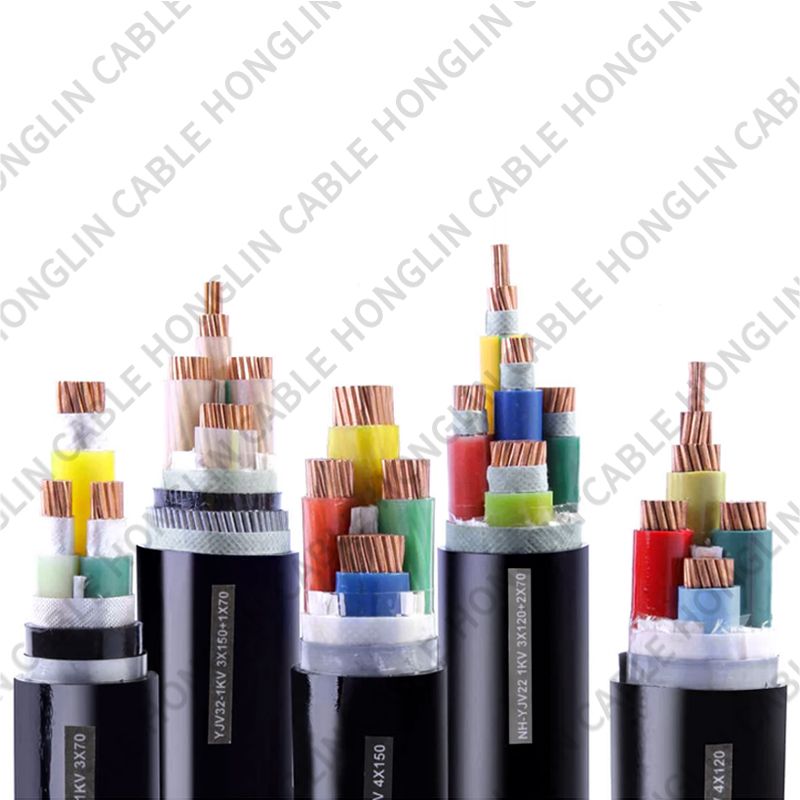
A 0.6/1kV LV cable is a low voltage power cable designed for electrical power transmission and distribution systems with a rated voltage of 0.6/1kV (U₀/U).
It is one of the most widely used voltage classes for low voltage power distribution, serving applications ranging from commercial buildings and industrial facilities to infrastructure, renewable energy projects, utility systems, and electrical equipment.
However, “0.6/1kV LV cable” does not describe just one cable construction. Depending on the project, the cable may use copper or aluminum conductors, PVC or XLPE insulation, PVC or LSZH sheathing, and armored or unarmored structures.
Choosing the right cable therefore requires more than checking the voltage rating. Conductor size, insulation material, installation environment, current carrying capacity, voltage drop, mechanical protection, fire performance, and applicable standards should all be considered.
This guide explains what a 0.6/1kV LV cable is, how it is constructed, which types are available, where they are used, and how to select the right cable for a project.
The designation 0.6/1kV describes the rated voltage of the cable.
In the notation U₀/U:
U₀ is the rated power-frequency voltage between the conductor and earth or metallic screen.
U is the rated power-frequency voltage between conductors.
Therefore, a 0.6/1kV cable has a rated voltage of:
0.6 kV between conductor and earth
and
1 kV between conductors.
The maximum permissible system conditions depend on the applicable cable standard and installation system.
This distinction is important because a cable should never be selected only by looking at the nominal voltage of the electrical equipment. The cable's rated voltage must be suitable for the complete electrical system.
A 0.6/1kV LV cable is a low-voltage power cable designed to carry and distribute electrical energy in systems operating within the cable's rated voltage range.
Typical constructions include:
Copper or aluminum conductor → XLPE/PVC insulation → optional bedding/armor → PVC/LSZH outer sheath
The actual construction depends on the cable type.
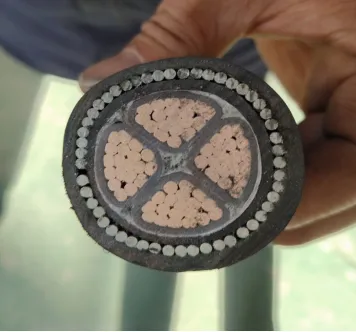
For example, a typical unarmored XLPE cable may use copper conductors, XLPE insulation, and a PVC sheath. An underground armored version may add steel tape or steel wire armor for mechanical protection.
Commercial 0.6/1kV LV cable ranges commonly include copper and aluminum conductors, XLPE insulation, PVC or LSZH sheaths, and armored or unarmored configurations.
Understanding the individual layers helps engineers and buyers choose the right cable structure.
The conductor is the current-carrying part of the cable.
The most common conductor materials are:
Copper
Aluminum
Copper provides high electrical conductivity and is widely used where compact dimensions and electrical performance are important.
Aluminum has a lower density and can provide a significant weight advantage, particularly for large power-distribution cables.
Conductors may be manufactured as solid or stranded constructions depending on the cable size and applicable standard.
IEC 60228 is commonly used as a reference for cable conductor classification in international LV cable applications.
XLPE stands for cross-linked polyethylene.
It is widely used in modern LV power cables because it provides good electrical insulation and higher thermal capability than conventional PVC insulation.
Many 0.6/1kV XLPE power cables specify a maximum normal conductor operating temperature of approximately 90°C, with higher short-circuit temperature limits under defined conditions.
XLPE is therefore commonly selected for power-distribution applications where thermal performance is important.
PVC can also be used as the insulation material in certain LV cable constructions.
PVC offers a practical balance between:
Electrical insulation
Mechanical properties
Manufacturing performance
Cost
General-purpose applications
Whether PVC or XLPE is the better choice depends on the project's thermal, electrical, environmental, and regulatory requirements.
Multicore and armored cables may contain an inner covering or bedding layer.
This layer helps protect the insulated cores and provides a suitable structure for subsequent armor application.
Armor is optional rather than a universal feature of 0.6/1kV LV cable.
Depending on the cable design and installation environment, armor may include:
Steel tape armor (STA)
Steel wire armor (SWA)
Aluminum wire armor (AWA)
Other metallic protection systems
Armor is generally considered when the cable needs additional mechanical protection.
For example, commercial LV cable ranges include unarmored, steel-tape-armored, and steel-wire-armored constructions for different installation conditions.
The outer sheath protects the cable from the surrounding environment.
Common materials include:
PVC
PE
LSZH compounds
Specialized flame-retardant materials
PVC is widely used for general-purpose LV power cables.
LSZH, or low-smoke zero-halogen, constructions may be selected for particular building and infrastructure applications where smoke and halogen emissions during a fire are important considerations.
There is no single best 0.6/1kV cable. The correct design depends on the project.
A copper conductor combined with XLPE insulation is one of the most common LV power cable constructions.
A typical structure is:
Cu / XLPE / PVC
It can be used for:
Building power distribution
Industrial feeders
Distribution boards
Commercial facilities
Equipment power supply
A typical commercial YJV-type 0.6/1kV cable uses stranded copper, XLPE insulation, and PVC sheathing, with common conductor sizes extending from small cross-sections to several hundred square millimeters.
An aluminum conductor can reduce cable weight and material cost for appropriate applications.
Typical structures include:
Al / XLPE / PVC
or armored versions such as:
Al / XLPE / STA / PVC
Aluminum LV cables are commonly considered for larger feeders and power-distribution systems.
Published commercial product ranges include aluminum XLPE-insulated 0.6/1kV cables with PVC, PE, steel-tape, or steel-wire protection depending on the application.
Armored LV cables add a mechanical protection layer.
They are commonly considered for:
Underground installations
Industrial facilities
Cable trenches
Direct-burial systems
Areas exposed to mechanical damage
Steel tape armor and steel wire armor provide different mechanical and installation characteristics, so the armor should be selected according to the actual route and project requirements.
An unarmored cable can be suitable where the installation system already provides adequate mechanical protection.
Examples include cables installed in:
Protected cable trays
Conduits
Electrical rooms
Protected equipment areas
Removing unnecessary armor can reduce cable weight and make installation easier.
LSZH cable is designed to produce low smoke and little or no halogen-containing gas under specified fire conditions.
It can be considered for applications such as:
Public buildings
Transportation facilities
Tunnels
Data centers
Infrastructure projects
The exact fire-performance requirements should always be determined by the local building code and project specification.
For international low-voltage power cable projects, IEC 60502-1 is one of the most important standards to understand.
IEC 60502-1 covers power cables with extruded insulation for rated voltages up to and including 1 kV.
IEC 60228 is commonly referenced for conductor requirements.
Commercial products currently marketed for the 0.6/1kV LV category commonly specify IEC 60502-1 and IEC 60228 as their principal standards.
Depending on the destination market, additional standards may be required, including:
IEC
EN
BS
DIN/VDE
UL
CSA
National electrical standards
Utility or project-specific specifications
A cable manufactured to one standard should not automatically be assumed to comply with another standard.
For international projects, Honglin Cable recommends confirming the required standard before finalizing the cable design and quotation.
The 0.6/1kV voltage class is used across many electrical distribution environments.
Factories require LV cables to supply:
Motors
Pumps
Compressors
Production machinery
Distribution panels
Auxiliary systems
Industrial environments may also require enhanced mechanical, thermal, chemical, or fire performance.
0.6/1kV cables are widely used in commercial electrical infrastructure.
Applications can include:
Main feeders
Sub-distribution
HVAC systems
Lighting systems
Electrical rooms
Building equipment
The exact cable construction should comply with the local electrical and building regulations.
Large infrastructure projects may use 0.6/1kV LV cables for:
Transportation facilities
Airports
Hospitals
Water-treatment plants
Public buildings
Utility facilities
Projects with high occupancy may have additional fire and smoke requirements.
LV cables are also used in renewable energy installations.
They can connect equipment such as:
Inverters
Transformers
Switchboards
Battery systems
Auxiliary power equipment
However, renewable-energy projects require careful evaluation of DC/AC voltage, UV exposure, ambient temperature, current rating, installation method, and environmental conditions.
Armored 0.6/1kV cables are frequently considered for underground power routes where additional mechanical protection is needed.
The final cable construction should be selected based on:
Soil conditions
Moisture
Mechanical risk
Installation depth
Cable arrangement
Local regulations
Voltage rating is only the starting point.
The conductor cross-section must be selected according to the expected load current and installation conditions.
Cable ampacity depends on factors including:
Conductor material
Conductor size
Insulation temperature rating
Ambient temperature
Installation method
Number of loaded cables
Cable grouping
Soil thermal conditions for buried cables
A cable size should therefore not be selected from current alone.
For long cable runs, voltage drop can become a major design factor.
A cable may have enough thermal current capacity but still produce excessive voltage drop because of its length and conductor resistance.
For long feeders, engineers should check both:
Ampacity
and
Voltage drop.
Copper is generally selected when conductivity and compact dimensions are priorities.
Aluminum may provide advantages in weight and material cost, particularly for large cross-sections.
The connection method must also be compatible with the conductor material.
XLPE is commonly selected when higher operating temperature and power-distribution performance are required.
PVC can be an economical option for suitable applications.
The decision should consider:
Maximum conductor temperature
Short-circuit conditions
Installation environment
Cost
Project specifications
Ask whether the cable could be exposed to mechanical damage.
If yes, an armored design may be appropriate.
If the cable is installed in a protected route, an unarmored cable may be more efficient.
For buildings and infrastructure, determine whether the project requires:
Flame retardancy
Low smoke
Halogen-free construction
Fire resistance
Special fire-survival performance
These are different characteristics and should not be confused.
The cable may be exposed to:
Water
Moisture
UV radiation
Heat
Cold
Chemicals
Oil
Mechanical stress
The sheath and complete cable construction should be suitable for the environment.
Cable size is normally specified by conductor cross-sectional area in mm².
Commercial 0.6/1kV LV cable ranges can cover a wide range of conductor sizes.
For example, published product ranges include copper conductors from approximately 1.5 mm² to 1000 mm² and aluminum conductors from approximately 10 mm² to 630 mm², although the actual available range depends on the cable type and manufacturer.
Common project sizes may include:
1.5 mm²
2.5 mm²
4 mm²
6 mm²
10 mm²
16 mm²
25 mm²
35 mm²
50 mm²
70 mm²
95 mm²
120 mm²
150 mm²
185 mm²
240 mm²
300 mm²
400 mm²
500 mm²
630 mm²
Larger sizes are also available for particular power-distribution systems.
However, there is no universal “correct” cable size for a given voltage.
For example, a 0.6/1kV cable could be 10 mm² for one circuit and 240 mm² for another. The required size depends on current, distance, installation method, ambient conditions, voltage drop, short-circuit requirements, and local regulations.
LV power cables are available in different core arrangements.
Typical configurations include:
Single-core
2-core
3-core
4-core
5-core
3+1 core
Other customized constructions
A four-core cable, for example, can be used in three-phase distribution systems with a neutral conductor.
A five-core cable may be used where separate phase, neutral, and protective conductors are required according to the system design.
The correct configuration depends on the electrical architecture.
A common question is whether a 0.6/1kV cable is simply a larger version of a 450/750V cable.
It is not.
The rated voltage is one of the fundamental characteristics of the cable.
A 0.6/1kV cable is designed for a higher voltage class than a 450/750V cable, and the two should not be treated as interchangeable.
The cable selected must match the system voltage and the requirements of the applicable standard.
A 0.6/1kV LV cable belongs to the low-voltage category.
Medium-voltage cables operate at substantially higher system voltages and require different insulation and electrical field-control designs.
LV cable construction is comparatively straightforward:
Conductor → Insulation → Sheath
An armored LV cable may add:
Conductor → Insulation → Bedding → Armor → Sheath
MV cables generally require additional semiconductor screens and insulation systems to manage electrical stress.
Therefore, an LV cable cannot be substituted for an MV cable merely because its conductor size is sufficient.
When buying 0.6/1kV cable, a detailed specification can significantly reduce quotation errors.
A useful RFQ should include:
1. Rated voltage:
0.6/1kV
2. Conductor:
Copper or aluminum
3. Number of cores:
1, 2, 3, 4, 5, 3+1, etc.
4. Cross-sectional area:
For example, 4 × 120 mm²
5. Insulation:
XLPE or PVC
6. Armor:
Unarmored, STA, SWA, AWA, etc.
7. Sheath:
PVC, LSZH, PE, or other specified material
8. Standard:
For example, IEC 60502-1
9. Installation:
Indoor, outdoor, underground, cable tray, conduit, etc.
10. Quantity:
Required length in meters or drums
A clear specification such as:
4 × 120 mm² Cu/XLPE/PVC 0.6/1kV power cable, IEC 60502-1
is much more useful to a manufacturer than simply requesting:
120mm LV cable
Depending on the project, buyers may encounter structures such as:
| Cable Structure | Typical Application |
|---|---|
| Cu/XLPE/PVC | General LV power distribution |
| Al/XLPE/PVC | Larger feeders and distribution |
| Cu/XLPE/STA/PVC | Underground and mechanically protected routes |
| Cu/XLPE/SWA/PVC | Applications requiring stronger mechanical protection |
| Al/XLPE/STA/PVC | Aluminum armored distribution cable |
| XLPE/LSZH | Selected building and infrastructure projects |
| PVC insulated/sheathed | General-purpose LV applications |
The exact cable designation varies according to the applicable national or international standard.
Honglin Cable provides cable solutions for customers sourcing low-voltage power cables for industrial, commercial, infrastructure, and electrical distribution applications.
For a 0.6/1kV project, Honglin Cable can work from the customer's technical requirements to determine the appropriate combination of:
Copper or aluminum conductor
Conductor cross-section
Number of cores
XLPE or PVC insulation
PVC or LSZH sheath
Armored or unarmored construction
Applicable international standard
Cable length
Packaging requirements
This specification-based approach is particularly useful for EPC contractors, electrical distributors, system integrators, contractors, and industrial buyers who need a cable matched to a defined project rather than a generic LV cable.
Before production, the cable specification should be confirmed against the project's electrical requirements, installation conditions, applicable standards, and required documentation.
A 0.6/1kV LV cable is a low-voltage power cable with a rated voltage of 0.6 kV between conductor and earth and 1 kV between conductors, expressed as U₀/U.
IEC 60502-1 is one of the principal international standards used for power cables with extruded insulation up to and including 1 kV. IEC 60228 is commonly referenced for conductors.
Yes. 0.6/1kV power cables are widely used in industrial power distribution, machinery, feeders, switchboards, and auxiliary electrical systems.
The specific cable construction must match the industrial environment.
Yes. Copper is one of the most common conductor materials for 0.6/1kV LV power cables.
Yes. Aluminum conductor 0.6/1kV cables are widely used for appropriate power-distribution applications, particularly where cable weight and material cost are important considerations.
Neither is universally better.
XLPE generally offers higher thermal performance, while PVC can provide an economical and practical solution for many applications.
The correct material depends on the project requirements.
Not always.
Armor is required only when the installation calls for additional mechanical protection or when the applicable specification requires it.
Yes, provided that the selected cable construction is suitable for underground installation.
Depending on the installation, armored cable, suitable sheath materials, moisture protection, and mechanical protection may be required.
Many XLPE-insulated 0.6/1kV cables use a normal maximum conductor operating temperature of approximately 90°C, subject to the applicable standard and cable construction.
Cable size should be selected based on load current, voltage drop, installation method, ambient conditions, conductor material, cable grouping, short-circuit requirements, and applicable electrical regulations.
Voltage rating alone cannot determine conductor size.
The 0.6/1kV LV cable is a fundamental component of modern low-voltage power distribution.
Its versatility comes from the wide range of available constructions: copper or aluminum conductors, XLPE or PVC insulation, PVC or LSZH sheaths, and armored or unarmored designs.
For a successful cable selection, the key is to match the cable to the complete application rather than choosing based on voltage alone.
Before purchasing, confirm:
Rated voltage
Conductor material
Number of cores
Cross-sectional area
Insulation material
Armor requirement
Sheath material
Installation environment
Applicable standard
Fire-performance requirements
Required cable length
For companies sourcing 0.6/1kV LV cable, XLPE power cable, PVC power cable, armored LV cable, copper LV cable, or aluminum LV cable, Honglin Cable can provide project-based cable solutions according to the required technical specification.
Honglin Cable — Professional Cable Solutions for Low Voltage Power Distribution.